

New Articles
-
 送你一束康乃馨,创建一个共生世界 2026/08/27
人的根本,就是生命 ——送你一束康乃馨,创建一个共生世界 钱宏(Archer Hong Qian) ...
- 剔除冗余,彰显新美 2026/08/26
剔除冗余,彰显新美Eliminate Redundancy, Reveal New Beauty ——论“官多为患”“官满为患”殖官主义的组织诊疗...
- 不同语言使用字词(符记)的互证意涵 2026/08/25
不同语言使用字词(符记)的互证意涵 The Mutual Illumination of Words and Signs Across Languages ...
- 北美自由贸易区,先把“边界”讲清楚 2026/08/24
北美自由贸易区,先把“边界”讲清楚North American Free Trade: Define the “Boundary” First ——美加墨USMCA...
共生思想理论前沿
THE THEORY
-
-
-
-
 关于中文“共生”翻译及对应的人、事、物之说明
关于中文“共生”翻译及对应的人、事、物之说明 ——Symbiosism:Charles Thomas Taylor &Qian hong又一次量子缠绕...
查看详细说明
Speech
-
 三大自组织货币的共生格局——宏观世界之数字货币 2021/07/08
三大自组织货币的共生格局 ——宏观世界之数字货币 钱 宏 The Institute for Global Symbiosism(...
-
 新汉字yǜ的释义 2019/11/16
语从金音玉(Yǜ):金口玉言,一诺千金,性人诚恳、执信; &n...
-
 钱宏:中国的真实经验与未来走向(凤凰博报专... 2019/11/16
点击播放 中国的真实经验与未来走向《凤凰博报》专访钱宏主持人:...
送你一束康乃馨,创建一个共生世界
发布时间:2026/08/27 公司新闻 浏览次数:16
人的根本,就是生命
——送你一束康乃馨,创建一个共生世界
钱宏(Archer Hong Qian)
马克思的伟大,在于思想上抓住了“人的根本是人本身”;他的历史偏蔽,则在这一思想诉诸现实的过程中,没有真正走出Subject—Object的关系结构。半个世纪的追问使我越来越确信:今天需要回到的,不只是抽象的“人本身”,而是生命主体;需要改变的,也不只是由谁代表谁,而是从主客二元走向交互主体共生(Intersubjective Symbiosism),让组织重新成为生命的受托者。由此,重建哲学、重建人民共和国、重建社会、社会元勋立宪制与重建组织孞托,才可能汇入同一条路:创建一个共生世界。
引 一束康乃馨,和半个世纪前的一个梦
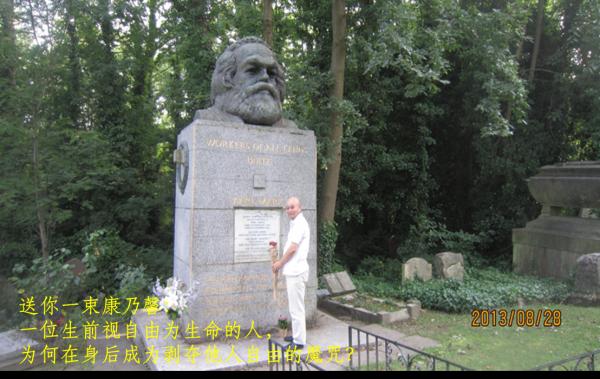
2013年9月21日,我来到伦敦海格特公墓,看望卡尔·马克思。我带了一束康乃馨。到医院看望生病的朋友,人们常常送康乃馨;那一天,我也是去“探病”的。站在马克思墓前,我留下了一句话:“送你一束康乃馨:一个生前视自由为生命的人,为何在身后成为剥夺他人自由的思想符咒?”
这不是一句反马克思的话。恰恰相反,因为年轻的时候,我是真心喜欢卡尔·马克思的。1973年至1975年,我还是一个终日“面朝黄土背朝天”、躬耕田亩的青年农夫。劳动之余,坐在田埂上,我几乎读完了从公社秘书那里能够借到的马克思、恩格斯、列宁的所有著作,以及关于他们的故事和传记。那时的马克思,在我心里从来不是一个冷冰冰的政治符号。我把他看作一位反抗剥削、反抗压迫的精神贵族。我们一家当时正在承受政治、经济以及村社宗法文化带来的多重压力。对于一个在土地上劳作、又渴望另一种生活的年轻人来说,马克思首先给我的不是一套政治经济学公式,而是一种精神支撑:现实并不等于全部世界,还有可能的世界,人可以追寻可能的世界。
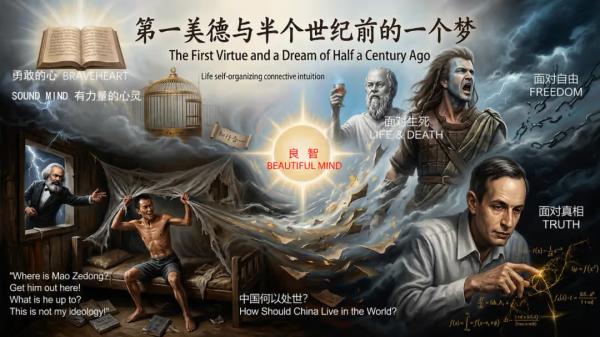
偏偏就在这个时候,1975年的一个仲夏之夜,我在那个由猪栏修葺成的小房间里,做了一个后来半个世纪都没有真正离开我的梦。梦里,卡尔·马克思突然从半米见方的小窗翩然而至。他很生气,冲着我大喊:“毛泽东在哪里?你给我叫他出来,他搞什么名堂,这哪是我的思想?”我吓了一跳,赶紧回答:“毛主席刚刚出恭,他很崇拜你啊!”马克思只说了一句:“那还差不多!”随即不见了。我猛然惊醒,大汗淋漓,连床上的蚊帐都扯了下来。
第二天,我把这个梦告诉母亲。母亲没有给我讲什么大道理,只谨慎地叮嘱:“崽哩,这事千万别告诉别人,包括你爸爸也不要说。”真正让我困惑的,是那时候的我对毛泽东其实没有根本怀疑。1967年看到《毛主席1936年与斯诺的谈话》以后,我还很崇拜他;马克思更是我真心喜欢的人。那么,为什么偏偏会做这样一个梦?
半个世纪以后回望,我不愿意把一个梦神秘化,更不会拿一个梦去证明什么政治判断。但我越来越相信,生命有时比理论更早感觉到裂缝。白天的理性仍然接受一套完整的解释,生活经验、身体感受、心智深处的直觉,却可能已经感到了现实与理论之间某种难以言说的错位。它还不是理论,甚至还算不上思想,只是生命隐隐地在说:这里有什么不对。
1975年,梦里的马克思问我:“这哪是我的思想?”三十八年以后,我来到他的墓前,反过来问他:“一个生前视自由为生命的人,为何在身后成为剥夺他人自由的思想符咒?”所以,那束康乃馨不是祭奠,是探病。我真正想知道的,从来不只是“马克思究竟对不对”,而是一个以人的解放为出发点的伟大思想,进入现实以后,究竟在哪里生了病?
启 从生命的疑问走向哲学的追问
寻找这个问题的答案,我用了半个世纪。1975年的梦还只是一种说不清楚的生命感觉;到了1980年前后,我开始把目光转向“社会生活动力之动力”,试图追问人的思想、行为和社会生活背后究竟还有什么更深的发生力量。问题一旦这样提出,就很难再满足于对某个政治人物、某项政策或者某种制度作孤立判断,因为推动现实的力量往往已经潜伏在我们的概念、价值和思维方式之中。
1982年,我与朋友合作写下《关于“哲学基本问题”的实质、由来和影响》和《在信息的激流中思考》,并明确提出“必须在思维方式上来一场改革”。在《关于“哲学基本问题”的实质、由来和影响》后半部分,我们又进一步提出“哲学现代化”。今天回头看,这正是后来所谓“重建哲学”的思想起点。真正的改革不能只是在既有思维框架中更换答案;如果产生答案的方式没有改变,如果人仍然习惯于把世界分成一个可以定义、代表和支配的主体与一个等待被安排的对象,那么新的结论完全可能沿着旧的轨道,重新制造旧的问题。
我当时还没有后来这些关于“交互主体共生”的完整概念,却已经隐约意识到,思维方式的改革最终不能停在认识论里。我们怎样认识世界,迟早会变成怎样对待另一个人、怎样组织社会、怎样使用权力的问题;哲学如果不能走进生命之间的真实关系,所谓现代化仍可能只是换一套更时髦的概念。
四年以后,1986年初,一场车祸让我住进医院。身体突然停下来,许多现实顾忌也暂时退到了身后,我终于写出《公民个人权利优先引论》,提出“重建人民共和国”。这不是一次从哲学突然跳到政治的转弯。恰恰因为思维方式已经成为问题,国家与公民的关系才必须重新追问:一个以“人民”命名的共和国,究竟怎样才能让一个个具体的人真正成为共和国的主体,而不只是被一个抽象的“人民”概念所覆盖?
1994年的《背景主义:关于大文化战略的哲学追问》,则把1982年已经启动的“哲学现代化”进一步展开。文化危机说到底会追到哲学危机,人既秉承既有背景,又能够“在出”背景;我们生活在已经形成的历史之中,却并非只能重复历史。一个人之所以是活的生命,恰恰因为他能够在既有条件中感受、判断、选择、创造,并由此打开可能的世界。这样一路走来,从1975年的生命直觉,到1982年的思维方式改革和哲学现代化,再到1986年的“重建人民共和国”和1994年的背景主义,问题越来越集中:一个具体的、有生命的人,究竟应该处在什么位置?
如果一切都以人民的名义发生,为什么一个具体的人仍然可能受到压迫?如果人民被说成历史的主人,那么“人民”究竟是谁?是一个抽象名词,是一个阶级,是一个可以由某种组织完整代表的政治意象,还是常言说的“一娘生九子,连母十样心”的一个个会疼痛、会思想、会愛、会恐惧、会创造、会犯错误,也必须为自己的选择承担后果的生命?沿着这个问题继续往前走,我又一次回到了马克思。
我曾站在大英博物馆圆形阅览室的木质桌椅间默想:这个难以见容于自己的祖国、也辗转难容于欧洲大陆的卡尔·马克思,何以能够相对淡定从容地在英伦一呆就是三十四年?这里恰恰是现代政治文明和现代工商文明的重要发源地之一。马克思曾经就在这样的书山卷海之间阅读、思考和写作,而伦敦也容得下一个对资本主义展开如此尖锐批判的人生活下来。这个看似寻常的历史事实,反而让我久久不能释怀:一种文明真正的力量,也许不仅在于它创造了什么,更在于它能够容得下什么。一个社会能够容纳批判自己的人,给异见者留下生活、研究、写作和争辩的空间,本身就是一种比口号更深沉的自由,也是一种组织孞托。马克思真正伟大的地方,恰恰是后来许多以马克思主义命名的庞大组织最容易遮蔽的生命原点。他说“人的根本就是人本身”,又与恩格斯把“有生命的个人的存在”置于全部人类历史的前提。国家、阶级、政党和理论都不是先于生命而存在的实体;首先在那里的是“有生命的个人”。资本之所以值得批判,是因为资本可能异化人;剥削之所以需要反抗,是因为人不能成为另一个人积累财富的工具;专制之所以需要打破,是因为人的生命不能成为权力实现自身意志的材料。即使是生产和发展,也必须回到生命接受检验:如果商品、资本和GDP不断增加,一个个具体的人却失去时间、尊严、自由和生命活力,那么手段与目的已经发生倒置。
因此,我从来不认为走出马克思必须先把马克思打倒。真正值得做的,是回到马克思最澄明的地方,再从那里再出发。也正是在这里,一个更困难的问题浮现出来:人的根本既然是人本身,那么,谁有资格代表“人本身”?
承 当“人本身”被“代表人本身”取代
马克思面对的是19世纪工业资本主义。工业无产阶级处在现代生产体系的中心,同时承受着资本增殖造成的深刻异化,因此,无产阶级不仅成为需要解放的人,也被赋予了改变旧世界的历史使命。这种判断有它鲜明的时代依据,也有它强大的道义力量。马克思不满足于解释世界,他要求理论进入现实;“批判的武器”不能代替“武器的批判”,理论一经掌握群众,也会成为物质力量。正是在这里,思想开始诉诸Action。
然而,行动一旦发生,一个在理论中并不显眼的问题便变得越来越重要:具有改变历史的力量,是否就等于拥有代表所有人的资格?一个阶级可以成为重大历史变革的力量,却不因此天然取得代表所有生命主体的权利;而阶级本身又不能直接行动,它需要理论、组织和领导。到了普列汉诺夫和列宁那里,先进阶级与先进理论之间进一步建立起先锋队的关系,历史主体的代理链条由此不断延长:从有生命的个人,走向被认为代表先进生产力方向的群体,再走向掌握先进理论的先锋队,最后落到能够组织、动员和行动的现实组织。
组织一旦形成,就有了自己的生存条件。它需要纪律,需要资源,需要执行,需要判断,需要在复杂现实中辨认朋友与敌人、正确与错误、前进与阻碍。尤其在革命状态中,这种组织逻辑会迅速强化。于是,“谁代表人民”的问题,很自然地与“谁掌握资源配置权”结合起来。土地归谁,资本归谁,工厂归谁,粮食怎样分配,劳动怎样组织,谁有权没收财富,谁又有权决定一个人应该得到多少,这些都不再只是理论问题,而成为最直接的生活问题。
“打土豪,分田地”之所以能够形成巨大的革命动员力,正因为它触及财富的归属和配置。但是,比“分什么”更深的一层始终是“谁来分”。2007年,我在《全生态社会建设论——关于“共生主义理念”的说明》中,把“共结果”与“共过程”区别开来,也由此提出了后来反复使用的“掌勺人”问题。一个社会如果把主要注意力放在有限结果的共同占有与重新分配上,就无法绕过掌勺人;而勺子真正代表的,是资源配置权。
这使我逐渐看见一种十分微妙的倒置。一个组织最初可能为了人的解放而形成,随后因为行动需要而代表人,再因为代表而获得定义何为“人的真正利益”的资格,最后又因为这种资格取得越来越广泛的资源配置权。到这一步,一个具体的人甚至需要证明自己符合组织所定义的“人民”,才能确认自己的位置。人的代表者逐渐变成代表者的组织,代表者的组织又可能成为事实上的主体;原本应该获得解放的人,则重新成为被组织、被教育、被改造、被配置的对象。
马克思抓住了“人的根本就是人本身”,但他的思想诉诸现实以后,并没有完全摆脱轴心时代以来深刻影响人类思想的Subject—Object结构。主体可以从神转向人,从君主转向人民,从资本转向劳动者,然而只要仍然需要一个终极Subject来定义和支配Object,主客二元的基本关系就没有真正改变。马克思的伟大与他的历史偏蔽,恰恰在这里彼此相邻:他把人重新带回思想的中心,却又为一种能够代表人的历史主体留下了入口。
转 革命之后,社会怎样重新生长
这个问题落到中国,显得尤其沉重。近代中国经历的不只是一次革命,而是一百多年连续的战争、革命、运动和国家建构。传统中国当然远非理想社会,我后来把官僚权力不断扩张、自我繁殖并汲取社会资源的一种结构称为“殖官主义”(Reproductive Officialdom);在这样的结构里,国家兴,百姓可能苦,国家亡,百姓也依旧苦。然而,传统中国仍然保留着一个不可忽略的社会条件:政权基本不下乡,县以下还有乡绅、宗族、村落、行业和各种地方性关系,维系着相当广阔的社会生活空间。
费孝通在《乡土中国》中所描述的“差序格局”,当然包含等级、宗法、礼俗以及劣绅问题,不能被浪漫化;但它也提醒我们,传统国家与日常社会之间并非完全重合。人们在国家行政之外生产、生活、互助、调解纠纷、延续文化。即使王朝更替,社会仍保留着一定的休养生息和自我修复能力。这种社会自组织力并不完美,却是普通人能够继续生活下去的重要条件。
晚清以后,这种结构在连续动荡中不断受损。军队“过兵”,征用、摊派和掠夺接踵而来,良绅逃散,劣绅坐大;民国政府不得不以保甲等方式加强基层行政。中国共产党则把现代革命的组织能力进一步推进到社会末梢,从“支部建在连上”,到土地改革工作队深入乡村并留下基层组织,再到“三大改造”以后形成高度组织化的社会结构,国家组织与社会生活之间原有的边界被大幅改写。后来被称作“举国体制”的组织方式,的确能够在特定时期集中资源、完成许多分散社会力量难以完成的任务,但与此同时,社会自身的组织空间也可能被不断挤压。
这使中国现代史出现了一个值得反复咀嚼的悖论:一次次革命都以改变旧世界、解放人民为目标,却可能在摧毁旧权力结构的同时,也把人民赖以生活和自我组织的社会网络一并消灭。人越来越直接面对国家组织,乡村、社区、行业、企业、学校乃至日常生活空间越来越难以保持自身的主体性。革命能够迅速打碎一种秩序,却不能自动生成有生命力的社会;后者需要时间,需要信任,需要交往,需要无数普通人在日常生活中重新学习连接、承担和自治。
因此,1986年提出“重建人民共和国”以后,我越来越清楚地意识到,共和国要名副其实,不能只有国家的制度形式,还必须有真实存在的社会。所谓“人民”,不能只是政治文本中的集合名词,而要能够以一个个具体生命及其自组织连接的方式存在。一个国家如果只有庞大的国家组织,只有居民管理,却缺少真正的社区生活;只有被组织的人,却缺少能够自己组织起来的人,那么“共和”究竟发生在哪里?一个连社会都难以生长的国家,又怎样真正共和?
正因为如此,2003年我在《从“三个代表”到“社会元勋立宪制”》中,把问题推进到“集体理想与利益集团”的矛盾。一个政党当然可以拥有崇高的集体理想,但只要它成为现实组织,就同时具有组织自身的利益。理想的高尚不能证明组织没有利益,宣称代表人民也不能自动证明组织永远符合人民利益,更不能因为自认掌握真理,就取得不受约束地配置社会资源的权力。任何能够长久运行的制度,都不能建立在“掌权者永远是好人”或者“掌勺人永远大公无私”的假设之上。
“社会元勋立宪制”正是在这样的现实追问中发生的。晚清以来的革命浪潮不断以新的组织替代旧的组织,而新的最高权力又一次次成为最激烈的争夺对象。中国已经没有皇帝,也没有理由重新制造一个皇帝;但如果国家最高位置始终同时意味着最高象征、最高政治权力和最大的资源配置能力,围绕这个位置的争夺就很难真正停息。因此,我尝试把国家最高象征与日常治理权分开:现实治理由有责任、有边界、受法律约束的议会和内阁承担,国家最高象征则可以给予那些真正帮助中国重建社会、恢复社会自组织力、使人民共和国名副其实的人。
这里所谓“社会元勋”,重心其实不在“元勋”,而在“社会”。它不是新皇帝,也不是新的全能统治者,更不应血缘继承。谁能够帮助一个在一百多年战争、革命、运动和高度组织化中不断受损的社会重新生长,谁能够让普通人重新获得连接、自治、承担和创造生活的能力,谁才建立了值得国家纪念的社会功勋。这个设想未必是一个可以脱离历史条件、原样搬用的制度模板,它真正针对的是一个更深的问题:能否结束“摧毁旧主体—建立新主体—再争夺新主体”的循环,让国家的强大与社会的生长不再彼此排斥?
沿着这个问题继续往前走,我越来越确信,中国真正缺少的并不只是某一种更好的国家制度安排,而是被一百多年革命与高度组织化不断削弱的社会自身。所以,2007年9月7日,受邀参加“上海社科界代表座谈会”时,我坦率地提出:“以社会建设为中心,重建有社会的中国特色社会主义。”这里的“社会建设”,我当时已经明确界定为“社会自组织力建设”。经济可以增长,国家可以强大,政府也可以拥有越来越强的组织能力,但如果这些增长和强大没有同时生长出公民与社会的自组织能力,国家与一个个生命之间就会越来越缺少能够缓冲、连接、自治和承担的社会空间。
这也是为什么,我当时特别警惕把国民推向“无自组织力的‘原子’状态”。一旦社会自身失去组织能力,人便只能越来越直接地面对庞大的国家组织;政府也不得不承担越来越多本来可以由社会自己消化、协调和解决的事务。国家看起来更强了,组织成本却可能越来越高,公信力反而越来越脆弱。 所以,“重建社会”从来不是在国家之外另造一个与国家对抗的力量,而是让共和国重新拥有社会,让人民重新拥有彼此连接、自我组织和共同生活的现实空间。
后来收入《中国:共生崛起》(第160-165,知识产权出版社)的这篇发言,今天再读,我尤其在意的已经不是当年那些具体政策建议,而是其中越来越清楚的一条思想线:社会建设是基础,也是出发点和目的地;经济和政治最终都要回到社会生活接受检验。 从1986年的“重建人民共和国”,到2003年的“社会元勋立宪制”,再到2007年的“重建有社会的中国特色社会主义”,我其实是在一步一步发现:共和国之所以需要重建,根本上是因为社会需要重新生长;而社会之所以能够重新生长,最终又必须回到一个个生命主体的自组织连接。
这样回看,革命真正留下的难题已经不只是“谁取得了政权”,而是政权更替以后,生命与社会还能不能继续生长。政治的成熟也许不在于永远寻找一个更正确、更先进、更有力量的最高主体,而在于逐渐学会让权力回到边界,让组织回到功能,让社会恢复自己的生命。
合 从重建哲学到重建组织孞托
朋友袁剑曾经抓住我的一个特点:重建。这个词确实陪伴了我很久。1982年提出思维方式改革和“哲学现代化”,后来我把这条路称为重建哲学;1986年提出重建人民共和国;此后又不断谈到重建社会、重建价值、重建社会孞托,直到今天进一步提出重建组织孞托。表面看,这些“重建”分属哲学、政治、社会和组织不同领域,实际上一直在回应同一个问题:当一种原本为了生命而发生的思想、制度或组织逐渐异化以后,我们究竟应该怎样面对它?
我越来越不愿意把答案简单交给“摧毁”。摧毁当然有时不可避免,历史上也确有必须打破的枷锁;但摧毁本身从来不能保证新的生命秩序自然出现。一个旧世界可以在很短时间里坍塌,一个能够让人安心生活、彼此信任、自由创造的社会,却往往需要很长时间慢慢长成。所谓重建,也不是把旧东西重新拼回原样,而是回到它之所以发生的生命根基,辨认哪些东西已经成为冗余、异化和支配,哪些功能仍然值得保存,然后让新的关系从真实生活中重新生成。
走到这里,我越来越愿意用八个字概括生命最基本的存在状态:生命本自具足,又非独存。“本自具足”意味着每一个生命都有不能被替代的主体性。任何人、阶级、政党、国家、资本、宗教和技术,都不能成为另一个具体生命的终极主体;“又非独存”则意味着生命从来不是孤岛。没有父母和他者,没有语言与交互,没有恊作与连接,也就没有今天的“我”;没有无数生命跨越世代的承接,更不会有市场、组织和文明。
于是,问题就不能停留在“个人还是集体”“国家还是社会”“自由还是秩序”的两端摆动。生命需要组织,因为许多事情单个生命无法独自完成;生命又必须警惕组织,因为组织一旦把受托的权力变成自身的占有,就可能反过来支配生命。真正需要改变的,是我们理解关系的哲学原点。
轴心时代以来,人类许多思想都习惯于在Subject与Object之间展开:主体认识对象、定义对象、改造对象、代表对象,最终也可能配置对象。即使主体的名字不断改变,从君主变成国家,从阶级变成人民,从政党变成资本乃至未来的超级AI,只要唯一主体的位置仍然存在,另一个生命就可能重新成为Object。
所以,仅仅改变“谁是主体”还不够,必须改变主体与主体发生关系的方式。你是主体,我也是主体,他、她同样是主体;你的主体性不需要以我的客体化来证明,我也不能因为拥有更多知识、财富、选票、权力或者算力,就取得替你定义“真正利益”的资格。主体之间当然会有差异、冲突和不平衡,却也能够相遇、感应、恊商、修正、托付,并在交互中生成任何一个主体独自无法生成的新可能。这就是我所说的交互主体共生——Intersubjective Symbiosism。
然而,哲学关系一旦回到生活,就还要回答一个朴素的问题:主体与主体真正相遇以后,究竟怎样相处、怎样行动?多年思考中,我逐渐把人类不同文明积累的相处智慧重新放在一起,称为“践行交互主体共生的金银铜铁通五律”。它们不是五条机械并列的戒律,而像人在不同关系情境中可以辨认方向的五种尺度。
金律(Golden Rule)讲“待人如己,推己及人”(Do to others as you would have them do to you),把自己的生命感受推向他者;银律(Silver Rule)讲“己所不欲,勿施于人”(Do not impose on others what you yourself do not desire),为主体之间划出最基本的克制边界;铜律(Bronze Rule)讲“己之所欲,乐施于人”(To give joy to others as one desires for oneself),使善意从不伤害进一步走向主动给予。可是,共生并不等于取消边界,更不能让善意成为纵容邪恶与权力滥用的理由,所以还需要铁律(Iron Rule)所保留的“以眼还眼,以牙还牙”(An eye for an eye, a tooth for a tooth):它的现代意义不在报复,而在约束权力滥用、维护公平与公义。
把这些经验贯通起来,我最后形成了一条通律(General Rule):自己活也要别人活,不要自己邪恶也让别人邪恶——“Live and let live; don’t be evil and let evil be.” 前半句承认生命本自具足又非独存,后半句则提醒我们,愛之智慧从来不是没有原则的宽容。一个真正的共生秩序,既要给生命自由生长的空间,也要有阻止恶意侵害他者、侵蚀组织的能力。这正是交互主体共生由哲学进入Action时的价值基础。
这样再看组织,问题便更加清楚:如果主体之间不再依靠一个最高Subject来统一,那么公共秩序也不能寄望于某个特殊材料做成的“掌勺人”永远善良英明。金、银、铜、铁、通五律必须进一步进入组织关系,成为托付、权力、责任和边界能够彼此校正的生活准则。也正是在这里,交互主体共生自然走向组织孞托。
交互主体共生不是在Subject与Object之间再寻找一个折中点,而是把关系发生的原点从“主体面对对象”转向“主体遇见主体”。这一步非常重要,因为“生命本自具足,又非独存”,只有在这里才获得完整的哲学含义。本自具足,使任何组织都不能取代生命成为终极主体;又非独存,使生命必然走向连接、合作和托付,并由此生成组织。组织并非外在强加给生命的庞然大物,它本来就从生命之间的关系中发生。
这样一来,组织的问题也可以重新理解。生命把一部分时间、资源、信息、权利和行动能力托付给组织,是为了完成单个生命无法完成的事情。权力因此不是从天而降的所有物,而是由托付发生的行动能力;资源配置权也不应成为组织可以无限占有的“勺子”,而只能在受托关系中被有限、负责地行使。托付产生权力,同时产生责任;托付规定权限,也规定边界;既然托付来自生命,生命就应当保有监督、修正、追责、退出和重新托付的可能。组织由此不再是生命的主人,而回到生命受托者的位置。
这就是我今天所说的组织孞托——Organizational Trust。它并非在政治制度之外再增加一个道德口号,而是交互主体共生进入现实组织关系后的必然展开。也正是在这里,几十年来看似分散的“重建”开始汇流:重建哲学,是为了改变我们理解人与世界的方式;重建人民共和国,是为了让人民从被代表的抽象概念重新回到国家的生命主体;重建社会,是为了恢复生命之间自组织连接的空间;社会元勋立宪制,是在中国具体历史条件下尝试把国家象征、现实治理与社会生长重新安排;重建组织孞托,则进一步追问所有组织如何重新成为生命的受托者。
这条路走到今天,哲学上的转换也越来越清楚。它意味着从Subject支配Object走向Intersubjective Symbiosism,从“谁代表人民”走向“人民如何托付组织”,从争夺资源配置权走向受托、有限、负责地行使资源配置权,也意味着从不断革命、不断消灭旧组织的惯性,走向恢复生命与社会的自组织能力。再往深处,它还意味着从智慧之愛(Philosophy)的轴心时代,走向愛之智慧(Amorsophia)的共生时代。这里的“愛”不是温情的装饰,而首先是对另一个生命主体性的承认:我可以追求智慧,却不能因为拥有智慧就把另一个生命降格为我的对象。
生 让共生世界从真实生活中发生
2010年上海世博会前夕,我在中国浦东干部学院组织的一次论坛上,已经提出“创建一个共生世界”。那时,这句话更多是在回答我们希望走向哪里。十六年以后,再回头看这一路的坑坑洼洼、曲折转折,我越来越关心另一个问题:那个共生世界究竟从哪里发生,又怎样从愿景进入现实?
答案显然不能是再找到一个最聪明的人,替所有人设计未来;也不能是找到一个最先进的阶级、最正确的政党,带领所有生命走进同一个被预先规定的世界;到了人工智能时代,更不能因为算法越来越强大,就把人的生活交给一个无所不知的超级系统。如果共生尚未发生,一个新的唯一Subject已经高高站起,那么我们只是换了一种技术和语言,重新走回那条熟悉的道路。
因此,我仍然赞成马克思墓碑上那句著名的话:哲学家们只是用不同的方式解释世界,而问题在于改变世界。能够抓住人、事、物根本关系的澄明理论,如果永远停留在书斋里,也无法成为生活的力量。思想要进入现实,孞仰要进入生活,事实又必须不断检验思想,最后都要诉诸Action。但是,经历20世纪以后,我们比马克思多了一层不能回避的经验:行动本身并不天然正确,关键还在于以什么关系、什么组织方式行动。
以解放为名的行动可能产生新的压迫,以平等为名的行动可能形成新的特权,以人民为名的行动也可能让一个个具体的人失去声音;同样,以发展和技术进步为名,人也可能被重新变成生产工具、数据、流量和参数。今天如果仍然从“谁更先进”“谁更有资格代表”“谁应该掌握更多资源配置权”开始,我们很可能只是把旧的主体—客体结构装进新的机器。真正值得尝试的Action,应当从改变组织模式开始,从重新规定生命与组织之间的关系开始。
这也是为什么,我把“重建组织孞托”看作今天创建共生世界的现实起点。共生世界不会被一个宏大主体一次性制造出来,它只能从一个个本自具足又非独存的生命之间发生。生命自组织连接,在连接中彼此成为主体,在交互中形成托付,在托付中生成组织;组织如果能够始终记得自己受托于生命,并在责任、边界和持续回应中运行,共生就不再只是一个遥远的理想,而会成为日常生活中可以不断发生、不断修正、不断生长的秩序。
如果把视野再放远一些,这个转变就不只是个人与组织关系的调整,而是文明自身正在跨越的一道门槛。我曾用“自然世—人类世—地球世”来理解这条长时段的生命轨迹。自然世(Naturalopocene)首先告诉我们,共生不是人类后来发明的一套伦理,生命本来就从连接中发生,在交换、竞争、互惠、共栖和动态平衡中延续。人类文明从来没有真正离开过共生起源这个生命底盘,只是在漫长的扩张中越来越容易忘记它。
进入人类世(Anthropocene),人把自己确立为越来越强大的Subject,以知识、技术和组织能力不断改造自然,也把越来越多的他者和世间万物视为可以认识、使用、配置的Object。正是这种主体能力创造了现代科学、工商文明和前所未有的物质繁荣,也把主客二元推到了极致。今天生态压力、组织异化以及AI带来的深层不安,都在提醒我们:如果Subject的能力无限扩张,而关系方式没有改变,人的成功本身也可能反过来成为生命的困境。
因此,迈进地球世(Earthropocene),并不是给历史再添一个新年代的标签,而是要恢复一种更深的自觉:人属于地球生命的整体连接,同时又以自己的心智、技术和责任参与其中。我们需要超越人类以Subject自居、把他者和世间万物一概视为Object的自我中心主义,让Intersubjective Symbiosism成为新的关系原理。马克思当年试图把被资本客体化的人重新带回主体位置;今天还需要沿着这个生命原点继续向前,把“主体的解放”推进到“主体与主体怎样共生”。
AI的出现使这一步尤其迫切。人类正在把自己的知识、判断和组织能力不断外化给算法与机器;如果AI仍沿着Subject—Object的旧逻辑猛进,它完全可能成为前所未有的超级“掌勺人”,把生命进一步数据化、对象化。反过来,如果人工智能能够在愛之智慧(Amorsophia)的方向上升格,让技术进入生命感知、关系辨认、责任边界与组织孞托,那么AI就可能从控制生命的工具转向赋能生命连接的参与者。由此,我后来提出AM——Artificial Mind & Amorsophia MindsField/Network,让“愛之智慧”不只停留在哲学命题,而尝试进入数位—量子时代的生活基础设施。
从Naturalopocene的共生起源,穿过Anthropocene的主体扩张,再走向Earthropocene的交互主体共生,这条文明线索也使“创建一个共生世界”获得了新的尺度。它既不是退回自然,也不是否定人类文明,而是让人类已经获得的知识、技术与组织能力重新回到生命关系之中。若再向远处望,地球世本身还会向太空敞开;但无论文明走得多远,生命如何相遇、主体怎样彼此承认、组织怎样受托于生命,仍会是我们不能绕开的原点。
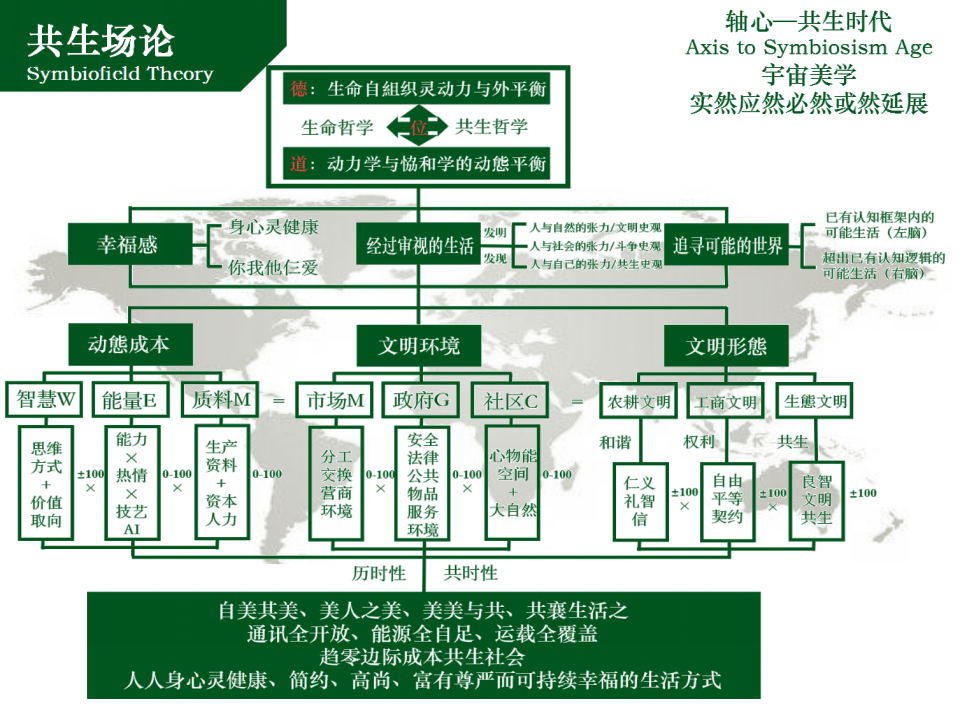
这样再回头看,1975年猪圈里的那个梦,1982年的思维方式改革与哲学现代化,1986年的重建人民共和国,1994年的背景主义,2003年的社会元勋立宪制,2007年的掌勺人问题,2010年的“创建一个共生世界”,2013年马克思墓前的一束康乃馨,以及后来关于交互主体共生、共生经济学、社会自组织和组织孞托的不断思考,就不再只是一些年份和概念。它们更像一次走了半个世纪的远足:有时走在田埂上,有时走进医院,有时站在历史的废墟前,有时又在一束康乃馨旁边重新想起年轻时的自己。路上当然有坑洼,也有走过以后才知道需要折返的地方,但问题始终没有离开生命本身。
我真正追问的,也许从来不是“马克思对不对”,而是马克思已经发现的那个“有生命的个人”,怎样才能不再一次次被以他的名义建立起来的宏大主体重新吞没。马克思的伟大,在于穿透资本、商品、劳动、阶级和制度的重重遮蔽,抓住“人的根本是人本身”;他的历史偏蔽,则在思想诉诸Action时,没有真正走出Subject—Object的关系结构。人本身可以被先进生产力群体代表,先进群体又可以被掌握先进理论的先锋队代表,代表者再取得越来越完整的资源配置权,于是,为人的解放而形成的组织也可能异化为支配生命的主体。
俄国革命、中国革命以及今天一些以“民主社会主义”名义出现的政治主张,当然处在不同历史环境和制度条件之中,不能简单等同;值得警惕的是那条可能反复出现的深层逻辑:只要有人确信自己比一个个具体生命更了解“人民真正的利益”,并因此要求把越来越多的代表权、组织权和资源配置权集中起来,生命就可能再次从主体滑向对象。真正的问题始终是:谁有资格取代生命成为主体?我的回答越来越明确——没有。
所以,今天再说“人的根本就是人本身”,还需要向前走一步。这里的“人本身”不是一个孤立、自足、与他者无关的Subject,而是本自具足又非独存的生命主体。你、我、他(她、它、祂)彼此不是等待征服、代表、改造和管理的Object,而是在连接中彼此发现,在交互中彼此修正,在托付中形成组织,在共襄中生成新的可能。这就是交互主体共生——Intersubjective Symbiosism。
两千多年来,Philosophy——智慧之愛,使人类不断追求知识、智慧和真理,这是轴心时代留给人类的伟大遗产。但当拥有智慧的Subject越来越强大,另一个问题也越来越迫近:智慧究竟怎样对待另一个生命?如果另一个生命始终只是Object,知识越多,控制可能越精密;技术越强,支配也可能越彻底;AI越聪明,人甚至可能越透明。数位—量子时代因此需要的不只是更多智慧,还需要智慧本身改变方向,从Philosophy走向Amorsophia——从智慧之愛走向愛之智慧。愛之智慧首先意味着承认:另一个生命不是我的Object;我承认他的主体性,也承认我自己并非独存。
于是,“创建一个共生世界”也有了比2010年更加清楚的发生路径。它从生命原本的共生事实出发,经过人类主体能力的充分展开,再走向主体之间的重新相认;它让金、银、铜、铁、通五律从文明经验进入现实行动,让组织从资源配置的主人回到生命的受托者,也让AI有机会从强化主客支配的机器转向愛之智慧的参与者。这样理解,重建组织孞托便不再只是组织治理的一项改革,而是我们迈向Earthropocene、让共生世界真正发生的一处现实入口。
1975年那个仲夏之夜,梦里的马克思从猪圈半米见方的小窗钻进来,生气地问我:“这哪是我的思想?”那时候,我不知道怎样回答。2013年,我来到海格特公墓,把一束康乃馨放到他的墓前,又把问题还给了他。今天,我想,这场持续半个世纪的对话终于可以有一个暂时的回答:亲愛的马克思,你没有错在发现人的根本就是人本身,那恰恰是你最伟大的地方;真正需要后来者继续完成的,是把这句话贯彻到底,不再让任何抽象的“人”取代一个个有生命的人,不再让任何代表生命的组织反过来成为生命的主人,也不再用一个新的全能主体去消灭另一个旧的全能主体。
如果说这场远足最终把我带到了哪里,那并不是一个可以封闭起来的理论终点,而是一条仍然向生活敞开的路。半个世纪前,我只是隐约觉得“这里有什么不对”;后来才逐渐明白,真正需要改变的既有思想的框架,也有组织的方式,更有文明理解自身的位置。今天我愿意以赤子之心继续面对AI猛进所带来的巨大不确定性,也愿意期待工程师与哲学家、企业与政府、每一个真实生活中的人彼此伸手,在AI与AM之间继续攻坚克难。因为共生从来不会由一套理论替我们完成,它只能在人与人的相遇、生命与技术的磨合、托付与责任的往复中一点一点发生。1975年那个睡在猪圈里的青年农夫,当时还说不出来的“可能世界”,也许正是在这样的行动中渐渐显出轮廓。马克思墓前的那束康乃馨因此也还没有凋谢:问题仍在生长,生活仍在继续,而Action已经有了新的起点——重建组织孞托,创建一个共生世界。
人的根本,就是生命。生命本自具足,又非独存。由Subject—Object走向Intersubjective Symbiosism(交互主体共生),由智慧之愛(Philosophy)的轴心时代走向愛之智慧(Amorsophia)的共生时代,这不是告别马克思,而是从他最伟大的生命原点继续出发。
The Root of the Human Being Is Life
—A Bouquet of Carnations for You: Creating a Symbiotic World
Archer Hong Qian
Marx’s greatness lies in the fact that, in thought, he grasped that “the root for man is man himself.” His historical blind spot was that, when this insight was translated into reality, it did not truly break free of the Subject–Object structure. Half a century of questioning has made me increasingly certain that what we need to return to today is not merely the abstract “human being himself,” but the living subject. What must change is not merely who represents whom, but the relationship itself: we must move beyond the subject–object duality toward Intersubjective Symbiosism, so that organizations once again become trustees of life. Only then can rebuilding philosophy, rebuilding the People’s Republic, rebuilding society, a constitutional order honoring social merit, and rebuilding Organizational Trust converge upon one road: creating a symbiotic world.
Contents
Prelude — A Bouquet of Carnations and a Dream from Half a Century Ago
Opening — From Life’s Question to a Philosophical Inquiry
Development — When “the Human Being Himself” Is Replaced by “Those Who Represent the Human Being”
Turn — How Can Society Grow Again After Revolution?
Convergence — From Rebuilding Philosophy to Rebuilding Organizational Trust
Emergence — Let a Symbiotic World Arise from Real Life
Prelude — A Bouquet of Carnations and a Dream from Half a Century Ago
On September 21, 2013, I went to Highgate Cemetery in London to visit Karl Marx. I brought a bouquet of carnations. When people visit a sick friend in the hospital, they often bring carnations; that day, I too had come to “visit the sick.” Standing before Marx’s grave, I left these words: “A bouquet of carnations for you: how did a man who, in life, regarded freedom as life itself become, after death, an ideological spell used to deprive others of freedom?”
This was not an anti-Marx statement. Quite the opposite. When I was young, I genuinely liked Karl Marx. From 1973 to 1975, I was still a young farmer who spent his days with his face to the earth and his back to the sky, tilling the fields. In the hours left after labor, sitting on the ridges between fields, I read almost every work by Marx, Engels, and Lenin that I could borrow from the commune secretary, along with stories and biographies about them. Marx was never a cold political symbol to me. I saw him as an aristocrat of spirit who resisted exploitation and oppression. At the time, my family was enduring multiple pressures—political, economic, and those arising from the patriarchal culture of village society. For a young man laboring on the land yet longing for another kind of life, what Marx first gave me was not a set of formulas in political economy, but spiritual support: reality is not the whole of the world. There are possible worlds, and human beings can pursue them.
And yet it was precisely then, on a midsummer night in 1975, in a small room converted from a pigsty, that I had a dream that has never truly left me in the half century since. In the dream, Karl Marx suddenly came through a small window about half a meter square. He was furious and shouted at me: “Where is Mao Zedong? Bring him out here! What on earth is he doing? This is not my thought!” Startled, I hurriedly replied, “Chairman Mao has just gone to relieve himself. He admires you very much!” Marx said only, “That’s more like it!” and vanished. I woke with a start, drenched in sweat, having even torn down the mosquito net over my bed.
The next day, I told my mother about the dream. She offered no grand explanation; she only warned me cautiously, “My boy, don’t tell anyone about this—not even your father.” What truly puzzled me was that, at the time, I had no fundamental doubts about Mao Zedong. After reading Mao’s 1936 conversation with Edgar Snow in 1967, I came to admire him greatly; Marx, too, was someone I sincerely loved. Why, then, did I have such a dream?
Looking back half a century later, I have no wish to mystify a dream, still less to use one as proof of a political judgment. But I increasingly believe that life sometimes senses a fissure before theory does. Daylight reason may still accept a complete explanatory system, while lived experience, bodily feeling, and intuition deep within the mind have already detected an inexpressible dislocation between reality and theory. It is not yet theory, perhaps not even thought. It is simply life whispering: something here is wrong.
In 1975, Marx in my dream asked me, “This is not my thought—what is this?” Thirty-eight years later, at his grave, I turned the question back to him: “How did a man who, in life, regarded freedom as life itself become, after death, an ideological spell used to deprive others of freedom?” That is why the carnations were not an offering to the dead; they were a visit to the sick. What I truly wanted to know was never simply whether Marx was right or wrong. I wanted to know where a great idea that began with human emancipation fell ill after it entered reality.
Opening — From Life’s Question to a Philosophical Inquiry
It has taken me half a century to search for an answer. The dream of 1975 was still only an inarticulate feeling of life. Around 1980, I began to turn my attention toward what I called “the driving force behind the driving forces of social life,” trying to ask what deeper generative power might lie behind human thought, behavior, and social life. Once the question was posed in this way, it became difficult to remain satisfied with isolated judgments about a political figure, a policy, or a particular system, because the forces that move reality are often already hidden in our concepts, values, and modes of thought.
In 1982, together with friends, I wrote “The Essence, Origins, and Influence of the ‘Basic Question of Philosophy’” and “Thinking in the Torrent of Information,” explicitly arguing that “a reform in our mode of thinking is imperative.” In the latter half of “The Essence, Origins, and Influence of the ‘Basic Question of Philosophy,’” we went further and proposed the “modernization of philosophy.” Looking back today, this was the intellectual starting point of what I later called “rebuilding philosophy.” Genuine reform cannot consist merely in replacing answers within an inherited framework of thought. If the way answers are generated does not change—if people remain accustomed to dividing the world into a subject that can define, represent, and dominate, and an object waiting to be arranged—then new conclusions may simply travel along old tracks and reproduce old problems.
At the time, I did not yet possess the later, more complete concept of Intersubjective Symbiosism, but I had already begun to sense that reforming our mode of thought could not end with epistemology. How we understand the world sooner or later becomes a question of how we treat another person, how we organize society, and how we use power. If philosophy cannot enter the real relationships among living beings, its so-called modernization may amount to little more than changing into a more fashionable vocabulary.
Four years later, at the beginning of 1986, a traffic accident put me in the hospital. My body was suddenly forced to stop, and many practical inhibitions temporarily receded. I finally wrote An Introduction to the Priority of Individual Civil Rights, in which I proposed “rebuilding the People’s Republic.” This was not a sudden turn from philosophy to politics. Precisely because the mode of thought itself had become a problem, the relationship between state and citizen had to be asked anew: how can a republic named after “the people” allow each concrete person truly to become a subject of the republic, rather than being covered over by an abstract concept of “the people”?
My 1994 Backgroundism: A Philosophical Inquiry into Grand Cultural Strategy further developed the “modernization of philosophy” begun in 1982. A cultural crisis, pursued to its roots, becomes a philosophical crisis. Human beings inherit existing backgrounds, yet can also “emerge out of” them. We live within histories already formed, but we are not condemned merely to repeat them. A person is a living being precisely because, within given conditions, he or she can feel, judge, choose, and create, thereby opening possible worlds. Along this path—from the life-intuition of 1975, to the reform of thinking and modernization of philosophy in 1982, to “rebuilding the People’s Republic” in 1986 and Backgroundism in 1994—the question became increasingly focused: where, exactly, should a concrete, living person stand?
If everything is done in the name of the people, why can a concrete person still be oppressed? If the people are said to be the masters of history, who exactly are “the people”? An abstract noun? A class? A political image that some organization can completely represent? Or the individual lives evoked by the old saying, “One mother gives birth to nine children, and all ten hearts differ”—lives that feel pain, think, love, fear, create, make mistakes, and must also bear the consequences of their choices? Following this question forward, I returned once again to Marx.
I once stood among the wooden tables and chairs of the British Museum’s Round Reading Room and wondered: how was Karl Marx—a man who could scarcely find acceptance in his own homeland and was repeatedly unable to find a place on the European continent—able to live with relative calm and composure in Britain for thirty-four years? This was, after all, one of the birthplaces of modern political civilization and modern commercial and industrial civilization. Marx himself had read, thought, and written amid such mountains of books and oceans of pages, while London made room for a man who mounted so fierce a critique of capitalism. This seemingly ordinary historical fact stayed with me for a long time: perhaps the true strength of a civilization lies not only in what it can create, but also in what it can accommodate. A society capable of making room for those who criticize it, leaving dissenters space to live, research, write, and argue, possesses a freedom deeper than slogans—and a form of Organizational Trust.
Marx’s true greatness lies precisely in the life-origin that many enormous organizations later bearing the name of Marxism most easily obscured. He wrote that “the root for man is man himself,” and with Engels placed “the existence of living human individuals” at the starting point of all human history. States, classes, parties, and theories are not entities that exist prior to life; first there are living individuals. Capital deserves criticism because it can alienate human beings. Exploitation must be resisted because a person cannot become an instrument for another person’s accumulation of wealth. Despotism must be broken because human life cannot become material through which power realizes its own will. Even production and development must return to life for their test: if commodities, capital, and GDP keep increasing while concrete people lose time, dignity, freedom, and vitality, then means and ends have been reversed.
For this reason, I have never believed that moving beyond Marx requires first knocking Marx down. What is worth doing is returning to Marx at his clearest point and setting out again from there. And it is precisely here that a more difficult question appears: if the root of the human being is the human being himself, who is qualified to represent “the human being himself”?
Development — When “the Human Being Himself” Is Replaced by “Those Who Represent the Human Being”
Marx confronted nineteenth-century industrial capitalism. The industrial proletariat stood at the center of the modern system of production while also bearing the profound alienation produced by capital accumulation. The proletariat therefore became not only those in need of emancipation, but a force entrusted with the historical mission of transforming the old world. This judgment had a clear basis in its time and a powerful moral force. Marx was not content merely to interpret the world; he demanded that theory enter reality. “The weapon of criticism” could not replace “the criticism of weapons,” and theory, once it seized the masses, could itself become a material force. It is here that thought begins to appeal to Action.
Yet once action begins, a question that was not especially conspicuous in theory becomes increasingly important: does possessing the power to change history amount to possessing the right to represent everyone? A class may become a major force of historical transformation without thereby acquiring a natural right to represent every living subject. And a class cannot act as such by itself; it needs theory, organization, and leadership. With Plekhanov and Lenin, the relationship between the advanced class and advanced theory was further organized through the vanguard. The chain of proxy for the historical subject thus grew longer: from living individuals, to a group deemed to represent the direction of advanced productive forces, then to a vanguard possessing advanced theory, and finally to a concrete organization capable of organizing, mobilizing, and acting.
Once an organization is formed, it acquires conditions of survival of its own. It needs discipline, resources, execution, and judgment; it must distinguish friend from enemy, right from wrong, advance from obstruction in a complex reality. Under revolutionary conditions, this organizational logic intensifies rapidly. Thus the question “Who represents the people?” becomes naturally joined to another: “Who controls the allocation of resources?” Who owns the land, the capital, and the factories? How is grain distributed and labor organized? Who has the authority to confiscate wealth, and who decides how much a person should receive? These are no longer merely theoretical questions. They become the most immediate questions of life.
The slogan “Down with the local tyrants, divide the land” could generate enormous revolutionary mobilization precisely because it touched the ownership and allocation of wealth. Yet beneath “what is to be divided?” there always lies a deeper question: “Who does the dividing?” In 2007, in “On Building a Fully Ecological Society—An Explanation of the Idea of Symbiosism,” I distinguished “sharing outcomes” from “sharing processes,” and from this emerged what I later repeatedly called the problem of the “ladle-holder.” If a society concentrates primarily on common possession and redistribution of finite outcomes, it cannot avoid the ladle-holder; and what the ladle truly represents is the power to allocate resources.
I gradually came to see a very subtle inversion. An organization may initially be formed for human emancipation. Then, because action requires it, the organization represents people; because it represents them, it acquires the authority to define their “true interests”; and because it possesses that authority, it gains ever wider powers of resource allocation. At this point, a concrete person may even have to prove that he or she conforms to the organization’s definition of “the people” in order to secure a place. The representatives of human beings gradually become an organization of representatives; the organization of representatives may then become the de facto subject, while those who were supposed to be emancipated once again become objects to be organized, educated, remolded, and allocated.
Marx grasped that “the root for man is man himself,” but once his thought entered reality, it did not fully escape the Subject–Object structure that has deeply shaped human thought since the Axial Age. The subject may shift from God to man, from monarch to people, from capital to labor; yet so long as an ultimate Subject is still required to define and dominate the Object, the basic subject–object relation has not truly changed. Marx’s greatness and his historical blind spot stand side by side at precisely this point: he brought the human being back to the center of thought, yet also left an opening for a historical subject capable of representing human beings.
Turn — How Can Society Grow Again After Revolution?
When this question is brought into the Chinese context, it becomes especially weighty. Modern China has experienced not one revolution but more than a century of successive wars, revolutions, political movements, and state-building. Traditional China was of course far from an ideal society. I later used the term “Reproductive Officialdom” for a structure in which bureaucratic power continually expands, reproduces itself, and extracts social resources; within such a structure, when the state prospers, the people may suffer, and when the state collapses, the people may still suffer. Yet traditional China retained one social condition that should not be overlooked: political power generally did not extend directly into the countryside. Below the county level, local gentry, lineages, villages, trades, and many forms of local relationship sustained a broad space of social life.
Fei Xiaotong’s description of the “differential mode of association” in From the Soil certainly includes hierarchy, patriarchy, ritual convention, and the problem of corrupt local gentry; it should not be romanticized. Yet it also reminds us that the traditional state and everyday society did not completely overlap. Outside state administration, people produced, lived, helped one another, mediated disputes, and carried culture forward. Even through dynastic change, society retained a certain capacity for recuperation and self-repair. This social capacity for self-organization was imperfect, but it was an important condition enabling ordinary people to continue living.
After the late Qing, this structure was repeatedly damaged by continuous turmoil. Passing armies brought requisitions, levies, and plunder; decent local gentry fled while predatory figures gained ground. The Republican government was compelled to strengthen grassroots administration through systems such as baojia. The Chinese Communist Party pushed the organizational capacity of modern revolution still further into the capillaries of society: from “building the Party branch at the company level,” to land-reform work teams entering villages and leaving grassroots organizations behind, and then to the highly organized social structure that emerged after the “Three Great Transformations.” The former boundary between state organization and social life was extensively rewritten. The organizational form later called the “whole-nation system” could indeed concentrate resources during particular periods and accomplish tasks difficult for dispersed social forces to achieve; at the same time, however, the organizational space of society itself could be continually compressed.
This produced a paradox in modern Chinese history worth pondering again and again. Repeated revolutions aimed to change the old world and liberate the people, yet while destroying old structures of power they could also destroy the social networks through which people lived and organized themselves. Individuals came to face state organizations more directly, while villages, communities, trades, enterprises, schools, and even spaces of everyday life found it increasingly difficult to retain their own subjectivity. Revolution can smash an order quickly, but it cannot automatically generate a living society. The latter needs time, trust, interaction, and countless ordinary people relearning connection, responsibility, and self-governance in everyday life.
Thus, after proposing “rebuilding the People’s Republic” in 1986, I became increasingly aware that for a republic to live up to its name, it cannot possess only the institutional form of a state; it must also possess a society that truly exists. “The people” cannot remain merely a collective noun in political texts. They must exist as concrete lives and through their self-organizing connections. If a country has only a vast state organization and grassroots administration but lacks genuine community life; if it has only people who are organized but lacks people capable of organizing themselves, then where does the “republic” actually happen? How can a country in which society itself can scarcely grow truly become a republic?
For this reason, in my 2003 essay “From the ‘Three Represents’ to a Constitutional Order Honoring Social Merit,” I pushed the question toward the tension between “collective ideals and interest groups.” A political party may of course possess lofty collective ideals, but once it becomes a real organization, it also possesses organizational interests of its own. The nobility of an ideal does not prove that an organization has no interests. Claiming to represent the people does not automatically prove that an organization will always conform to the people’s interests. Nor does believing oneself to possess the truth confer an unconstrained right to allocate social resources. No institution capable of lasting operation can be built on the assumption that “those in power will always be good people” or that “the ladle-holder will always be perfectly selfless.”
The idea of a “constitutional order honoring social merit” arose from this concrete line of questioning. Since the late Qing, successive revolutionary waves had repeatedly replaced old organizations with new ones, while the new supreme power again and again became the fiercest object of struggle. China no longer has an emperor, nor is there any reason to manufacture a new one. But if the highest position in the state continues to combine the supreme symbol, supreme political authority, and greatest capacity to allocate resources, the struggle around that position will be difficult to end. I therefore tried to separate the highest symbol of the state from the power of day-to-day governance: practical government would be carried out by a responsible parliament and cabinet, bounded and constrained by law, while the highest symbolic position of the state could honor those who had genuinely helped China rebuild society, restore its capacity for social self-organization, and make the People’s Republic worthy of its name.
The emphasis in “social merit” is not on “merit” but on “social.” It is not a new emperor, nor a new all-powerful ruler, and the position should never be inherited by blood. Only those who help a society—damaged through more than a century of war, revolution, political movements, and intensive organization—grow again; and who enable ordinary people to recover their capacities for connection, self-governance, responsibility, and creating their own lives can be said to have rendered social service worthy of national remembrance. This idea may not be an institutional template that can be lifted out of its historical conditions and applied unchanged. Its real target is a deeper question: can we end the cycle of “destroy the old subject—establish a new subject—fight over the new subject again,” so that the strength of the state and the growth of society no longer exclude one another?
Following this question further, I became increasingly convinced that what China truly lacked was not merely a better arrangement of state institutions, but society itself—a society weakened by more than a century of revolution and intensive organization. Thus, on September 7, 2007, when I was invited to a “Symposium of Representatives of the Shanghai Social Sciences Community,” I stated frankly: “Put social construction at the center and rebuild socialism with Chinese characteristics that has a society.” By “social construction,” I had already explicitly meant “building society’s capacity for self-organization.” The economy may grow, the state may become strong, and government may acquire ever greater organizational capacity; but if this growth and strength do not simultaneously cultivate the self-organizing capacities of citizens and society, then between the state and each living person there will be less and less social space capable of buffering, connecting, self-governing, and assuming responsibility.
This is why I was particularly wary at the time of pushing citizens into an “atomized condition without the capacity for self-organization.” Once society loses its own organizational capacity, individuals can only face the enormous state organization more directly, while government itself must take on more and more matters that society could otherwise absorb, coordinate, and resolve. The state may appear stronger, yet organizational costs can keep rising while public trust becomes more fragile. “Rebuilding society,” therefore, has never meant constructing outside the state a force designed to confront it. It means giving the republic a society again, and giving the people back the real space in which they can connect with one another, organize themselves, and live together.
That 2007 speech was later included in China: The Symbiotic Rise (pp. 160–165, Intellectual Property Publishing House). Reading it today, what matters most to me is no longer the specific policy proposals of that time, but an intellectual line that had become increasingly clear: social construction is the foundation, the point of departure, and the destination; economics and politics must ultimately return to social life to be tested. From “rebuilding the People’s Republic” in 1986, to the “constitutional order honoring social merit” in 2003, and then to “rebuilding socialism with Chinese characteristics that has a society” in 2007, I was in fact discovering step by step that the republic needs rebuilding fundamentally because society needs to grow again; and society, in turn, can grow again only by returning to the self-organizing connections among living subjects.
Seen in this light, the real difficulty left by revolution is no longer merely “who obtains political power,” but whether life and society can continue to grow after power changes hands. Political maturity may lie less in endlessly searching for a more correct, more advanced, more powerful supreme subject than in gradually learning to restore boundaries to power, organizations to their functions, and society to its own life.
Convergence — From Rebuilding Philosophy to Rebuilding Organizational Trust
My friend Yuan Jian once identified a recurring feature of my thought: rebuilding. The word has indeed accompanied me for a long time. In 1982 I called for reform in our mode of thinking and for the “modernization of philosophy”; later I came to call this path rebuilding philosophy. In 1986 I proposed rebuilding the People’s Republic. Thereafter I repeatedly spoke of rebuilding society, rebuilding value, and rebuilding social trust, until today I have gone further and proposed rebuilding Organizational Trust. On the surface, these forms of “rebuilding” belong to different domains—philosophy, politics, society, and organization. In fact, they have always been responses to the same question: when an idea, institution, or organization that originally arose for the sake of life gradually becomes alienated, how should we face it?
I have become increasingly unwilling to hand the answer simply to “destruction.” Destruction may of course sometimes be unavoidable; history has indeed contained shackles that had to be broken. But destruction itself never guarantees that a new living order will naturally appear. An old world can collapse in a very short time; a society in which people can live with security, trust one another, and create freely often takes a long time to grow. Rebuilding does not mean putting the old thing back together exactly as it was. It means returning to the living ground from which it originally arose, distinguishing what has become redundant, alienated, and dominating from what functions remain worth preserving, and then allowing new relationships to regenerate from real life.
At this point in the journey, I increasingly prefer eight Chinese characters to summarize the most basic condition of life: 生命本自具足,又非独存—life is whole in itself, yet never exists alone. “Complete in itself” means that every life possesses an irreplaceable subjectivity. No person, class, political party, state, capital, religion, or technology can become the ultimate subject of another concrete life. “Yet never exists alone” means that life is never an island. Without parents and others, without language and interaction, without cooperation and connection, there would be no “me” as I am today; without countless lives carrying one another across generations, there would be no markets, organizations, or civilization.
The question therefore cannot remain trapped in oscillations between “individual or collective,” “state or society,” “freedom or order.” Life needs organization because many things cannot be accomplished by an individual life alone. Yet life must also remain vigilant toward organization, because once an organization turns entrusted power into its own possession, it may in turn dominate life. What truly needs to change is the philosophical point of origin from which we understand relationships.
Since the Axial Age, much human thought has unfolded between Subject and Object: the subject knows the object, defines it, transforms it, represents it, and may ultimately allocate it. Even if the name of the subject keeps changing—from monarch to state, from class to people, from political party to capital, and perhaps in the future to superintelligent AI—so long as the position of a single ultimate Subject remains, another life may once again become an Object.
It is therefore not enough merely to change “who is the subject.” We must change the way subjects relate to subjects. You are a subject; I am a subject; he and she are subjects as well. Your subjectivity does not need my objectification in order to prove itself, and I cannot acquire the right to define your “true interests” merely because I possess more knowledge, wealth, votes, power, or computing capacity. Subjects will of course differ, conflict, and stand in unequal relations; yet they can also encounter one another, sense one another, deliberate, revise, entrust, and through interaction generate new possibilities that no single subject could produce alone. This is what I call Intersubjective Symbiosism.
Yet once a philosophical relationship returns to life, it must answer a simple question: after subjects truly encounter one another, how should they live together and act? Over many years of reflection, I gradually brought together forms of relational wisdom accumulated by different civilizations and called them the Five Rules for Practicing Intersubjective Symbiosism: the Golden, Silver, Bronze, Iron, and General Rules. They are not five mechanically parallel commandments, but five measures by which people can orient themselves in different relational situations.
The Golden Rule—“Do to others as you would have them do to you”—extends one’s own sense of life toward another. The Silver Rule—“Do not impose on others what you yourself do not desire”—draws the most basic boundary of restraint between subjects. The Bronze Rule—“To give joy to others as one desires for oneself”—moves goodwill from merely refraining from harm toward active giving. Yet symbiosis does not abolish boundaries, and goodwill must never become an excuse for indulging evil or abuses of power. Hence there is also the Iron Rule, preserving “An eye for an eye, a tooth for a tooth.” Its modern meaning lies not in revenge, but in restraining abuses of power and upholding fairness and justice.
Bringing these experiences together, I eventually formulated a General Rule: “Live and let live; don’t be evil and let evil be.” The first half recognizes that life is complete in itself yet never exists alone; the second reminds us that Amorsophia—the wisdom of love—is never tolerance without principle. A genuinely symbiotic order must give life room to grow freely while also possessing the capacity to prevent malicious harm to others and the corrosion of organizations. This is the value foundation on which Intersubjective Symbiosism moves from philosophy into Action.
Seen from here, the organizational question becomes clearer. If relations among subjects no longer depend on a supreme Subject to unify them, public order cannot rest on the hope that some “ladle-holder,” made of exceptional material, will remain forever benevolent and wise. The Golden, Silver, Bronze, Iron, and General Rules must enter organizational relationships, becoming living norms through which entrustment, power, responsibility, and boundaries can correct one another. It is precisely here that Intersubjective Symbiosism naturally leads to Organizational Trust.
Intersubjective Symbiosism does not search for another compromise point between Subject and Object. It shifts the point of origin of relationship from “a subject facing an object” to “a subject encountering another subject.” This step matters because only here does the proposition “life is whole in itself, yet never exists alone” acquire its full philosophical meaning. Being whole in itself means that no organization can replace life as the ultimate subject. Never existing alone means that life necessarily moves toward connection, cooperation, and entrustment, from which organization emerges. Organization is not a gigantic external thing imposed upon life; it originally arises from relationships among lives.
The organizational problem can therefore be understood anew. Life entrusts part of its time, resources, information, rights, and capacity for action to organizations in order to accomplish what a single life cannot accomplish alone. Power is therefore not a possession descending from heaven; it is a capacity for action generated by entrustment. Nor should the power to allocate resources become a “ladle” that an organization can possess without limit; it can only be exercised within a fiduciary relationship, with limits and responsibility. Entrustment generates power and responsibility at the same time; it defines authority and also defines boundaries. Since entrustment comes from life, living persons should retain the possibility of supervision, correction, accountability, exit, and re-entrustment. Organization thereby ceases to be the master of life and returns to its proper place as trustee of life.
This is what I now call Organizational Trust. It is not another moral slogan added outside political institutions, but the necessary unfolding of Intersubjective Symbiosism within real organizational relationships. Here, the forms of “rebuilding” that seemed scattered across decades begin to converge. Rebuilding philosophy seeks to change the way we understand human beings and the world. Rebuilding the People’s Republic seeks to return the people from an abstract concept represented by others to living subjects of the state. Rebuilding society seeks to restore the space for self-organizing connections among lives. The constitutional order honoring social merit was an attempt, under China’s particular historical conditions, to rearrange the relationship among national symbolism, practical governance, and social growth. Rebuilding Organizational Trust asks, further, how every organization can once again become a trustee of life.
At this point, the philosophical transformation has become increasingly clear. It means moving from Subject dominating Object toward Intersubjective Symbiosism; from “Who represents the people?” toward “How do the people entrust organizations?”; from struggling for the power to allocate resources toward exercising that power as an entrusted, limited, and responsible capacity. It also means moving away from the inertia of endless revolution and endless destruction of old organizations toward restoring the self-organizing capacities of life and society. At a deeper level, it means moving from the Axial Age of Philosophy—the love of wisdom—toward a symbiotic age of Amorsophia—the wisdom of love. Here, “love” is not a sentimental ornament. It begins with recognition of the subjectivity of another life: I may pursue wisdom, but possessing wisdom does not entitle me to reduce another life to my object.
Emergence — Let a Symbiotic World Arise from Real Life
On the eve of the 2010 Shanghai World Expo, at a forum I organized at the China Executive Leadership Academy Pudong, I had already proposed “creating a symbiotic world.” At the time, the phrase was primarily an answer to the question of where we hoped to go. Sixteen years later, looking back over the uneven ground and many turns of this journey, I have become increasingly concerned with another question: where does that symbiotic world actually arise, and how does it move from vision into reality?
The answer clearly cannot be to find yet another smartest person to design the future for everyone. Nor can it be to find the most advanced class or the most correct political party to lead all lives into a single predesigned world. In the age of artificial intelligence, still less can we hand human life over to an omniscient super-system simply because algorithms are becoming more powerful. If symbiosis has not yet arisen and a new single Subject has already risen above us, then we have merely changed the technology and vocabulary while returning to the familiar road.
For this reason, I still agree with the famous words engraved on Marx’s tomb: philosophers have only interpreted the world in various ways; the point, however, is to change it. A lucid theory capable of grasping the fundamental relationships among people, events, and things cannot become a force in life if it remains forever in the study. Thought must enter reality; faith must enter life; facts must continually test thought; and ultimately all must appeal to Action. Yet after the experience of the twentieth century, we know something Marx, given his time, could not have known in the same way: action is not inherently right. What matters is the relationship through which we act and the organizational form in which we act.
Action in the name of liberation can produce new oppression. Action in the name of equality can create new privilege. Action in the name of the people can deprive concrete people of their voices. Likewise, in the name of development and technological progress, human beings can once again be turned into instruments of production, data, traffic, and parameters. If today we still begin by asking “Who is more advanced?”, “Who is more qualified to represent?”, or “Who should control more resource-allocation power?”, we may simply be installing the old Subject–Object structure inside new machines. The Action truly worth attempting should begin with changing organizational modes and redefining the relationship between life and organization.
This is why I regard rebuilding Organizational Trust as the practical starting point for creating a symbiotic world today. A symbiotic world will not be manufactured all at once by some grand subject. It can arise only among living beings that are complete in themselves yet never exist alone. Life connects through self-organization; within connection, lives encounter one another as subjects; through interaction, they form entrustment; through entrustment, organizations emerge. If organizations can continually remember that they are entrusted by life, and operate through responsibility, boundaries, and sustained responsiveness, symbiosis ceases to be a distant ideal and becomes an order that can repeatedly arise, correct itself, and grow in everyday life.
If we widen the view, this transformation is more than an adjustment in the relationship between individuals and organizations. It is a threshold civilization itself is crossing. I have used the sequence Naturalopocene–Anthropocene–Earthropocene to understand this long trajectory of life. Naturalopocene first reminds us that symbiosis is not an ethic humans invented later. Life itself arises through connection and continues through exchange, competition, mutual benefit, coexistence, and dynamic balance. Human civilization has never truly left this living ground of symbiotic origins; through its long expansion, it has simply become increasingly easy to forget it.
With the Anthropocene, the human being established itself as an ever more powerful Subject, transforming nature through knowledge, technology, and organizational capacity while treating more and more other beings and things in the world as Objects to be known, used, and allocated. This very capacity of subjecthood created modern science, commercial and industrial civilization, and unprecedented material prosperity; it also pushed the subject–object duality to an extreme. Today, ecological pressures, organizational alienation, and the deep unease brought by AI all remind us that if the power of the Subject expands without limit while the form of relationship remains unchanged, human success itself may turn back into a predicament for life.
To enter the Earthropocene, therefore, is not simply to add another label to historical chronology. It is to recover a deeper awareness: human beings belong to the overall connectedness of life on Earth while also participating in it through our minds, technologies, and responsibilities. We need to move beyond an anthropocentric self-understanding in which humanity appoints itself Subject and treats other lives and the world as Object, allowing Intersubjective Symbiosism to become a new relational principle. Marx once sought to return human beings objectified by capital to the position of subject. Today we must continue forward from that life-origin, advancing from “the emancipation of the subject” to the question of “how subjects live symbiotically with subjects.”
The emergence of AI makes this step especially urgent. Humanity is continually externalizing its knowledge, judgment, and organizational capacity into algorithms and machines. If AI continues to surge forward according to the old Subject–Object logic, it may become an unprecedented super “ladle-holder,” further reducing life to data and objectifying it. Conversely, if artificial intelligence can be elevated in the direction of Amorsophia, so that technology enters into the perception of life, the discernment of relationships, boundaries of responsibility, and Organizational Trust, then AI may shift from an instrument for controlling life into a participant that strengthens the connections of life. It is from here that I later proposed AM—Artificial Mind & Amorsophia MindsField/Network—so that the “wisdom of love” might cease to be merely a philosophical proposition and begin to enter the living infrastructure of the Digital–Quantum Age.
From the symbiotic origins of Naturalopocene, through the expansion of subjecthood in the Anthropocene, and onward toward the Intersubjective Symbiosism of Earthropocene, this civilizational line gives “creating a symbiotic world” a new scale. It is neither a return to nature nor a rejection of human civilization. It is a way of returning the knowledge, technology, and organizational capacities humanity has already gained to the relationships of life. Looking farther ahead, Earthropocene itself will open toward space; but however far civilization travels, how lives encounter one another, how subjects recognize one another, and how organizations remain entrusted by life will remain origins we cannot bypass.
Seen again from this distance, the dream in the pigsty in 1975; the reform of thinking and modernization of philosophy in 1982; rebuilding the People’s Republic in 1986; Backgroundism in 1994; the constitutional order honoring social merit in 2003; the problem of the ladle-holder in 2007; “creating a symbiotic world” in 2010; the bouquet of carnations at Marx’s grave in 2013; and my later reflections on Intersubjective Symbiosism, Symbionomics, social self-organization, and Organizational Trust are no longer merely a collection of dates and concepts. They resemble a trek lasting half a century: sometimes along a field ridge, sometimes into a hospital, sometimes before the ruins of history, sometimes beside a bouquet of carnations, remembering the young man I once was. There have of course been potholes along the road, and places I understood only later required me to turn back. Yet the question has never left life itself.
Perhaps what I have truly been asking was never simply whether Marx was right or wrong, but how the “living individual” Marx had already discovered could avoid being swallowed again and again by grand subjects established in that individual’s name. Marx’s greatness lay in penetrating the layers of capital, commodities, labor, class, and institutions to grasp that “the root for man is man himself.” His historical blind spot was that, when thought appealed to Action, it did not truly leave behind the Subject–Object structure. “Man himself” could be represented by a group deemed to embody advanced productive forces; that advanced group could then be represented by a vanguard possessing advanced theory; and the representatives could acquire increasingly comprehensive powers of resource allocation. Thus an organization formed for human emancipation could itself become alienated into a subject that dominates life.
The Russian Revolution, the Chinese Revolution, and political proposals appearing today under the name of “democratic socialism” of course belong to different historical environments and institutional conditions and cannot simply be equated. What deserves vigilance is a deeper logic that can recur: whenever some people become convinced that they understand “the true interests of the people” better than concrete living persons themselves, and on that basis demand the concentration of ever greater powers of representation, organization, and resource allocation, life can once again slide from subject into object. The real question remains: who is qualified to replace life as subject? My answer has become increasingly clear—no one.
Thus, when we say today that “the root for man is man himself,” we need to take one further step. The “human being himself” here is not an isolated, self-sufficient Subject unrelated to others, but a living subject that is complete in itself yet never exists alone. You, I, he, she, it, and the Divine are not Objects waiting to be conquered, represented, transformed, and managed. We discover one another in connection, correct one another in interaction, form organizations through entrustment, and generate new possibilities through co-creation. This is Intersubjective Symbiosism.
For more than two thousand years, Philosophy—the love of wisdom—has led humanity in the pursuit of knowledge, wisdom, and truth. This is a great inheritance of the Axial Age. Yet as the Subject possessing wisdom becomes ever more powerful, another question presses closer: how does wisdom treat another life? If another life remains merely an Object, then the more knowledge we possess, the more precise control may become; the stronger technology grows, the more complete domination may become; the smarter AI becomes, the more transparent human beings may become. The Digital–Quantum Age therefore needs more than additional wisdom. Wisdom itself must change direction—from Philosophy to Amorsophia, from the love of wisdom to the wisdom of love. The wisdom of love begins by recognizing that another life is not my Object; I recognize its subjectivity, and I also recognize that I myself do not exist alone.
“Creating a symbiotic world” therefore has a clearer path of emergence than it did in 2010. It begins from the original symbiotic fact of life, passes through the full development of human subject-capacity, and moves toward subjects recognizing one another anew. It brings the Golden, Silver, Bronze, Iron, and General Rules from civilizational experience into practical action; it returns organizations from masters of resource allocation to trustees of life; and it gives AI the possibility of moving from a machine that intensifies subject–object domination toward a participant in the wisdom of love. Understood in this way, rebuilding Organizational Trust is no longer merely a reform in organizational governance. It is a practical point of entry through which we move toward Earthropocene and allow a symbiotic world truly to arise.
On that midsummer night in 1975, Marx in my dream came through the half-meter-square window of the pigsty and angrily asked me, “This is not my thought—what is this?” At the time, I did not know how to answer. In 2013, I went to Highgate Cemetery, placed a bouquet of carnations before his grave, and returned the question to him. Today, I think this half-century dialogue can finally have a provisional answer: Dear Marx, you were not wrong to discover that the root for man is man himself. That was precisely your greatest insight. What later generations still need to do is carry that sentence through to its full conclusion: never again allow an abstract “humanity” to replace living human beings; never again allow an organization that represents life to turn around and become life’s master; and never again use a new omnipotent subject to destroy an old omnipotent subject.
If this long trek has brought me anywhere, it is not to a theoretical endpoint that can be closed off, but to a road that remains open to life. Half a century ago, I could only sense vaguely that “something here is wrong.” Gradually I came to understand that what needs to change includes our frameworks of thought, our modes of organization, and the very place from which civilization understands itself. Today I am willing, with the heart of a child, to continue facing the enormous uncertainties brought by the rapid advance of AI. I also hope that engineers and philosophers, enterprises and governments, and every person living a real life can reach toward one another and continue the difficult work between AI and AM. Symbiosis will never be completed for us by a theory. It can only arise little by little in encounters among people, in the mutual adjustment of life and technology, and in the repeated movement between entrustment and responsibility. The “possible world” that the young farmer sleeping in a pigsty in 1975 could not yet put into words may be gradually taking shape through such Action. The bouquet of carnations at Marx’s grave has therefore not yet withered: the question is still growing, life continues, and Action has found a new point of departure—rebuild Organizational Trust and create a symbiotic world.
The root of the human being is life. Life is whole in itself, yet never exists alone. To move from Subject–Object toward Intersubjective Symbiosism, and from the Axial Age of Philosophy—the love of wisdom—toward a symbiotic age of Amorsophia—the wisdom of love, is not to bid farewell to Marx. It is to set out again from the greatest life-origin in his thought.
下一篇: 剔除冗余,彰显新美



1975年仲夏之夜,一个青年农夫在猪圈里梦见马克思;2013年,他带着一束探病般的康乃馨来到马克思墓前。半个世纪的追问由此汇成一个问题:以人的解放为原点的伟大思想,何以在诉诸Action后走向人的重新客体化?本文从马克思“人的根本是人本身”重新出发,追索从先进阶级、先锋队到组织垄断代表权与资源配置权的历史偏蔽,并沿着重建哲学、重建人民共和国、重建社会、社会元勋立宪制,走向重建组织孞托。生命本自具足,又非独存。由此,人的根本进一步澄明为生命本身,组织则回到生命受托者的位置;Subject—Object走向Intersubjective Symbiosism,Philosophy走向Amorsophia,AI走向AM。思想最终仍须诉诸Action:重建组织孞托,创建一个共生世界。
2026年08月27日下午3:05
In the summer of 1975, a young farmer sleeping in a room converted from a pigsty dreamed of Karl Marx. In 2013, he stood before Marx’s grave with a bouquet of carnations—not simply in homage, but as if visiting an old friend whose great idea had somehow fallen ill. This half-century inquiry asks a fundamental question: how could a philosophy that began with human emancipation, once translated into Action, lead again to the objectification of living persons?
Returning to Marx’s insight that “the root for man is man himself,” the essay traces a historical deviation: from the “advanced class” to the vanguard, and from representation to an organization’s concentration of authority over resources and human lives. Against this logic, the author’s decades-long path—from rebuilding philosophy and the People’s Republic, to rebuilding society, exploring a constitutional order honoring social merit, and ultimately rebuilding Organizational Trust—converges upon a deeper philosophical turn.
Life is self-sufficient in itself, yet never exists alone. The root of the human being is therefore clarified as life itself. Organizations must return to their proper role as trustees of life. Subject–Object must give way to Intersubjective Symbiosism; Philosophy, the love of wisdom, must open toward Amorsophia, the wisdom of love; and AI toward AM. Theory ultimately returns to Action: rebuild Organizational Trust and create a symbiotic world.
2026年08月27日下午3:05