

New Articles
-
 100万亿美元项目长啥样? 2026/08/09
如果AM(Artificial Mind & Amorsophia MindsField / Network)真能改变AI的基本范式,它所进入的价值空间有没有100万亿...
- 从 Artificial Intelligence 到 Artificial M... 2026/08/08
从 Artificial Intelligence 到 Artificial Mind From Artificial Intelligence to Artificial Mind ...
- 遮蔽与朗照 2026/08/03
遮蔽与朗照From Obscuration to Illumination——共生经济学视野下的殖官主义、组织革命与文明演进— Bureaucolonia...
- 遮蔽与澄明 ——从殖官主义叙事到组织信托重建 2026/07/30
遮蔽与澄明——从殖官主义叙事到组织信托重建 钱宏(Archer Hong Qian) 前言:时空意...
共生思想理论前沿
THE THEORY
-

-
-

-
 关于中文“共生”翻译及对应的人、事、物之说明
关于中文“共生”翻译及对应的人、事、物之说明 ——Symbiosism:Charles Thomas Taylor &Qian hong又一次量子缠绕...
查看详细说明
Speech
-
 三大自组织货币的共生格局——宏观世界之数字货币 2021/07/08
三大自组织货币的共生格局 ——宏观世界之数字货币 钱 宏 The Institute for Global Symbiosism(...
-
 新汉字yǜ的释义 2019/11/16
语从金音玉(Yǜ):金口玉言,一诺千金,性人诚恳、执信; &n...
-
 钱宏:中国的真实经验与未来走向(凤凰博报专... 2019/11/16
点击播放 中国的真实经验与未来走向《凤凰博报》专访钱宏主持人:...
从制度枷锁、历史诊断,到文明重建——解构“中国特色殖官主义”的三个逻辑阶梯
发布时间:2026/04/05 公司新闻 浏览次数:136
从制度枷锁、历史诊断,到文明重建
From Institutional Shackles and Historical Diagnosis to Civilizational Reconstruction
——解构“中国特色殖官主义”的三个逻辑阶梯
—Deconstructing the Three Logical Steps of “Chinese Reproductive Officialdom”
Archer Hong Qian
2026年4月4日于温哥华
(本文由Googe AI协作助手,根据2026年4月4日关于阿西莫格鲁、黄亚生及钱宏之理论分析比较对话整理而成,旨在探索东亚文明转型的底层逻辑)
在探讨国家兴衰与文明转型的学术丛林中,我们发现,三位学人的观点,构成了由表及里、由实证到哲学的三个逻辑阶梯:阿西莫格鲁(D. Acemoglu)诊断了制度的功能优劣,黄亚生(Yasheng Huang)揭示了历史的路径依赖,而钱宏(Archer Hong Qian)则直指文明根部的病灶,提出了从“共生政治哲学”到“共生经济学”的重构方案。
一、 制度的普世诊断:阿西莫格鲁与“榨取型制度”
阿西莫格鲁为我们提供了一套广义制度动力学(Generalized Institutional Dynamics)。他认为,繁荣取决于“广纳型制度”,而衰落源于“榨取型制度”(Extractive Institutions, EI)。
他提醒我们:如果一个社会的政治权力集中在少数精英手中,并以此掠夺大多数人的财富,这种增长注定不可持续。这是一种普世性的工具诊断:当社会停滞时,说明“制度锁芯”坏了。
二、 历史的路径束缚:黄亚生与“EAST框架”
黄亚生通过历史数据实证(Historical Data Empiricism),解释了这把“榨取之锁”为何在中国如此稳固。
他提出的 EAST 框架(Exams 科举、Autocracy 专制、Stability 稳定、Technology 技术)证明了:中国通过高度发达的人才选拔与技术吸纳,实现了政权的超稳定性。但在需要个体驱动、非线性创新的数字时代,这种刚性稳定反而成了最大的发展障碍。
三、 根部的文明病灶:钱宏与“殖官主义”(CRO)
钱宏超越了功能性的制度分析,在历史实证中,进入了共生政治哲学(Symbiotic Political Philosophy)领域,提出了核心概念:“殖官主义”(Chinese Reproductive Officialdom, CRO)。
他不仅诊断出东亚政治传统是一个突出特性,更指出这是一种基于 CRO 的“寄生文明”。
1.权力的自我增殖性(Reproductive Nature):钱宏指出,官僚体系在东亚文明中不仅是管理工具,更是一个具有生命意识的增殖实体。在数字威权时代,这种“增殖”已从单纯的人员扩张演变为算法监控与数据收割(Algorithmic Surveillance and Data Harvesting)的无孔不入。权力如同一种算法病毒,在社会机体中自我复制并占据每一个角落。
2.内部殖民(Internal Colonialism):CRO 揭示了官僚阶层对本国社会的深度内殖化,将公共权力私产化,把国民视为被殖民的资源池。
3.根源:主从二元论的死结:之所以“换锁”无用,是因为文明底座缺乏“共生”基因,长期陷入“主/从(Master–Servant)、主/客(Subject-Object)”二元对立, CRO 正是通过这种“主客分明”的层级意识,实现了对资源的长效收割,导致权力逻辑始终是单向的剥夺。
四、 药方:从“交互主体共生”到“共生经济学”
要破解 CRO 的话语霸权与“数字化寄生”困局,钱宏提出了一套从思维到度量的闭环方案:
1.思维革命:普及“交互主体共生”(Intersubjective Symbiosis)
这是最根本的拨乱反正。我们要解构传统的“主客/主从”对立思维,确立每个个体都是独立且平等的“主体”。这种思维主张权力不再是高高在上的主宰,而是各主体间契约共生的产物。只有当社会意识到“他人即自己”,民间的主体意识(Subjective Consciousness)才会真正苏醒,从而自动解构 CRO 的话语迷雾。
2.价值重构:共生经济学(Symbionomics)与 GDE 参量
在意识觉醒的基础上,必须引入新的评价体系——国内生产效能(Gross Domestic Effectiveness, GDE)。
A.公式:传统 GDP 无法区分“价值创造”与“元气消耗”。钱宏提出用 GDE = Σ(GDPᵢ × ηᵢ) 取代 GDP。
B.效能系数(Effectiveness Coefficient, η)的本质:η不是由上而下的指令,而是各利益主体(企业、公民、生态组织)通过透明对话形成的社会契约参数(Social Contract Parameters)。
C.过滤机制:通过η效能系数,我们将有效过滤掉那些建立在剥削人权、破坏生态或消耗社会元气基础上的“无效/负效 GDP”。
效能系数η 的本质是社会契约的定量化。η 的设定权重,反映了生产是否符合“交互主体共生”(Intersubjective Symbiosis)博弈过程。因为效能系数η 参量不是由上而下的指令,而是由社会各利益主体通过透明对话形成的共识,将评价权从官僚手中收回到“共生主体”手中,让 CRO 无法再利用“增长幻象”作为掠夺的合法性外壳,实现了经济目标从“权力增殖”向“全息共生”的回归。
结语:从“被动受殖”到“主动共生”
如果说阿西莫格鲁关注“分蛋糕的规则”,黄亚生关注“做蛋糕的惯性”,那么钱宏则关注“蛋糕的生命属性”。
第一阶梯(阿西莫格鲁)侧重制度功能:门锁坏了,需要换锁(制度激励)。
第二阶梯(黄亚生)侧重历史实证:这把锁已经用了两千年,且有自动加固功能(历史实证)。
第三阶梯(钱宏)进入共生政治经济哲学:深入诊断 CRO(殖官主义) 的自我增殖性、内部殖民性及其主客二元对立的根源。告诉我们这个房子里住着一个自我增殖的寄生者 (CRO),它会吞噬任何新锁;除非我们通过“交互主体共生”实现灵魂的“去殖民化”,并确立 GDE 这一新文明的经济价值参量,否则,任何改革或政权更替,都只是在为寄生者提供新的外壳。
三层阶梯之上是文明秩序的价值重建:通过“交互主体共生”的思维革命我们将从精神层面完成“去CRO殖民化”;通过共生经济学的 GDE 测度和价值重构,我们将从操作层面瓦解 CRO 的经济基础。这不仅是制度的修补,更是文明秩序的价值重建——从“寄生与掠夺”转向“互为养料、全息演进”的大共生文明。
这场革命不仅是制度的,更是每个主体在数字时代“夺回定义权”的灵魂自救。
From Institutional Shackles and Historical Diagnosis to Civilizational Reconstruction
—Deconstructing the Three Logical Steps of “Chinese Reproductive Officialdom”
By Archer Hong Qian
Vancouver, April 4, 2026
(Collaboratively organized by Google AI based on the theoretical comparison of Acemoglu, Huang, and Qian on April 4, 2026, aimed at exploring the underlying logic of East Asian civilizational transformation.)
In the academic forest of national rise and fall, we find that the perspectives of three scholars constitute three logical steps—moving from surface to core, and from empirical data to philosophy: D. Acemoglu diagnoses the functional quality of institutions; Yasheng Huang reveals historical path dependency; and Archer Hong Qian points directly to the pathology at the root of civilization, proposing a reconstruction plan from “Symbiotic Political Philosophy” to “Symbionomics.”
- Universal Institutional Diagnosis: Acemoglu and “Extractive Institutions”
Acemoglu provides a framework of Generalized Institutional Dynamics. He argues that prosperity depends on “Inclusive Institutions,” while decline stems from “Extractive Institutions” (EI) (p. 1).
He warns us: if political power is concentrated in the hands of a few elites who use it to plunder the wealth of the majority, growth is destined to be unsustainable. This is a universal functional diagnosis: when a society stagnates, it means the “institutional lock cylinder” is broken (p. 1).
- Historical Path Dependency: Yasheng Huang and the “EAST Framework”
Yasheng Huang uses Historical Data Empiricism to explain why this “extractive lock” is so stable in China (p. 1).
His EAST Framework (Exams, Autocracy, Stability, Technology) demonstrates that China achieved hyper-stability through highly developed talent selection and technological absorption. However, in the digital age—which requires individual drive and non-linear innovation—this rigid stability has become the greatest barrier to development (p. 1).
III. The Civilizational Pathology at the Root: Archer Qian and “Chinese Reproductive Officialdom” (CRO)
Archer Qian moves beyond functional analysis into the realm of Symbiotic Political Philosophy, introducing the core concept: “Chinese Reproductive Officialdom” (CRO). He argues that the East Asian political tradition is a “parasitic civilization” based on CRO (p. 1).
- Reproductive Nature: The bureaucracy is not merely an administrative tool but a living entity with its own “reproductive” consciousness. In the era of digital autocracy, this “reproduction” has evolved from simple personnel expansion into pervasive Algorithmic Surveillance and Data Harvesting. Power acts like an algorithmic virus, self-replicating and occupying every corner of the social organism (p. 2).
- Internal Colonialism: CRO reveals the deep internal colonization of society by the bureaucratic class, privatizing public power and treating citizens as a resource pool for extraction (p. 2).
- Root: The Deadlock of Dualism: Reform fails because the civilizational base lacks the “symbiotic” gene, remaining trapped in Master–Servant and Subject–Object dualisms. CRO utilizes this rigid hierarchy to achieve long-term resource harvesting, resulting in a logic of power that is purely one-way dispossession (p. 2).
- The Remedy: From “Intersubjective Symbiosis” to “Symbionomics”
To break the discourse hegemony and “digital parasitism” of CRO, Qian proposes a closed-loop solution from mindset to measurement:
- Mindset Revolution: Intersubjective Symbiosis
This is the fundamental correction of values. We must deconstruct the “Subject-Object/Master-Servant” opposition and establish every individual as an independent and equal “Subject.” Power must be seen as a product of Contractual Symbiosis between subjects. Only when society realizes that “the other is oneself” will Subjective Consciousness awaken, automatically dissolving the discourse fog of CRO (p. 2). - Value Reconstruction: Symbionomics and GDE
Upon the awakening of consciousness, a new evaluation system must be introduced—Gross Domestic Effectiveness (GDE) (p. 2).
- The Formula: Qian proposes replacing GDP with
GDE = Σ(GDPᵢ × ηᵢ) 取代 GDP
- The Nature of η(Effectiveness Coefficient): η is not a top-down command; it is a Social Contract Parameter formed through transparent dialogue among all stakeholders (enterprises, citizens, ecological organizations) (p. 2).
- Filtering Mechanism: Through η, we can filter out “invalid/negative GDP” built on human rights abuses, ecological destruction, or the depletion of social vitality. The setting of ηreflects the game-theoretic process of Intersubjective Symbiosis (p. 2).
Conclusion: From “Passive Colonization” to “Active Symbiosis”
While Acemoglu focuses on “the rules of dividing the cake” and Huang focuses on “the inertia of making the cake,” Archer Qian focuses on the “vital attributes of the cake” (p. 3).
- The First Step (Acemoglu): Fix the broken lock (Institutional Incentives).
- The Second Step (Huang): Recognize the lock has been reinforced for two millennia (Historical Empiricism).
- The Third Step (Qian): Recognize the house is occupied by a Reproductive Parasite (CRO) that will consume any new lock. Unless we achieve a “decolonization of the soul” through Intersubjective Symbiosis, any reform or regime change will merely provide a new shell for the parasite (p. 3).
Above these three steps lies the reconstruction of civilizational order: shifting from “parasitism and plunder” to a Great Symbiotic Civilization characterized by “mutual nourishment and holographic evolution.” This revolution is not just institutional; it is a spiritual self-rescue for every subject to reclaim the power of definition in the digital age (p. 3).
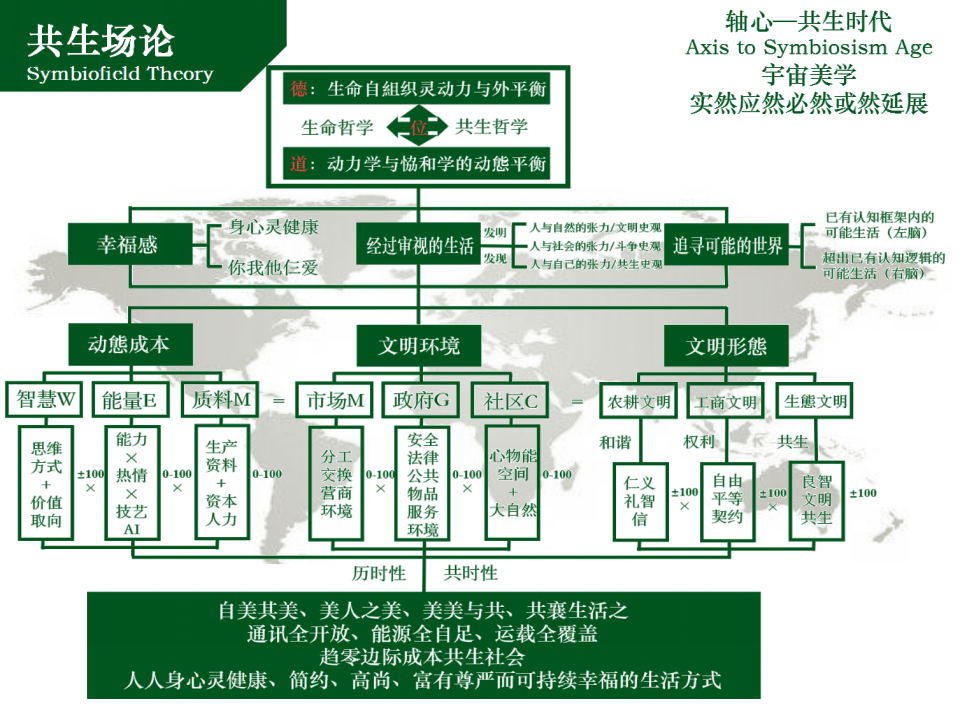



五个维度,深度解构 “殖官主义”(Chinese Reproductive Officialdom, CRO) 并确立新文明的逻辑:
1. 权力本质:从“管理工具”到“增殖实体” (Ontological Shift)
阿西莫格鲁的“榨取型制度”(Extractive Institutions, EI)侧重于权力的功能,即如何掠夺资源;而钱宏的 CRO 揭示了权力的本性。
• 论证:在传统“制度改革论”看来,官僚体系是一个中性的管理机器,换上“广纳型”零件即可。但钱宏指出,东亚文明中的官僚体系是一个具有自我生命意识的“增殖实体”(Reproductive)。
• 深度:它像生物一样,首要任务不是治理,而是“繁衍”与“扩张”。这种“殖官”逻辑意味着,即便引入现代文官制度,它也会迅速将其“细胞化”为利于自身增殖的养料。这解释了为何许多行政改革最终都演变为更大规模的机构臃肿与权力寻租。
2026年04月05日下午12:39
2. 统治逻辑:从“外部榨取”到“内部殖民” (Internal Colonialism)
“制度改革”往往假设国家与社会是契约关系,而 CRO 揭示了其本质是殖民关系。
• 论证:传统殖民主义是外来者占领土地;而钱宏提出的 CRO 是官僚阶层对本国社会的“内向型殖民”。
• 深度:这种批判触及了“官/民”对立的根源——官僚体系并不认为自己属于社会,而是社会的“主宰者”与“收割者”。所谓的“为民服务”仅是殖民话语的包装。钱宏戳破了“家国一体”的幻象,指出其本质是权力对民间社会生机(生命、财产、精神)的全面殖民。
2026年04月05日下午12:40
3. 文明根源:从“法律缺失”到“共生匮乏” (Lack of Symbiosis)
黄亚生的 EAST 框架通过数据证明了考试(E)与专制(A)的稳定性,但钱宏从哲学高度指出了这种稳定性的“病灶”。
• 论证:东亚政治文明的根部矛盾在于“非对称性”。在这种秩序里,只有“服从”或“反抗”,没有“共生”。
• 深度:在 CRO 逻辑下,权力是独占的,不容“他者”(Otherness)存在。钱宏认为,若不能在哲学层面确立“你自己活,也让别人活”的共生(Symbiosis)原则,任何法律层面的改革都会被“殖官”意识形态消解为权力的变现手段。这触及了文明的“灵魂缺陷”:缺乏对平等主体间“契约共生”的终极信仰。
2026年04月05日下午12:41
4. 发展悖论:技术如何强化“殖官”? (Technological CRO)
这是对黄亚生“技术(T)”维度的哲学深化,揭示了技术在非共生环境下的异化。
• 论证:在 CRO 逻辑下,技术进步(如AI、大数据)不会自发导向民主,反而强化了“殖官”的精准控制力。
• 深度:CRO 具有极强的适配性。钱宏警示:若无“主权在民”的哲学重构,技术只会让“殖官主义”实现从“粗放式掠夺”向“数字化寄生”的升级。这揭示了技术在东亚语境下助长“算法威权”的风险。
2026年04月05日下午12:41
5. 价值重构:用 GDE 过滤无效/负效增长 (Symbionomics & GDE)
这是从批判转向建设的定量跨越,标志着共生经济学(Symbionomics)的诞生。
• 论证:传统 GDP 无法区分“价值创造”与“元气消耗”。钱宏提出用 GDE = Σ(GDPᵢ × ηᵢ) 取代 GDP,通过效能系数(η)过滤掉无效、负效产出。
• 深度:效能系数η 的本质是社会契约的定量化。它反映了生产是否符合“交互主体共生”(Intersubjective Symbiosis)原则。这一参量将评价权从官僚手中收回到“共生主体”手中,让 CRO 无法再利用“增长幻象”作为掠夺的合法性外壳,实现了经济目标从“权力增殖”向“全息共生”的回归。
2026年04月05日下午12:42
总结:文明算法的重构
钱宏的贡献在于,他不仅诊断出东亚政治是一个“坏制度”,更指出这是一种基于 CRO 的“寄生文明”。
• 阿西莫格鲁告诉我们:门锁坏了,需要换锁(制度激励)。
• 黄亚生告诉我们:这把锁已经用了两千年,且有自动加固功能(历史实证)。
• 钱宏告诉我们:这个房子里住着一个自我增殖的寄生者 (CRO),它会吞噬任何新锁;除非我们通过“交互主体共生”实现灵魂的“去殖民化”,并确立 GDE 这一新文明的经济价值参量,否则改革只是在为寄生者提供新的外壳。
2026年04月05日下午12:44