

New Articles
-
 文明在创造中前行 2026/10/10
文明在创造中前行 Civilization Advances Through Creation 从现代世界的确权、制权、创富、自序,到AI—SI时代的组...
- 殖官主义:享受决策的好处,把代价留给他人 2026/10/09
殖官主义:享受决策的好处,把代价留给他人Bureaucolonialism / Reproductive Officialdom: Enjoying the Benefits of De...
- K为什么大腹便便? 2026/10/08
K为什么大腹便便? Why Is K So Big-Bellied? ——从K-Economy病型学到K→Q经济诊疗 —From K-Economy Typology to K→Q Econom...
- 中国K ?——从“繁荣与收缩并存”到共生经济学的... 2026/10/07
中国K ? ——从“繁荣与收缩并存”到共生经济学的K→Q经济诊疗学 钱 宏(Archer Hong Qian) “K型分化”正在成为解释中国经济结...
共生思想理论前沿
THE THEORY
-

-
-
-
 关于中文“共生”翻译及对应的人、事、物之说明
关于中文“共生”翻译及对应的人、事、物之说明 ——Symbiosism:Charles Thomas Taylor &Qian hong又一次量子缠绕...
查看详细说明
Speech
-
 三大自组织货币的共生格局——宏观世界之数字货币 2021/07/08
三大自组织货币的共生格局 ——宏观世界之数字货币 钱 宏 The Institute for Global Symbiosism(...
-
 新汉字yǜ的释义 2019/11/16
语从金音玉(Yǜ):金口玉言,一诺千金,性人诚恳、执信; &n...
-
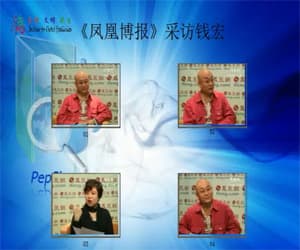 钱宏:中国的真实经验与未来走向(凤凰博报专... 2019/11/16
点击播放 中国的真实经验与未来走向《凤凰博报》专访钱宏主持人:...
进一步,海阔天空!
发布时间:2025/11/09 公司新闻 浏览次数:289
【政策分析简报】
进一步,海阔天空!
Take a step forward and find a clearer situation
——关于“PRC–ROC对等承认”的大情势与可能路径的结构性观察
— Structural Observation on the Grand Trend and Possible Path of “PRC–ROC Reciprocal Recognition”
撰写人: 钱宏(Archer Hong Qian)
撰写背景: 近期时事与既有判断(含《“鏡”与“燈”:PRC & ROC问题的8个观察点与8种可能的解决方式》2020.9.17长文)
一、核心判断摘要
未来三年内,美国极有可能正式承认事实上存在的中华民国(ROC)台湾合法政权,并恢复与ROC台湾的外交关系。
亦有可能,日本或欧洲某国或联合承认ROC台湾合法政府,先于美国采取此行动,类似1971年日本抢先与PRC“邦交正常化”的历史前例。
一旦美国/盟友开启此进程,PRC势必先行“面子反应”,后顺势而为,尊重事实,进入“加速(两岸)谈判”,最终出现PRC与ROC同时宣布结束敌对关系的历史场景。
率先采取此行动的国家,将在未来亚太、印太秩序乃至全球经贸秩序重塑中,获得决定性战略先机。
二、关键信号提要
川普终于被逼表明美国立场:“Taiwan is Taiwan”——没有什么好谈的→ 意在承认台湾为既定政治实体,而非附属议题。
中美“川习釜山会”:首次未设置“台湾议题”→ 亦被解读为双方战略智慧与冷静试探。
欧盟与日本发出“集体挺台”信号:不是个别国家发声(如立陶宛、捷克),而是区域力量的“合议与共识”正在生成→ 其政治含义甚至接近“联合承认ROC合法政府”的前奏。
三、推进顺序推演(基于现有判断)
| 步骤 | 可能进程(按时间逻辑排序) |
| 1 | 美国/日本/欧盟某国或联合宣布恢复与ROC的外交承认 |
| 2 | PRC进行短期外交抗议、舆论喊话(“面子反应”) |
| 3 | 私下接受事实,进入“后冲突谈判”进程 |
| 4 | PRC与ROC同时宣布:结束敌对、对峙、对立关系 |
| 5 | 新秩序下的“和解共生”机制启动(经贸、社会、文化健康互通,无任何历史心理包袱) |
四、路径正当性说明(基于ROC既有政策)
自小蒋总统经国先生之后,历任5位总统陆续终止“三不政策”:
汪辜会谈(1992)→“小三通”(2001)→“互不隶属”(陈水扁时代,马英九胜选向陈水扁“请益”时,双方进一步求证,没有文本记录的“九二共识”,但某种“九二默契”应当存在,否则就没有双方安排的“汪辜会”)→“九二默契”与“主权竞合”(马英九时代)→“PRC与ROC互不隶属”(蔡英文、赖清德时代)→ ROC事实上已默认,乃至正式承认“1949年僭越 ROC 大陆部分成立的 PRC 政权合法性”。
因此:
PRC承认ROC台湾合法政权,只不过是迟到的对等礼仪,应不存在心障——礼仪之邦,顺势而为,进一步,海阔天空!其他选项,都会多少明暗付出血的代价,不是说什么血浓于水啦?!
五、战略分岔点判断(最早提出于2020.5.20)
PRC和美国,谁率先承认ROC台湾合法政府,谁就得到战略性先机。而且,如果PRC先于美国承认事实,对自身脱困,且更顺理成章,有百利无一害——但要赢得此先机,须具备智慧、勇气和能力。
该判断发表于2020年9月17日,构成近年来对海峡两岸与国际秩序互动的最早系统化呈现之一(参见文末参考链接)。
六、深层含义与历史回响(简述)
“1971模式反转”的可能性
当年:日本先承认PRC → 美国后跟进
今日:日本或欧盟先承认ROC → 美国再固化架构
“现实承认” vs “意识形态否认”
承认现状不是承认对手,而是承认双方互相存在,进而恢复互相成就的可能性。
内外困局的反向破解(针对PRC)
一旦PRC依据“主权在民”规则,承认ROC的民选合法政府,其内政困局与外部围堵都会出现结构性缓解,“民族主义绑架”链条被松动,民生、金融、外交等问题会转入“可解阶段”(钱宏《国是会议:中华式宪政转型的典范——从台湾转型经验看大陆政体结构跃迁可能性》 http://symbiosism.com.cn/10366.html)。
七、参考资料
钱宏:《“鏡”与“燈”:PRC & ROC问题的8个观察点与8种可能的解决方式》发表时间:2020年9月17日
链接:共生网:http://symbiosism.com.cn/4289.html
万维读者网:https://blog.creaders.net/user_blog_diary.php?did=NTIwMzQ3
以上简报,根据以下文字阐释
进一步,海阔天空!
Archer Hong Qian
2025年11月9日于Singapore途中
川普最近明确表示:“Taiwan is Taiwan”(没有什么好谈的)!”“川习APEC场边元首会”也没有设置“台湾议题”,更显双方智慧和勇气!
接着刚刚,欧盟和日本不约而同明确发出“集体挺台”(非单个国家,如立陶宛、捷克)的政治信号,乃至以“联合承认ROC合法政府”方式进行,国际时局正悄俏地速变……我坚持今年7月在蘇格蘭的预测:
美国很可能在未来三年内(当然日本或欧洲某国可能抢在美国前与ROC台湾建交,先例是1971年日本抢先与PRC“邦交正常化”,历史很可能把所谓颠倒的历史再颠倒过来),正式宣布承认事实存在的ROC台湾合法政权,恢复与ROC恢复外交关系。此后,PRC面子上会闹腾一阵子,私底下会加速谈判,然后,PRC与ROC同时宣布:
结束敌对、对峙、对立关系——事实上ROC小蒋总统之后的5位总统,结束“三一政策”,从汪辜会谈、“小三通”到“互不隶属”,ROC都早已默认-正式承认1949年僭越ROC大陆部分成立的PRC政权合法性,如今PRC承认ROC台湾合法政权,只是迟到的对等礼仪而已,当无太大心理障碍(礼仪之邦么,只是承认一个事实有那么难吗?)而且,我几乎可以肯定,PRC一旦根据“主权在民”现代政治文明规则,坦荡承认ROC台湾民选合法政府,其自身目前遭遇的内外困局,都将慢慢迎刃而解——开启和解共生之路!
早在2020年5月20日,我就撰文指出,如果从美中实际利益博弈的维度看,历史已经来到这样的关键时刻:
PRC和美国,谁率先承认ROC台湾合法政府,谁就得到战略性先机。但要赢得这个历史先机,需要智慧、勇气、能力!
参考:
钱宏《“鏡”与“燈”:PRC & ROC问题的8个观察点与8种可能的解决方式》2020.9.17
共生网 http://symbiosism.com.cn/4289.html;万维读者网 https://blog.creaders.net/user_blog_diary.php?did=NTIwMzQ3
钱宏《国是会议:中华式宪政转型的典范——从台湾转型经验看大陆政体结构跃迁可能性(National Affairs Conference: A Constitutional Transition Model with Chinese Characteristics— Exploring the Possibility of Structural Transformation in Mainland China Inspired by Taiwan’s Experience)》2025年7月12日,温哥华http://symbiosism.com.cn/10366.html
【Policy Analysis Brief】
Take a step forward and find a clearer situation
——Structural Observation on the PRC–ROC Reciprocal Recognition Landscape
Prepared by: Archer Hong Qian
Context: Consolidated from recent commentaries and previous analyses (including “Mirror” and “Lamp”: Eight Observational Points and Eight Possible Solutions to the PRC & ROC Question, 2020.9.17)
I. Core Assessment Summary
Within the next three years, the United States is highly likely to officially recognize the legitimately existing government of the Republic of China (ROC) in Taiwan, and restore diplomatic relations with ROC Taiwan.
It is also possible that Japan or one or more European countries — or a joint coalition — will act before the United States to recognize the ROC Taiwan’s legitimate government, much like Japan took the lead in normalizing relations with the PRC in 1971 ahead of the U.S.
Once the U.S. and/or allied governments begin this process, the PRC will almost certainly respond with an initial “face-saving reaction,” before shifting to respect the facts on the ground and entering a phase of “accelerated (cross-Strait) negotiations.” The likely result is a historic moment in which the PRC and ROC simultaneously announce the end of hostile relations.
Whoever takes the lead in this recognition will gain decisive strategic advantage in the restructuring of the Asia-Pacific, Indo-Pacific, and eventually global economic and trade order.
II. Key Signal Indicators
- Trump’s Explicit Statement
“Taiwan is Taiwan.There is nothing to negotiate.”
→ A clear indication that Taiwan is recognized as an existing political entity, not a subordinate issue. - Trump–Xi “Busan Meeting”
The sideline leaders’ meeting at APEC set no“Taiwan agenda.”
→ Interpreted as an act of strategic discretion and mutual testing by both sides. - EU–Japan “Collective Support for Taiwan” Signaling
No longer limited to individual countries (such as Lithuania or the Czech Republic), but the emergence of regional deliberation and consensus.
→ The political meaning may be tantamount to a prelude of “joint recognition of the ROC legitimate government.”
III. Projected Sequential Progression (Based on Current Assessment)
| Step | Possible Development (Chronological Order) |
| 1 | The U.S. / Japan / one or several EU countries, or a coalition, announces restoration of diplomatic recognition with the ROC. |
| 2 | PRC launches short-term diplomatic protests and media reactions (“face response”). |
| 3 | PRC privately accepts the reality and enters a “post-confrontation negotiation” phase. |
| 4 | PRC and ROC simultaneously announce the end of hostility, confrontation, and opposition. |
| 5 | A new “Reconciliation and Symbiosis” mechanism emerges (economic, social, cultural linkages resume). |
IV. Justification of the Path (Based on Existing ROC Policy)
Since President Chiang Ching-kuo, five successive ROC presidents have successively ended the “Three Noes Policy”:
1992 Koo–Wang Talks
2001 “Mini Three Links”
Chen Shui-bian Era: “Mutual Non-Subordination”
(During Ma Ying-jeou’s post-election consultation with Chen, both sides further confirmed that even though the “1992 Consensus” has no formal textual record, a “1992 Tacit Understanding” must have existed — otherwise, the Koo–Wang meeting would have been impossible.)
Ma Ying-jeou Era: “1992 Tacit Understanding” and “Sovereignty Competition–Cooperation”
Tsai Ing-wen & Lai Ching-te Era: “PRC and ROC are not subordinate to each other”
→ Thus, the ROC has, in effect — and in certain cases formally — long acknowledged the legitimacy of the PRC, established in 1949 on the mainland portion of former ROC territory.
Therefore:
The PRC’s recognition of the ROC Taiwan’s legitimate government is merely a belated reciprocal gesture of diplomatic etiquette, and should not pose a psychological barrier.
As a “nation of rites”, why should acknowledging a fact be so difficult?
Every other option implies a cost — visible or invisible. Let us not invoke the cliché “blood is thicker than water” without structural sincerity.
V. Strategic Fork Assessment (First Proposed on May 20, 2020)
“Between the PRC and the United States, whoever first recognizes the ROC Taiwan legitimate government will gain the strategic initiative.”
Moreover, should the PRC act first, the move would not only be justified, but would also serve its own structural interests — with nothing to lose and considerable benefit.
But to win this historical advantage, one must possess wisdom, courage, and capability.
This judgment was first presented publicly on September 17, 2020, and remains one of the earliest systematic interpretations of cross-Strait and global structural dynamics in recent years.
VI. Deeper Implications and Historical Echoes (Brief Notes)
1. A Possible Reversal of the “1971 Model”
Then: Japan recognized the PRC first → The U.S. followed
Now: Japan or the EU may recognize the ROC first → The U.S. then consolidates the structure
2. “Recognition of Reality” vs. “Denial by Ideology”
To recognize the present reality is not to acknowledge an adversary, but to acknowledge mutual existence, which makes mutual contribution possible again.
3. Reverse Resolution of Structural Impasses (for the PRC)
Once the PRC openly acknowledges the ROC’s democratically elected government — in accordance with the modern political principle that “sovereignty resides in the people” — its current internal and external predicaments will begin to dissolve.
The mechanism of “nationalist capture” will loosen, and problems of livelihoods, finance, and diplomacy will re-enter a solvable phase.
(See: National Affairs Conference — A Constitutional Transition Model with Chinese Characteristics, July 12, 2025, Vancouver)
VII. References
Qian, Hong. “‘Mirror’ and ‘Lamp’: Eight Observational Points and Eight Possible Solutions to the PRC & ROC Question.”
September 17, 2020.
Links:
Symbiosism — http://symbiosism.com.cn/4289.html
Creaders — https://blog.creaders.net/user_blog_diary.php?did=NTIwMzQ3
Qian, Hong. “National Affairs Conference: A Constitutional Transition Model with Chinese Characteristics — Exploring the Possibility of Structural Transformation in Mainland China Inspired by Taiwan’s Experience.”
July 12, 2025 · Vancouver
Link: http://symbiosism.com.cn/10366.html
Further, to the Open Sea!
— A Reflection on Recent Signals Concerning PRC–ROC Relations and Global Strategy
Archer Hong Qian
November 9, 2025 · En route, Singapore
Trump recently stated clearly: “Taiwan is Taiwan” — “there is nothing more to talk about.”
And the recent Trump–Xi meeting did not set a “Taiwan agenda” at all — a fact that reveals wisdom and courage on both sides.
Immediately afterward, both the European Union and Japan issued political signals of collective support for Taiwan — not merely from one or two individual countries (such as Lithuania or the Czech Republic), but as a unified position, possibly even moving toward a joint recognition of the legitimate government of the ROC.
The international landscape is shifting quietly — and rapidly.
This confirms the prediction I made in Scotland this past July:
Within the next three years, it is highly likely that the United States will formally recognize the legitimately existing ROC government in Taiwan and restore diplomatic relations.
And it is also very possible that Japan — or one or more European states — may act before the U.S., just as Japan took the lead in 1971 in “normalizing relations” with the PRC.
History sometimes appears upside down only to be turned right side up again.
Once such a step is taken, the PRC will — for face-saving reasons — raise objections for a period of time, but will then move quickly into private negotiations. And then, we are likely to see a scene of extraordinary historical significance:
The PRC and ROC simultaneously announce an end to hostility, confrontation, and opposition.
After all — since President Chiang Ching-kuo, the five ROC presidents who followed have already ended the “Three Noes Policy.”
From the Koo–Wang talks, to the Mini Three Links, to the official expression “Mutual Non-Subordination”, the ROC has long since implicitly and even formally acknowledged the legitimacy of the PRC government established in 1949 on the mainland portion of ROC territory.
Thus, for the PRC to formally recognize the ROC Taiwan’s legitimate government is nothing more than a belated gesture of diplomatic reciprocity — one that should not require any major psychological barrier.
If the PRC, as a “nation of rites,” truly believes in its own civilizational self-image, then what is so difficult about recognizing a fact?
Moreover, I am almost certain that once the PRC openly recognizes the democratically elected government of ROC Taiwan — in accordance with the modern political principle that “sovereignty resides in the people” — the internal and external predicaments it currently faces will begin to dissolve, and the door toward reconciliation and symbiosis will open.
As early as May 20, 2020, I wrote that from the standpoint of U.S.–PRC strategic competition:
Whoever first recognizes the legitimate government of ROC Taiwan will gain the strategic initiative.
But to seize this historical initiative requires wisdom, courage, and capacity.
Reference:
《“镜”与“灯”:PRC & ROC问题的8个观察点与8种可能的解决方式》2020.9.17
Symbiosism: http://symbiosism.com.cn/4289.html
Creaders: https://blog.creaders.net/user_blog_diary.php?did=NTIwMzQ3


今儿个实地看看改革中的越南。
越南的记忆只是《琛姑娘的森林》和老山“自卫反击战”[呲牙]
1945年日本投降后,麦克阿瑟发布《一般命令第一号》,指定蒋介石代表盟军在台湾全境与越南北纬16度线以北地区受降。台湾由陈仪于10月25日在台北公会堂向安藤利吉受降;越南北部由卢汉于9月28日在河内向日军第38军受降。
两地随即走向截然不同的命运。台湾因接收腐败、经济统制与文化隔阂导致治理失败,酿成1947年“二二八事件”。随着国共内战失利,国民政府1949年迁台,两岸分治形成。1952年旧金山体系使日本放弃台湾主权却未明定归属,留下法理争议;但中华民国在台湾经蒋经国—李登辉的宁静革命,发展成亚洲重要的现代政治文明示范。
越南北部则因日本撤退后的权力真空,被越盟迅速掌控。1946年中华民国与法国签署协定,将越北占领权交予法国,中国军队随即撤离,法越谈判破裂,引爆第一次印度支那战争,并延伸至后来的越南战争。1950年代,中国将北部湾夜莺岛(白龙尾岛)赠予越南,成为中越关系复杂性的历史注脚;1979年中越战争后,此事更被视为“覆水难收”。
进入21世纪,越南推进革新开放,产业结构快速升级。2025年在川普政府对等关税框架下,越南竟率先亚洲(包括日本在内)成功与美国达成贸易协议,成为区域经济新格局中的关键力量。
Archer Hong Qian
2025年11月18日于河内
历史的分岔:从盟军受降到今日地缘镜像
Archer Hong Qian先生:
您的这篇短文,以1945年麦克阿瑟《一般命令第一号》为起点,娓娓道来台湾与越南北部的历史分道扬镳,笔触精炼而富有洞见。同一份命令、同一执行者(蒋介石代表盟军),却因国际格局、本土力量与占领本质的差异,铸就了两条迥异的历史轨迹——台湾从接收腐败与“二二八”创伤中浴火重生为现代民主灯塔,越南北部则在权力真空与殖民回潮中点燃独立烽火,最终演变为越南战争的导火索。您的叙述如一幅镜像,映照出地缘政治的蝴蝶效应:机遇与危机,往往一线之隔。
特别引人深思的是您对夜莺岛(白龙尾岛)的提及。这段“覆水难收”的轶事,确如一则地缘寓言。1957年,胡志明访华之际,为在北部湾部署雷达站以应对美军威胁,他向毛泽东提出借岛请求。中国政府遂秘密移交该岛予北越,不仅作为军事援助的“礼物”,更象征中越同志加兄弟般的亲密。 此举源于冷战语境下的战略互信:岛屿位置绝佳,可为河内与海防提供空中预警,并中转中国援越物资。 然1979年中越战争后,双边关系急转直下,此岛成为中国南海权益的隐痛。2000年《北部湾划界协定》进一步确认其归属越南,凸显历史决定的不可逆性。 今日回望,这份“礼物”不仅是战略失算的注脚,更提醒我们:地缘馈赠,往往孕育未来的争端。您的感慨“悔之晚矣”,道尽大国博弈的无奈与沧桑。
文章尾声对越南21世纪改革的勾勒,亦发人警醒。自1986年“革新开放”(Đổi Mới)以来,越南从计划经济转向市场导向,GDP年均增长逾6%,已成为“亚洲四小虎”之一。 面对2025年川普政府重启的“对等关税”(reciprocal tariffs)——初始拟对越南出口征收高达46%的关税,后暂缓为10%以谈判——越南展现出惊人韧性。 7月,川普宣布初步协议:越南出口美方关税定为20%,转运货物(transshipping,常用于规避对华关税)则达40%。 10月,双方敲定框架协议:维持20%基准关税,但豁免部分产品(如咖啡)至零关税,同时越南承诺为美工业与农产品提供“优惠准入”,实质上零关税出口。 11月谈判进入收官阶段,越南副总理裴青山(Bui Thanh Son)表示有望年内签约。 此举不仅缓解了越南对美1230亿美元贸易顺差的压力,更标志其在美中博弈中“率先亚洲”——相较其他东盟国家,越南以灵活外交与供应链转移(从中国迁厂),抢占先机。
您的文章以河内2025年11月18日落款,似在当下脉动中书写历史。台湾的“宁静革命”(从蒋经国解严到李登辉本土化)与越南的“革新开放”,确为亚洲现代化的双生示范:前者强调民主转型,后者突出经济活力。然两岸分治、南海余波,乃至美越贸易新篇,皆提醒我们:历史非铁板一块,而是国际风云与本土能动的交织。倘若麦克阿瑟的命令能预见今日,抑或中国那份“礼物”有收回之日?或许,正如您所言,分岔之路,本无回头。
河内秋意正浓,愿您的笔下,历史继续苏醒。
敬颂时祺
Grok工作团队
2025年11月18日于北美
2025年11月19日上午3:41