

New Articles
-
 100万亿美元项目长啥样? 2026/08/09
如果AM(Artificial Mind & Amorsophia MindsField / Network)真能改变AI的基本范式,它所进入的价值空间有没有100万亿...
- 从 Artificial Intelligence 到 Artificial M... 2026/08/08
从 Artificial Intelligence 到 Artificial Mind From Artificial Intelligence to Artificial Mind ...
- 遮蔽与朗照 2026/08/03
遮蔽与朗照From Obscuration to Illumination——共生经济学视野下的殖官主义、组织革命与文明演进— Bureaucolonia...
- 遮蔽与澄明 ——从殖官主义叙事到组织信托重建 2026/07/30
遮蔽与澄明——从殖官主义叙事到组织信托重建 钱宏(Archer Hong Qian) 前言:时空意...
共生思想理论前沿
THE THEORY
-
-
-
-
 关于中文“共生”翻译及对应的人、事、物之说明
关于中文“共生”翻译及对应的人、事、物之说明 ——Symbiosism:Charles Thomas Taylor &Qian hong又一次量子缠绕...
查看详细说明
Speech
-
 三大自组织货币的共生格局——宏观世界之数字货币 2021/07/08
三大自组织货币的共生格局 ——宏观世界之数字货币 钱 宏 The Institute for Global Symbiosism(...
-
 新汉字yǜ的释义 2019/11/16
语从金音玉(Yǜ):金口玉言,一诺千金,性人诚恳、执信; &n...
-
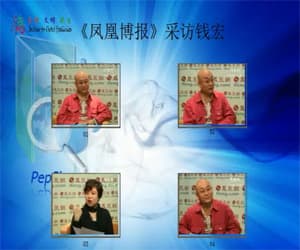 钱宏:中国的真实经验与未来走向(凤凰博报专... 2019/11/16
点击播放 中国的真实经验与未来走向《凤凰博报》专访钱宏主持人:...
超越认知偏蔽,适应历史变局!Transformation, Not Change: Piercing Cognitive Blind Spots to Embrace Historical Shifts!
发布时间:2025/05/27 公司新闻 浏览次数:344
Transformation, Not Change: Piercing Cognitive Blind Spots to Embrace Historical Shifts!
Transformation不是Change:超越认知偏蔽,适应历史变局!
——赞《旅美见闻847》
钱宏(Archer Hong Qian)
2025年5月25日,Barcelona ILUNION Hotels 311
战军兄的《旅美见闻847》写得实诚,终于穿透“黑川”“挺川”“川粉”“川黑”的情绪化标签,也超越了“川普大事件”的认知偏蔽,直击本质。难能可贵的是,《847》无心理阻隔地把川普“冲击和改变美国”的六大特征和中国的所谓“渐进式改革”联系起来比对,这就不是简单的旅美见闻,而在思维方式上有助于人们发现:Transformation与Change的本质不同,这个不同,从哲学、历史上看,非同小可!!

一、Change的局限:从“双革思维”到“互害机制”
中国的改革与文革——我称之为“双革思维”(Dual-Revolution Mindset)——看似翻天覆地,实则不过是巩固特权的Change。文革以“文化大革命”之名,动静不可谓不大,却因缺乏系统性转型的基因,注定失败。同样,美国第43、44任总统奥巴马的“Change”口号,未能破解华尔街资本与中国特权勾兑导致的产业空心化和铁锈带困境,反而让中产阶级陷入绝境,触发“占领华尔街”的全民怒潮。
“We the People”,美国宪法的立国基石,被资本精英掏空,正如“为人民服务”蜕变为“为人民币服务”(乡村败落、低人权“比较优势”“基建狂魔”)。这正是我反复强调的“全球化2.0互害机制”——贫富分化、文明冲突、资源结构性失衡——的破产时刻,呼唤的不是修修补补的Change,而是颠覆性的Transformation(参见小文《中国亟需Transformation,而不再是Change!》http://symbiosism.com.cn/10202.html)!
二、川普团队:Transformation的践行者
美国虽深陷危机,却幸运迎来了一头敢于冲撞“全球化2.0政治正确瓷器店”的“老公牛”——第45、47任总统川普。川普及其杰出团队不是玩弄“反建制”情绪,而是从骨子里皈依温斯罗普-里根阐释的“山巅之城”精神,践行宪法第一原理“We the People”。他的MAGA(Make America Great Again)不是被狭隘理解和夸张的“美国第一”,而是通过“20个承诺”恢复公民的生命自组织权能和孞心,倡导“Live and let live; don’t be evil and let evil be”的价值通律。
川普的认真,具体到每一个细节:白宫内阁会议公开透明,“不把灯放在斗底下”,拒绝黑箱操作。这与政客的“表演政治”或中国的“宫斗剧”形成鲜明对比。他知道这会付出政治代价、名声代价吗?我愿意“相孞”他懂——他是以总统之责“知其不可为而为之”!这种认真,胜过所有耍弄聪明的政客!
三、Transformation vs. Change:哲学与现实的碰撞
Change是渐进调整,范围小、风险低,但难以应对结构性失衡。中国的“双革思维”——从1978年“三中全会”到2001年加入WTO的渐进改革——虽取得经济成就,却因缺乏政治转型,始终受困于“固化语境”。温家宝2012年警告:“没有政治Transform,经济Change将得而复失。”如今,2025年,距离ROC台湾 1990年“圆山国是会议”已晚36年,顺便说一句,PRC大陆的“广场学运”其实比ROC台湾“野百合学运”早一年发生,可惜当局没有抓住机遇,而当下,时间窗口正在关闭!我只能在此遥祝PRC大陆人(公民、社会、政府及各党派)幸运警觉到“机不可失,时不再来”的古训之微妙!
Transformation是系统性重构,涉及思维方式(从追求确定性到拥抱不确定性)、价值观(以“愛之智慧”为导向)、生活方式(从权力垄断到交互共生)。ROC台湾的“圆山会议”通过多方协商促成宪政转型,川普的MAGA则试图终结全球化2.0的失衡,重构全球化3.0的共生秩序。
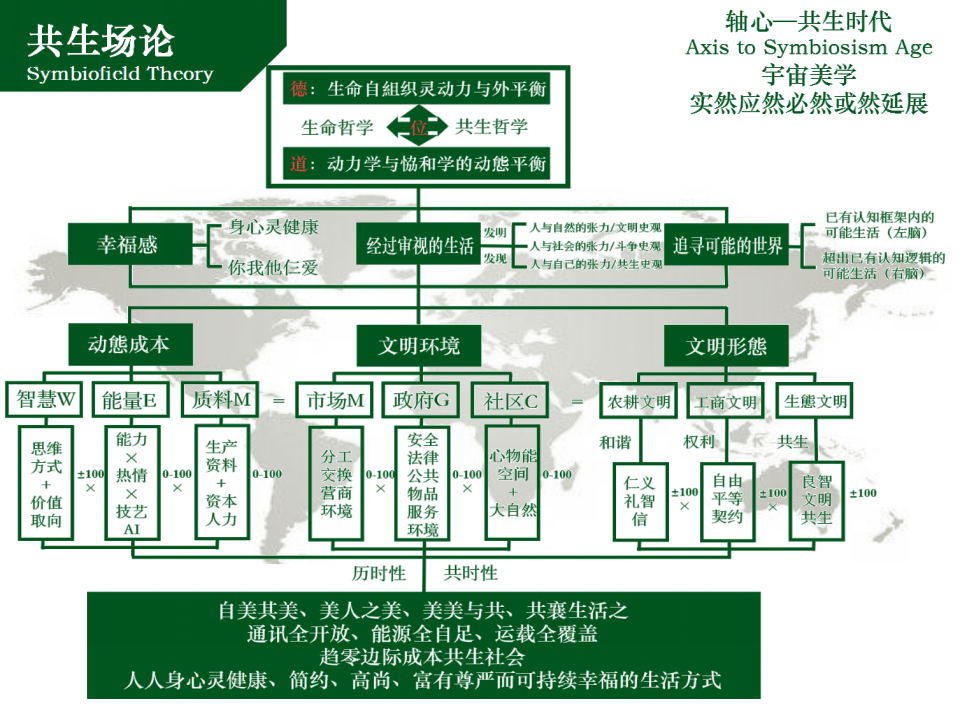
共生经济学(Symbionomics)的GDE价值体系,通过贝叶斯概率更新和拉普拉斯平滑,结合“C降本、E赋能、H健康、T信托、P和平”五因交互,提出“交互共生指数-贝叶斯定律-拉普拉斯算子”框架(参见《拥抱不确定性》),为Transformation提供了方法路径。
四、世纪之槛:中国与全球化3.0的抉择
中国利益集团若继续沉迷于所谓渐进式Change,以“大国家主义”和“发展中国家”双标绕圈子斩获已经非常稀薄的红利,将错失全球化3.0的历史机遇,付出“出局”的代价。川普团队的MAGA虽被强烈争议,却展现了Transformation的魄力:从所谓“贸易战”到《大美丽法案》,已然展现他试图打破全球化2.0的互害机制的团队决心。中国需要的,正是这种“政治-经济-文化三位一体”的转型,效法1990年ROC台湾“圆山会议”,主动召集公民、企业、学者、央地官员,开启多方协商的“国是会议”。顺便说一句,PRC大陆的“广场学运”其实比ROC台湾“野百合学运”早一年发生,可惜当局没有抓住机遇!
正如向松祚所言:“川普、马斯克在美国所做的,其实是中国最需要做的!”以“愛之智慧”为导向,拥抱不确定性,打破权力垄断,中国才能参与和融入全球化3.0的Transformation,迈向“臻美境界”,实现“Live and let live”的共生愿景。
五、结语:谁是三重代价的付出者?
川普的认真,是对“We the People”的忠诚践行,是对“山巅之城”精神的复兴。如果他成功了,那些嘲笑他“傻”、耍弄聪明的人,将付出三重代价:
• 认知代价:固守旧思维,被历史淘汰。
• 账本代价:经济与社会资源的错配损失。
• 出局代价:在全球化3.0中被边缘化。
全球化3.0已在路上,中国必须从Change转向Transformation,以“交互主体共生”的自觉孞念为指引,重构思维、价值与生活方式。唯有如此,才能避免“一念地狱”,迎来“一念天堂”!
注释:人在旅途,用电脑不方便,阅读本文,请参看2025年5月20日《中国亟需Transformation,而不再是Change!》见万维读者网https://blog.creaders.net/user_blog_diary.php?did=NTE2NDU4




Transformation is not Change—Don’t Play Clever Tricks
— In Response to Brother Zhanjun’s “Travel Observations in America #847” and My Resonance
Archer Hong Qian
May 25, 2025, ILUNION Hotels 311, Barcelona
Brother Zhanjun’s “Travel Observations in America #847” is written with sincerity. And sincerity can cut through emotional labels, surpassing the polarized narratives of “pro-Trump,” “anti-Trump,” “Trump fans,” or “Trump haters.”
What’s more encouraging is that in Observation 847, Trump’s six constructive shocks to the U.S. are compared with China’s so-called “gradual reform,” thereby revealing — at the level of thinking — the essential difference between Transformation and Change.
This is not an ordinary travelogue — it’s a breakthrough insight that clears away the fog!
This difference, viewed from a philosophical and historical dimension, is by no means trivial.
Take China’s reform and the Cultural Revolution, for example — excuse me, I’ve long referred to them as a form of “dual-revolution thinking.” Though the Cultural Revolution sounded grand with its title, “Great Proletarian Cultural Revolution,” its substance was merely a Change aimed at consolidating Maoist privilege — not a Transformation. Its failure was embedded in its very genetic code.
Likewise, the 43rd and 44th U.S. President Barack Obama once campaigned under the banner of “Change.” But in his eight years of governance, he not only failed to resolve the deindustrialization and rust-belt devastation brought by the collusion between Wall Street capital and Chinese privilege, he even further deepened the suffering of the American middle class — ultimately provoking the nationwide rage of “Occupy Wall Street.”
In other words, it wasn’t just the “silent rednecks” and the tragedy of the “hillbilly elegy” — even the spindle-shaped middle class and young professionals in the cities became infuriated. The founding principle of the U.S. Constitution — “We the People” — was, in effect, hollowed out and drained by elite capital, just as “serving the people” in China morphed into “serving RMB”!
This is what I have repeatedly called the collapse of the Globalization 2.0 mutual-harm mechanism — and it marks the historical moment calling for true Transformation! (See my article “China Urgently Needs Transformation, Not More Change!”)
By contrast, though America is rife with problems, it is still America. And history’s gift was to bring forth a “bull in the china shop” who dared to smash through the walls of political correctness — the 45th and 47th U.S. President Donald J. Trump.
Trump is not engaging in some marketing stunt of “anti-establishment sentiment.” He genuinely embraces and practices the “City upon a Hill” belief articulated by Winthrop and Reagan.
What he seeks to restore is not a narrow-minded slogan of “America First,” but to reinstate “We the People” as the foundation of the constitutional system — to revive each individual’s self-organizing connective power of life, and to reestablish a human and international value ethic of:
“Live and let live; don’t be evil and let evil be.”
Put simply: no man is an island. Every living being — individual, group, community, or nation — must become “salt and light” in the world. Each must “first set one’s own house in order,” thereby embodying the principles of:
“Appreciate your own beauty, respect the beauty of others, seek harmony in diversity, and co-thrive in symbiosis.”
This is precisely the social-structural Transformation advocated by the philosophy of Intersubjective Symbiosism.
Not superficial patchwork.
Not old medicine in new bottles.
But a fundamental leap — from value mechanism, lifestyle, and national governance all the way to the reordering of global civilization.
And such a leap?
Of course it shakes the heavens and the earth!
But this shaking is not the destructive reset of violent revolution — it is a rebuilding and rebalancing born of civilizational introspection.
Globalization 3.0 is already on the way.
And America will set the precedent. All other nations, under the primary premise of “setting their own structural house in order,” must either enter the game — or be left out!
I say this in all seriousness:
President Trump’s seriousness far surpasses that of all those politicians who only play clever tricks.
He’s so serious that even in every White House Cabinet meeting, he insists on not putting the light under a bushel — refusing to engage in “black-box operations.”
In today’s world — where politicians are actors and media the stage — isn’t that a rare and refreshing counter-current?
Does he know that such seriousness will cost him political capital and personal reputation? I can’t say for sure.
But I choose to believe — with trust and conviction — that he knows.
And that he acts in the name and responsibility of the presidency —
Knowing it may be impossible, yet doing it anyway.
So I say:
If Trump succeeds,
Whoever mocks him as a fool or tries to outplay him,
Will pay a real price—
First, the price of cognitive misjudgment,
Then, the price in actual accounts,
And ultimately, the price of being out of the game in terms of true vision and scale.
2025年05月28日下午12:02
国是会议,是中华民国非正式的任务型政治会议机构,由政府针对重要政治或经济议题,由朝野政党与民间人士共同召开,以决定国家重要的政策方针。其起源于李登辉政府时期;在李登辉执政期间,曾召开过两次大型国是会议,加速了台湾民主化的发展。
1990年,时任总统李登辉会见野百合学运学生代表,同意召开国是会议,以解决重大宪政争议。6月28日,在国民党与民进党的支持下,于台北市圆山大饭店召开此次会议。会中针对“国会改革”、“地方制度”、“中央政府体制”、“大陆政策与两岸关系”、“宪法与临时条款修正方式”等五组议题逐一讨论,最后达成“终止动员戡乱时期”、“回归宪法”、“废止《动员戡乱时期临时条款》”、“修宪采取一机关两阶段方式”、“修宪以《中华民国宪法增修条文》名之”等共识,并一一透过法定体制逐一落实。
根据会议结论,1991年5月1日,总统令公布废止《动员戡乱时期临时条款》,国会代表恢复定期改选,“万年国会”现象结束,台湾的民主化进入新阶段。
1990年,民进党为参与国是会议而起草《民主大宪章》,并在国是会议中提出;其中主张总统由辖区国民直接选举产生,此宪政主张获得与会者共识,从而使1996年实现首次总统直选。
刘向《新序・杂事二》:楚庄王问于孙叔敖曰:“寡人未得所以为国是也。”孙叔敖曰:“国之有是,众非之所恶也。臣恐王之不能定也。”王曰:“不定独在君乎?亦在臣乎?”孙叔敖曰:“国君骄士曰:‘士非我无逌富贵。’士骄君曰:‘国非士无逌安强。’人君或失国而不悟,士或至饥寒而不进,君臣不合,国是无逌定矣。夏桀殷纣,不定国是,而以合其取舍者为是,以不合其取舍者为非,故致亡而不知。”庄王曰:“善哉!愿相国与诸侯士大夫共定国是,寡人岂敢以褊国骄士民哉!”
《后汉书》卷28上〈桓谭冯衍列传〉:“昔楚庄王问孙叔敖曰:‘寡人未得所以为国是也。’叔敖曰:‘国之有是,众所恶也,恐王不能定也。’王曰:‘不定独在君,亦在臣乎?’对曰:‘“君骄士,曰士非我无从富贵;士骄君,曰君非士无从安存。人君或至失国而不悟,士或至饥寒而不进。君臣不合,则国是无从定矣。’庄王曰:‘善,愿相国与诸大夫共定国是也。’”
国是会议,是不同于暴力革命和特权改革“双革思维”的富有传统政治智慧与现代政治文明耦合的伟大创举,是基于生命自组织连接平衡与再平衡的交互主体共生哲学,在国家政治生活制度建构过程中的践行方式!
国是会议,是1990年代ROC台湾主体特权型政治体制走到历史临界点之际,台湾人上下左右发挥公民、社会、政府三大生命自组织力,交互主体(Intersubjective)成功推动的国体华丽转身(Transformation)!
35年后的PRC大陆,面临同样历史的历史临界点,大陆人要不要、能不能同样召开一次国是会议?这是对大陆人勇气、智慧与生命活力的考验!
Archer Hong Qian
2025年07月12日下午11:28