

New Articles
-
 文明在创造中前行 2026/10/10
文明在创造中前行 Civilization Advances Through Creation 从现代世界的确权、制权、创富、自序,到AI—SI时代的组...
- 殖官主义:享受决策的好处,把代价留给他人 2026/10/09
殖官主义:享受决策的好处,把代价留给他人Bureaucolonialism / Reproductive Officialdom: Enjoying the Benefits of De...
- K为什么大腹便便? 2026/10/08
K为什么大腹便便? Why Is K So Big-Bellied? ——从K-Economy病型学到K→Q经济诊疗 —From K-Economy Typology to K→Q Econom...
- 中国K ?——从“繁荣与收缩并存”到共生经济学的... 2026/10/07
中国K ? ——从“繁荣与收缩并存”到共生经济学的K→Q经济诊疗学 钱 宏(Archer Hong Qian) “K型分化”正在成为解释中国经济结...
共生思想理论前沿
THE THEORY
-

-
-
-
 关于中文“共生”翻译及对应的人、事、物之说明
关于中文“共生”翻译及对应的人、事、物之说明 ——Symbiosism:Charles Thomas Taylor &Qian hong又一次量子缠绕...
查看详细说明
Speech
-
 三大自组织货币的共生格局——宏观世界之数字货币 2021/07/08
三大自组织货币的共生格局 ——宏观世界之数字货币 钱 宏 The Institute for Global Symbiosism(...
-
 新汉字yǜ的释义 2019/11/16
语从金音玉(Yǜ):金口玉言,一诺千金,性人诚恳、执信; &n...
-
 钱宏:中国的真实经验与未来走向(凤凰博报专... 2019/11/16
点击播放 中国的真实经验与未来走向《凤凰博报》专访钱宏主持人:...
为什么恢复使用“孞”字?
发布时间:2026/07/15 公司新闻 浏览次数:144
为什么恢复使用“孞”字?
Why Restore Xìn (孞)?
——语间互证,和而生物:数位—量子共生时代的语言学使命
Interlingual Verification and “Harmony Generates New Life”:A Linguistic Mission for the Digital–Quantum Symbiotic Age
钱宏(Archer Hong Qian)
引子 周有光的“两头真”和“两头考”
为什么恢复使用“孞”?许多朋友看到我的笔名“孞烎”,不认识,却又不敢问,今天算是一并回答了。我恢复使用“孞”,并不是为了制造一个新概念,更不是为了玩文字游戏,而是希望借助这个几乎被遗忘的古字,把“信”重新带回生命本身。
其实,这事儿源自我对中国语言学家周有光先生的拜访。
20年前的2006 年,正值“汉语拼音之父”周有光先生100 周岁(满百岁),当时随着中国跨入手机与互联网飞速普及的“信息时代”,他敏锐地察觉到“信息”已成为人类不可或缺的刚需,因而他在为《学思集》写的后记中,将正式把“信”,作为“食衣住行”后的第五种生活方式,即:食、衣、住、行、信,来加以表达。
2010年5月我有幸第一次拜访周先生,他给我讲到一个“两头真”和“两头考”的观点。
周先生说人这一生,年轻时候天真盲从,年老时候开始探索真理,这叫做两头真。他退休后就想读点专业之外的书,想知道一些大事件的文化和历史背景,他发现“信史”不多,考古不易,考今更难。特别是了解自己的祖国最难,因为历代帝王歪曲历史,掩盖真相。苏联是新中国的原型,中国改革开放,略作修正,未脱窠臼。苏联瓦解以後,公开档案,俄罗斯人初步认识了过去,中国还所知极少。美国是当今唯一的超级大国,由于戴高乐主义反美,共产主义反美,伊斯兰教原教旨主义反美,美国的面貌变得模糊不清。了解真实的历史背景困难重重。可是旧纸堆里有时发现遗篇真本,字里行间往往使人恍然大悟。先知是自封的,预言是骗人的。现在是信息爆炸,食衣住行信都是刚需,对信息的辨识和发布,“信”字的重要性,远超前面四个字,我说“要从世界看中国,不要从中国看世界”,就是发现“信”字不简单,直接关系我们的心智状态和世界观。
周先生特别提醒我,千万不要小看文字,他说,“语言使人类别于禽兽,文字使文明别于野蛮”。文字把语言传到远处、留给未来,开创“文明时代”。以语言和文字为基础,人们进一步创造各色各样的“传信技术”:电话、电报、录音、录像、广播、电视、电脑、手机,日新月异,层出不穷。手机小巧玲珑,集多种功能于一掌:通话、短信、摄影、会面、名录、计时等等;功能不断增加,将来还会有翻译电话,我说汉语,你听到英语。信息技术把全世界的亲朋好友都聚会到眼前耳边,共度良辰佳节。可是,小钱注意到没有,信,也是一权利,小小手机一掌握,世界尽在其中,这个信是不是真,是不是可信,进而是不是值得托付?就成为了问题。
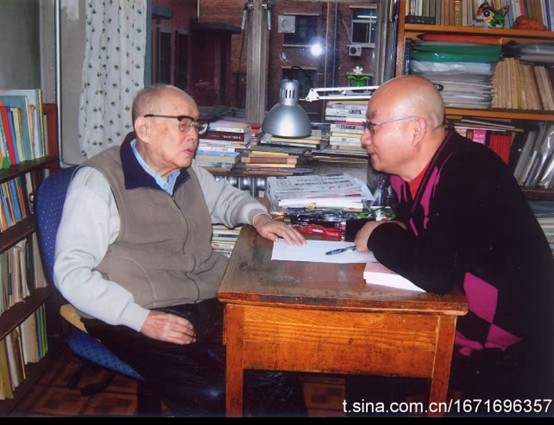
周先生正好说到我最感兴趣的文字,于是就冒昧地说,如果能这样理解“信”字,那早在宋代和明代,就出现了一个信的古字或异体字,也是个会意字“孞”字,在字形上由“子”和“心”构成 (上子下心),表示心中诚实、真实无欺,信守承诺,如赤子或君子般纯洁高贵的信任之心。我因为特别喜爱这个字,就把它拿来和另一个古字“烎”(Yin)组合成“孞烎”,做我的笔名。现在看来,这个孞,可能更适合用来表达先生要表达的“信”字真实涵义。周先生说,他懂我的意思,这个“孞”(音Xìn)字确实更贴切,不过语言是约定俗成,大家早已习惯了用“信”字,要改过来很难,就看大家能不能养成习惯了!
十多年前的这次拜访,大大增强了我的信心。
今天人们谈“信”,更多想到的是:诚信(Credit);信任(Trust);信用(Creditworthiness);信息(Information);通信(Communication);甚至短信、微信,当然也包括信托(Trusteeship)。
然而,《圣约》(Holy Bible)所讲的Faith(信仰),《独立宣言》所隐含的Trust(信任),以及生命世界中普遍存在的交互信托(Trusteeship),都远远超过了“人言为信”的层次。在这个意义上,采用“上子下心”的孞,更能表达信仰、信任、信托的意思。因为这里的“子”,不只是年龄意义上的儿童,而是每一个被造、具有生命主体性的“人”;这里的“心”,也不仅仅是情感,而是生命内在的回应能力、守约能力、共襄能力,是Heart,也是Mind,是Emotion,也是Reason,是Faith,也是Understanding。
孞,是生命主体回应造物主、回应他人、回应万物、回应未来的一种持续守约、持续连接、持续共襄的生命状态。所以,我冒昧地认为,我们应该比“因信称义”(奥古斯汀)更进一步提出:因孞守约和因孞成序。
因孞守约,是强调人与造物主之间圣约关系的恢复;
因孞成序,是强调的是生命在不断守约、不断回应、不断交互之中,自然展开文明秩序。
于是,“孞”便不只是一个字,而成为连接神学、自然哲学与组织哲学的一座桥梁。它把《圣约》的Faith、《独立宣言》的Trust,以及生命自组织连接动态平衡的自然法则,重新汇聚到同一个生命过程之中。
因此,“生命本自具足,又非独存”,“凡事交互主体共生”,也“因孞连接”起来。
由于每一个生命都本自具足,所以具有不可让渡的人格与尊严;又因为每一个生命都非独存,所以必须通过持续守约、持续回应、持续共襄、交互共生,才能形成家庭、社区、组织、国家以及人类文明。
自拜访周有光先生后,孞字对我来说,就不只用来作笔名,我决心要在生活中重新启用“孞”。
今天,我甚至有一个属于数位—量子共生时代的语言学野心。这就是中英文互证,和而生物,突破单一语言边界,追寻可能的世界。
维特根斯坦曾经提醒人们:“我的语言的边界,就是我的世界的边界。”
这句话揭示了语言与世界之间一种无法轻易割裂的关系。人并非先拥有一个完整无缺的世界,然后才使用语言去描述它;人所能发现、辨认、理解和表达的世界,往往已经受到自身语言结构、词汇传统与表达习惯的深刻影响。
语言不仅为事物命名,也影响人如何区分事物、连接经验、形成概念、组织思想和想象未来。一个人的语言中缺少某种概念,他未必完全看不见相应的现象,却往往难以准确识别、稳定保存并充分展开它。一个文明的语言中长期缺少某种表达,其思想世界也容易留下某种难以察觉的空白。
然而,维特根斯坦所说的“我的语言”,不应被理解为某一种语言必须成为人不可逾越的牢笼。恰恰相反,既然语言边界构成了世界边界,那么,不同语言之间的交互、翻译、互证和创造,也就可能帮助人不断拓展自身的世界。
一种语言为另一种语言打开新的观察角度,一种文字为另一种文明保存不同的生命经验,一种文化中的古老概念,也可能在新的历史处境中获得新的解释力。
因此,突破单一语言的边界,并不意味着消灭语言差异,更不意味着寻找一种可以取代所有语言的“唯一正确语言”。真正值得追求的,是不同语言主体之间的彼此进入、彼此照亮和彼此生成。
这便是我所说的:中英文互证,和而生物。
一、优势语言不等于唯一思想主体
目前,世界当代科技、人文、宗教和哲学文献,大部分使用英语表达。英语在国际学术、科技研发、商业活动、公共传播与数字平台中占据绝对优势地位。法语、德语、西班牙语、俄语、阿拉伯语、日语等语言也保存并承载着重要的文明传统,而以中文直接进入当代世界知识体系和思想前沿的内容,仍然只占很小比例。
这个现实无须回避。
英语已经成为当代人类知识交流最重要的通用媒介。大量新技术、新制度、新理论和新概念,首先用英语得到命名、讨论和传播。不会使用英语,的确容易受到当代知识边界的限制。
但是,语言的传播优势不等于思想的绝对优势,知识文献的数量优势也不等于真理的独占权。
英语能够成为当代世界的优势语言,是漫长历史、工业革命、科学发展、海洋贸易、制度创新、教育体系、国际秩序与科技平台共同作用的结果。这一历史性优势值得承认和学习,却不能成为忽视、贬低乃至抹杀其他语言主体性的理由。
任何一种语言,都不能穷尽生命。
任何一种文明,也不能独占世界的全部意义。
英语中的许多概念拥有清晰的分析结构、制度传统和现代知识背景;中文则在文字构形、关系体察、生命经验、历史积淀与意象生成方面,保存着另一种思想可能。其他语言同样拥有无法被英语完整替代的经验方式和概念资源。
当一种优势语言把自己的表达习惯误认为普遍真理,把自身概念的边界误认为世界本身的边界,语言优势便可能转化为语言世界里的自我中心主义。
这种自我中心主义,并不只存在于西方。
中文世界也可能沉浸于自身历史词汇和文化想象之中,误以为古老文字天然能够解释一切现代问题,或者把难以翻译当成不可理解,把文化特殊性变成拒绝交互的屏障。
无论东方还是西方,只要把自己的语言当成世界的唯一尺度,都会在不知不觉中缩小自身的世界。
二、大语言模型能够解决翻译,却不能替代思想的交互创造
进入数位—量子共生时代,不同语种之间的翻译障碍,正在被大语言模型迅速降低。
过去,掌握另一种语言往往需要多年训练;许多重要思想也因为翻译迟缓、语义损耗和传播渠道有限,长期停留在各自语言内部。今天,大语言模型已经能够在多种语言之间进行较为流畅的转换。随着技术继续发展,实时翻译、语境识别、术语协调和跨语种表达,将越来越自然地成为数位生活的日常基础设施。
但是,机器可以转换语言,却不能因此取消语言主体。
翻译可以把一种语言已经表达出来的内容转移到另一种语言之中,却不能自动代替不同语言使用者对世界进行新的观察,更不能消除不同语言传统之间富有创造力的张力。
真正重要的问题,不只是:
这句话如何从中文翻译成英语?
或者:
这个英文概念如何找到一个中文对应词?
更重要的是:
当中文和英文从各自不同的历史经验出发,共同面对同一个生命、科技、组织或文明问题时,是否可能生成任何一种单一语言原先都没有充分表达过的新思想?
这正是“和实生物,同则不继”的语言学意义。
“和”不是把不同声音压缩成同一种声音,也不是把弱势语言吸收到优势语言之中。“和”是差异主体保持自身生命,同时进入真实交互,由此生成原先并不存在的新认识、新概念与新世界。
翻译解决的是互通问题。
互证解决的是认知问题。
融通出新解决的,则是文明创造问题。
因此,大语言模型越能够解决翻译,人类越需要珍惜不同语言主体的思想创造。因为当语言转换的技术成本不断下降以后,真正稀缺的将不再只是翻译能力,而是各个语言主体能否从自身经验出发,提出值得全人类共同思考的问题。
三、文字是文化文明的“获得性基因”
语言不是任意摆放的符号,文字也不只是记录声音的工具。
文字是一个文明在漫长生活过程中形成的“获得性基因”。
生物基因保存生命演化的信息;文字则保存一个民族和文明在生产生活、家庭关系、宗教信仰、政治制度、自然观察和精神探索中获得的经验。
一个字的形体、结构、音义与历史使用,往往凝结着某种独特的认知方式。
这种“获得性基因”不会像生物基因那样直接遗传,却会通过语言教育、经典阅读、家庭记忆、公共生活和思想创造,在一代代人之间继续传递。它既保存过去,也可能在新的时代重新被激活。
随着人类认识不断拓展和深化,各种语言都会产生新字、新词和新的表达方式。科技革命会创造过去没有的对象,文明转型会暴露旧词难以涵盖的新关系,人的自我理解也会不断要求语言扩展自己的边界。
因此,语言不会停留在一部词典完成的时刻。
恢复古字、重新解释旧词、创造新词、组合跨语言概念,都可能成为文明继续生长的方式。
“孞”字的重新启用,就是这样一个微小而具体的案例。
四、为什么恢复使用“孞”?
“孞”(xin),见于《康熙字典》。
它是“信”的古字,与“信”同音、同义,却具有不同的文字结构。
我恢复使用“孞”,并非创造一个新字,也不是为了刻意标新立异,而是希望借助这个曾经存在、后来较少使用的古字,把“信”重新带回生命关系的深处。
“信”从字形上通常被解释为“人之言”。
这种结构凸显了言语、承诺、诚信与可验证性。人说出的话是否真实,作出的承诺是否履行,构成了社会生活中“信”的重要基础。没有言而有信,人与人之间的协作就难以持续。
但是,信若只停留在“人之言”,仍然不足以表达信仰、信任、守约、受托与生命交互关系的全部内涵。
“孞”则直接呈现出“子之心”的结构。
这里的“子”,可以指向每一个由造物主创造、具有独立人格和生命主体性的个体;这里的“心”,既是 heart,也是 mind。
中文的“心”,没有把人的情感、思想、意志、判断、良知与智慧截然分开。它既能够感受,也能够思想;既能够爱,也能够辨认;既能够相信,也能够判断;既能够回应召唤,也能够承担责任。
在这个意义上,“心”不是与理性对立的情感器官,而是生命主体感受、认知、选择、回应和守约的内在中心。
因此,“孞”所凸显的,不只是一个人说了什么,更是一个生命主体如何从心出发,进入关系、回应关系、守护关系,并在持续交互中生成秩序。
“信”与“孞”同音同义,并无彼此排斥的必要。
恢复“孞”,不是否定“信”,而是重新显现“信”在“人之言”之外长期存在的“子之心”维度。
言语可以表达承诺,心则使承诺成为真实的生命回应。
由“人之言”进入“子之心”,“信”便不再只是外在信用,也不只是一个静态判断,而成为持续发生的关系过程。
五、“孞”是关系过程
人们通常把“信”理解为某种主观状态:
我相信某件事。
我信任某个人。
我接受某种教义。
我相信某个机构值得依靠。
这些理解都有其意义,却容易把信局限在个人内部,仿佛信只是主体心中拥有的一种态度。
“孞”所要重新凸显的,则是信的关系性与过程性。
孞,是造物主与人之间、人与人之间、人与各从其类的万事万物之间,在一定“时—空—意”条件中不断约定、回应、履行、修复和生成的关系过程。
它既包含 Faith,也包含 Trust;既关乎 Covenant,也关乎 Trusteeship;既发生于 heart,也发生于 mind。
Faith强调生命对造物主的相信、回应与委身。
Trust强调生命主体之间能够彼此托付、彼此期待。
Covenant强调关系不是任意的偶遇,而具有承诺、边界与责任。
Trusteeship强调接受托付者不能占有受托对象,而应忠实服务于受益主体。
这些英文概念彼此区分,有助于现代思想进行精细分析;中文“孞”的字形结构,则帮助我们看到它们在生命深处可以具有共同的关系根基。
这就是中英文互证。
中文并不取代英语中的 Faith、Trust、Covenant 和 Trusteeship,英语也不负责把“孞”拆解完毕。二者在交互中彼此照亮,使我们看到:
信不是孤立主体的心理状态,而是生命在约中持续回应、在托付中承担责任、在交互中生成秩序的过程。
因此,可以说:
因信守约(Through Faith, we enter the Covenant);因孞成序(Through Xìn, we establish Order);因孞连接(Through Xìn, we remain Connected)。
“因信守约”(Covenant),揭示的是人与造物主之间的圣约关系。信使人回应召唤,进入约,并在恩典中学习守约。
“因孞成序” (Order),揭示的是这种守约关系如何进一步展开到人与人、人与组织、人与自然、人与科技之间,在持续回应和彼此成全中生成生活秩序、组织秩序与文明秩序。
“因孞连接”(Connectivity),则进一步揭示,秩序并不是关系的终点,而是关系不断生成的起点。孞使彼此独立而具足的生命主体,在尊重差异、守护边界和履行托付的前提下,进入持续而真实的连接。这种连接不是简单的信息交换,不是技术网络的节点耦合,也不是组织权力的控制延伸,而是生命主体之间基于信任、受托、责任与共同成长所形成的交互连接(Intersubjective Connectivity)。正是在这种不断生成、不断回应、不断更新的连接之中,生活得以丰富,组织得以可信,文明得以延续,人与AI、人与自然以及各从其类的万事万物,也才能在数位—量子共生时代,共襄生成、和而生物。
三者形成了一种非常工整的文明递进关系:
因信守约——关系得以建立;
因孞成序——关系得以稳定;
因孞连接——关系得以持续生成。
这就自然通向:
生命本自具足,又非独存。因为:
本自具足,所以需要约,彼此尊重;
又非独存,所以形成序,彼此成全;
交互共生,所以不断连接,彼此生成。
从而形成一种真正完整的文明逻辑,而且也为后面的愛之智慧孞態场/网(Amorsophia MindsField,AM)奠定了最自然的哲学基础。
六、从律法之约、福音之约到共生之约
在这一语言哲学基础上,律法之约、福音之约与共生之约便能够形成一条连续而叠加的文明脉络。
律法之约首先确立关系的边界。
它告诉人,生命不可任意伤害,承诺不可任意背弃,权利不可任意侵夺,人与造物主、人与人之间的关系具有不可随意逾越的秩序。
律法使自由不至于滑向任性,使权力不能自称正义,使不同主体能够在边界中共襄生活。
福音之约则恢复被罪、恐惧、骄傲和彼此伤害破坏的关系。
它没有简单取消律法,而是使人能够在恩典、爱与信之中重新回应约、进入约和履行约。它使守约不再只是外在强制,而成为内在生命的更新。
进入数位—量子共生时代,律法之约与福音之约并未失效,却需要进一步展开为人与组织、人与AI、人与数位系统、人与全球生态之间的共生之约。
共生之约不是对前两者的替代,也不是创造一种凌驾于宗教之上的新信仰。它是在律法所确立的边界和福音所恢复的关系之上,面对新的技术能力、组织形态与全球相互依存,展开新的文明实践。
律法回答:
什么不可逾越?
福音回答:
破裂的关系如何得到恢复?
共生回答:
不同生命主体如何在新的科技与组织条件下继续共襄生活、彼此成全?
因此,三者不是相互取代的三个时代,而是不断展开、彼此叠加的约与序。
由律法之约建立边界之序,由福音之约恢复生命之序,由共生之约展开数位—量子时代的交互主体共生之序。
七、生命本自具足,又非独存
“孞”之所以能够成为关系哲学的核心,是因为生命本身具有一种双重真实:
生命本自具足,又非独存。
生命本自具足,意味着每一个生命都具有自身的价值、尊严和主体性。人的人格不是由组织制造的,人的基本权利也不是由政府、公司、平台或算法赏赐的。
正如《独立宣言》所表达的:
We hold these truths to be self-evident, that all men are created equal, that they are endowed by their Creator with certain unalienable Rights.
这一表达与中文语义互证:造物主创造平等的人,并赋予他们不可让渡的权利。
然而,生命又非独存。
没有任何生命能够脱离造物主、他人、家庭、自然、社会与历史而独自完成自身。生命的成长需要关系,人的人格需要回应,权利的实现需要制度,思想的创造需要语言之间的相遇。
生命本自具足,防止关系吞没人。
生命又非独存,防止个人或共同体把自己封闭为世界的中心。
二者相合,便自然导向:
凡事交互主体共生(Everything Intersubjective Symbiosism)。
交互主体共生不是要求主体放弃自身,也不是把差异压缩成统一。它要求各个生命主体在保持自身独特性的同时,彼此承认、彼此回应、彼此守约、彼此受托,在差异中生成新的生活可能。
这也正是语言之间应有的关系。
英语无需放弃其现代知识优势,中文也不必通过模仿英语来证明自身价值。不同语言可以各美其美、美人之美,在彼此互证中拓展各自世界的边界。
八、从“孞”到愛之智慧孞態场/网
当“孞”被理解为生命主体持续守约、持续连接、持续回应和持续成序的关系过程时,愛之智慧孞態场/网 AM(Amorsophia MindsField)的提出也就不再显得突然。
AM不是简单增加一个AI系统,也不是把更多智能设备连接成更大的数字网络。
互联网主要连接信息。
物联网主要连接事物。
AI系统主要处理数据、模式和智能能力。
AM所要进一步承载的,则是生命主体之间的孞態关系:谁在托付,谁在受托;谁作出承诺,谁承担责任;技术服务于谁,组织为何存在;生命如何在heart与mind、Faith与Trust、Covenant与Trusteeship之间维持动态而真实的连接。
MindsField中的“Minds”,不是许多个孤立大脑的集合,而是具有heart与mind、能够感受、思想、判断、回应和守约的生命主体。
Field也不仅是工程意义上的节点网络,而是关系持续生成、彼此影响、动态平衡和共同成序的文明场。
因此,AM首先是一种文明关系场,其次才表现为数位—量子时代的生活基础设施。
“孞”的恢复使用,使中文世界能够以“子之心”的结构,重新体会Trust并非外加于生命的技术协议;而Faith、Trust、Covenant、Trusteeship、Mind与Field等英文概念,又帮助中文世界把“孞”的生命直觉展开为可以进入现代组织、制度设计和科技实践的分析结构。
这不是中文为英语提供装饰,也不是英语为中文提供认证。
这是两种语言彼此进入、彼此修正、和而生物的结果。
九、从语言互证到重建组织孞托
“重建组织孞托”并非与语言哲学无关。
相反,组织危机往往首先表现为语言关系的异化。
组织把“授权”说成服从,把“服务”说成管理,把“安全”说成全面监控,把“创新”说成无限扩张,把“公共利益”说成组织利益,把“人工智能”说成可以代替人的最终裁判。
语言一旦被权力垄断,组织就能够重新命名现实,遮蔽受托关系的颠倒。
因此,重建组织孞托,也要求重新恢复词语与生命真实之间的关系。
组织不是人的创造者,而是生命的受托者。
AI不是生命价值的来源,而是受托组织可以使用的能力。
政府、企业、学校、教会、平台和国际机构,都必须在目的、权力、程序、责任和结果上证明自己值得生命托付。
这里的“信托”,既需要制度意义上的Trusteeship,也需要生命关系意义上的“孞”。
没有孞,信托会退化成法律技术。
没有信托,孞又容易停留在私人愿望。
孞使制度拥有生命关系的基础,信托使生命关系获得可验证、可约束、可追责的组织形式。
于是,语言哲学、自然哲学、神学、组织哲学与科技实践,在这里汇聚为同一条脉络:
造物主创造平等的人,并赋予他们不可让渡的权利;
人因信进入约,因孞守约并成序;
生命本自具足,又非独存;
人由此建立组织,托付其维护生命、权利与共同生活;
科技与AI只能作为受托能力,不能成为生命的主人;
AM则使这种孞、约、序与托付,在数位—量子时代获得新的生活基础设施。
十、突破单一语言边界,追寻可能的世界
维特根斯坦所提醒的语言边界,既是一种限制,也是一种召唤。
语言限制人已经能够看见和表达的世界,却也为人提供不断拓展世界的入口。
当一个中文古字“孞”,与Faith、Trust、Covenant、Trusteeship、Heart、Mind和Field相遇时,发生的并非简单的词义对应,而是一种新的思想生成。
中文帮助英语世界看到,Heart与Mind原本可以同在一个“心”中;信也不只是命题确信,而是“子之心”进入关系、回应托付和生成秩序的过程。
英语帮助中文世界看到,信可以进一步区分为Faith、Trust、Covenant和Trusteeship,并落实到现代权利、组织责任、制度边界与科技治理之中。
双方都没有因为交互而失去自身。
它们反而在差异中拓展了各自的世界。
这就是伯阳父公元前8世纪就发现的:“和实生物,同则不继”。
因此,数位—量子共生时代的语言使命,不是让所有人说同一种语言,也不是让所有思想服从优势语言的表达规范,而是借助大语言模型提供的翻译能力,使不同语言主体更充分地进入人类性参与的思想创造。
习惯使用优势语言的人,需要特别警醒:便利的国际传播不能成为轻视其他语言经验的理由,概念的流行也不意味着它已经穷尽现实。
使用其他语言思考和表达的人,同样不必妄自菲薄或固步自封。语言使用规模的大小,并不直接决定思想价值的高低。一种语言只要仍然能够发现生命的新层次、提出文明的新问题、创造世界尚未拥有的表达,它就仍然是人类不可替代的思想主体。
文字是文化文明的获得性基因。
翻译使语言彼此可达。
互证使思想彼此照亮。
和而生物,则使人类不断突破已有语言的边界,追寻那些尚未被任何单一语言完整命名的可能世界。
因此,我恢复使用“孞”。
它不是对“信”的取代,而是对“信”的生命维度的重新显现;不是回到古代,而是让一个古老文字重新进入数位—量子共生时代;不是中文的自我封闭,而是中英文互证所打开的一条新路。
信,是约的起点;孞,是约的生命。
因信守约,因孞成序。
中英文互证,和而生物。
突破单一语言边界,追寻可能的世界。
“维特根斯坦的语言边界—优势语言与多语言主体—大语言模型—文字作为获得性基因—恢复孞字—heart与mind—因信守约、因孞成序—三约叠加—AM—重建组织孞托”连成完整推导。
孞 烎2026年7月5-15日凌晨·记于温哥华
Why Restore Xìn (孞)?
Interlingual Verification and “Harmony Generates New Life”
A Linguistic Mission for the Digital–Quantum Symbiotic Age
Archer Hong Qian
Introduction
I have a linguistic ambition for the Digital–Quantum Symbiotic Age:
to enable Chinese and English to illuminate one another, to let harmony generate new life, to move beyond the boundary of any single language, and to explore worlds that no single language can fully describe.
Ludwig Wittgenstein once wrote:
“The limits of my language mean the limits of my world.”
This observation has become one of the most frequently quoted insights in modern philosophy. Yet it is often misunderstood.
Language is not merely a tool that labels an already completed world. Rather, it shapes how we distinguish reality, preserve experience, organize concepts, and imagine the future. We do not first possess a complete world and then choose words to describe it; instead, our world gradually emerges through the language in which we live and think.
A language lacking certain concepts does not necessarily make corresponding realities invisible. It does, however, make them more difficult to recognize, preserve, and develop. Likewise, when an entire civilization lacks expressions for particular dimensions of experience, parts of its intellectual landscape may remain unexpectedly unexplored.
Yet Wittgenstein’s “my language” should never be understood as a prison.
If language defines the horizon of our world, then dialogue among languages offers the possibility of expanding that horizon.
One language may reveal what another has overlooked.
One civilization may preserve experiences that another has forgotten.
Ancient concepts may acquire new explanatory power when placed within new historical circumstances.
For this reason, moving beyond the boundary of a single language does not require eliminating linguistic diversity, nor does it require searching for one universal language capable of replacing all others.
The real task is something far more demanding:
different linguistic subjects entering one another’s worlds, illuminating one another’s insights, and together generating meanings that neither language could have produced alone.
This is precisely what I mean by
Interlingual Verification.
And it is also what an ancient Chinese expression has long suggested:
Harmony generates life; uniformity cannot sustain it.
I. A Dominant Language Is Not the Only Thinking Subject
Today, English unquestionably occupies a dominant position in global science, technology, commerce, diplomacy, philosophy, and digital communication.
Most contemporary research in artificial intelligence, biotechnology, economics, and institutional innovation is first written in English. French, German, Spanish, Russian, Arabic, Japanese, and many other languages continue to preserve important intellectual traditions, while works originally written in Chinese represent only a small fraction of the world’s contemporary knowledge production.
This reality should neither be denied nor resented.
English has become humanity’s most influential medium of international communication because of a long historical process involving scientific revolutions, industrialization, maritime trade, institutional innovation, educational systems, and the emergence of today’s digital platforms.
Its success deserves respect.
It also deserves to be learned.
Yet the predominance of one language does not imply the monopoly of thought.
The numerical superiority of publications does not confer exclusive ownership of truth.
No language exhausts life.
No civilization encompasses the whole of reality.
English offers remarkable analytical precision, institutional vocabulary, and scientific rigor.
Chinese preserves unique ways of perceiving relationships, living experience, historical continuity, symbolic imagination, and the dynamic interplay between humanity and nature.
Other languages preserve yet other dimensions of human existence that cannot simply be translated away.
Whenever a dominant language mistakes its conceptual framework for reality itself, linguistic advantage quietly turns into linguistic centrism.
This danger is not confined to the West.
Chinese speakers may likewise imagine that classical expressions automatically solve modern problems, or mistake cultural uniqueness for intellectual self-sufficiency.
Whether Eastern or Western, whenever a civilization mistakes its own language for the world’s final measure, it unknowingly narrows the very world it seeks to understand.
II. Large Language Models Will Remove Language Barriers, But Not Human Creativity
The emergence of large language models marks one of the greatest transformations in the history of language itself.
For thousands of years, mastering another language required years—often decades—of disciplined learning. Great philosophical works, scientific discoveries, and religious traditions frequently remained confined within their own linguistic communities because translation was slow, costly, and inevitably imperfect.
That age is rapidly coming to an end.
Large language models are already making multilingual communication remarkably natural. As AI continues to evolve, real-time translation, contextual interpretation, and cross-linguistic collaboration will become ordinary features of everyday life.
This is an extraordinary achievement.
Yet it also creates a profound misunderstanding.
If machines can translate every language into every other language, some may conclude that linguistic diversity will gradually become irrelevant.
I believe precisely the opposite.
The more perfectly machines translate, the more valuable human linguistic diversity becomes.
Translation transfers meanings that already exist.
It does not create meanings that have never existed before.
An AI system may accurately translate an English sentence into Chinese, or a Chinese sentence into English. It may preserve grammar, terminology, and even rhetorical style with astonishing precision.
Yet it cannot replace what occurs when different linguistic communities confront the same reality from different civilizational experiences.
The essential question is therefore no longer:
How should this sentence be translated?
Nor even:
Which Chinese word best corresponds to this English concept?
The deeper question is:
When Chinese and English approach the same questions of life, technology, organization, and civilization from their own historical experiences, can they together discover ideas that neither language has previously expressed?
This, to me, is the true significance of interlingual verification.
Translation solves the problem of communication.
Interlingual verification advances the work of understanding.
Their creative convergence opens entirely new possibilities for civilization.
This is precisely what an ancient Chinese expression has always implied:
Harmony generates life; uniformity cannot sustain it.
Harmony does not erase difference.
Nor does it absorb weaker voices into stronger ones.
Harmony preserves distinct identities while allowing them to interact creatively, producing possibilities that did not previously exist.
Ironically, as AI becomes increasingly capable of translating languages, humanity faces a new responsibility.
The scarcity of the future will not be translation.
The scarcity will be original thought.
Languages will no longer compete merely by the number of their speakers or publications.
They will contribute according to their ability to discover dimensions of life that humanity has not yet fully recognized.
The Digital–Quantum Symbiotic Age therefore requires something beyond multilingual communication.
It requires multilingual creativity.
III. Writing Is the Acquired Gene of Civilization
Language is more than a collection of symbols.
Writing is more than a method of recording speech.
Writing preserves the accumulated experience of civilization.
Biological genes preserve the evolutionary memory of life.
Writing preserves the acquired memory of culture.
Every script carries within it generations of observations about nature, family, community, governance, faith, and human existence.
Its form, pronunciation, historical usage, and symbolic structure often embody unique ways of understanding reality.
Unlike biological inheritance, however, these acquired patterns of civilization are transmitted through education, literature, public life, religious traditions, and continuous intellectual creation.
They preserve the past.
They also make the future possible.
As human understanding expands, every language inevitably develops new expressions.
Scientific revolutions introduce objects that earlier civilizations never encountered.
Civilizational transformations expose relationships that older vocabularies can no longer adequately describe.
New discoveries require new words.
Old words acquire new meanings.
Forgotten characters sometimes return with renewed significance.
Language therefore never reaches a final form.
It continues growing alongside civilization itself.
Restoring an ancient character, reinterpreting an old word, creating a new concept, or combining traditions across languages are not acts of nostalgia.
They are ways in which civilization continues to evolve.
It is within this context that I propose restoring an ancient Chinese character:
Xìn (孞).
Not because it is ancient.
But because it still has something to teach the future.
IV. Why Restore Xìn (孞)?
The ancient character Xìn (孞) appears in the Shuowen Jiezi, China’s earliest comprehensive dictionary of Chinese characters.
It is not a newly invented symbol.
Nor is it an attempt to revive an obsolete curiosity.
It is an ancient form of the modern character 信, pronounced exactly the same (xìn), sharing the same semantic lineage while preserving a different visual structure.
Why, then, restore it?
Not because the modern character is incorrect.
But because its most familiar interpretation has gradually become too narrow.
Traditionally, 信 is explained as “the word of a person.”
This interpretation rightly emphasizes honesty, credibility, promise, and truthfulness. Civilized society cannot exist without people whose words can be trusted. Contracts, commerce, law, friendship, and public institutions all depend upon this indispensable dimension of trust.
Yet trust is deeper than speech.
A promise begins before it is spoken.
Faithfulness exists before language expresses it.
Responsibility is born long before signatures appear on paper.
The ancient form 孞 quietly reminds us of this forgotten depth.
Rather than depicting “the word of a person,” its structure points toward “the heart of the child”—or, more fundamentally, the heart of the human person.
The Chinese character 心 carries a richness rarely preserved by a single word in modern Western languages.
It is simultaneously heart and mind.
It feels.
It thinks.
It judges.
It loves.
It remembers.
It imagines.
It responds.
It commits.
It remains faithful.
Chinese never divided these dimensions as sharply as modern philosophy often has.
What English frequently distinguishes as emotion, reason, conscience, will, and understanding all converge within one living center:
the heart–mind.
This insight has become unexpectedly significant in the age of artificial intelligence.
Modern AI excels at computation.
It analyzes.
Predicts.
Optimizes.
Generates.
Yet none of these capacities automatically constitute what classical Chinese simply calls 心.
An intelligent system may calculate.
Only a living subject can enter a covenant.
It is precisely here that Xìn acquires renewed significance.
Faithfulness does not originate in external compliance.
It begins in the heart–mind of a living subject responding to another living subject.
Thus Xìn does not merely describe whether one’s words correspond to reality.
It describes how one enters relationships, responds to relationships, remains faithful within relationships, and allows relationships themselves to generate order.
Trust, therefore, is never merely psychological.
Nor is it merely contractual.
It is relational.
It is living.
It unfolds through time.
V. Xìn Is a Living Process
Modern languages often describe faith and trust as internal mental states.
I believe something.
I trust someone.
I accept a doctrine.
I rely upon an institution.
All these expressions are meaningful.
Yet they remain incomplete.
They describe what occurs inside an individual consciousness.
Xìn directs our attention elsewhere.
It points toward the living process through which relationships continually emerge, mature, fracture, heal, and deepen.
Xìn is not something one possesses.
It is something one lives.
Between the Creator and humanity.
Between one person and another.
Between human beings and the organizations they establish.
Between humanity and the natural world.
Even between human civilization and the intelligent technologies it now creates.
Within English, this relational reality has gradually differentiated into several distinct concepts.
Faith expresses humanity’s response to the Creator.
Trust describes mutual confidence among persons.
Covenant establishes enduring relationships grounded in promise, responsibility, and fidelity.
Trusteeship reminds us that receiving authority never grants ownership; it imposes responsibility toward those whose interests one is entrusted to serve.
Each concept contributes something indispensable.
Yet viewed together, they reveal a common foundation.
That common foundation is precisely what Xìn seeks to recover.
Chinese does not replace these English concepts.
Nor does English fully explain Xìn.
Instead, they illuminate one another.
This is not translation.
This is interlingual verification.
From that mutual illumination emerges a broader understanding:
Faith is not merely belief.
Trust is not merely confidence.
A covenant is not merely a contract.
Trusteeship is not merely administration.
All four describe different dimensions of one living relational reality.
For this reason, I propose three corresponding principles:
Through Faith, we enter the Covenant.
Through Xìn, we establish Order.
Through Xìn, we remain Connected.
The first principle concerns humanity’s relationship with the Creator.
Faith answers the divine invitation and enters the covenant.
The second concerns civilization.
Order does not arise from coercion alone.
It grows wherever living subjects faithfully honor the relationships entrusted to them.
The third concerns the future.
Connection is not merely technological networking.
Nor is it unlimited connectivity.
True connection arises when distinct living subjects freely enter relationships of mutual trust, reciprocal responsibility, and continuous co-creation.
Only such connections generate enduring civilization.
Thus covenant gives birth to order.
Order makes possible connection.
And connection continually renews covenant.
This living rhythm, rather than mechanical control, is what sustains civilization itself.
VI. From the Covenant of Law to the Covenant of the Gospel, and Toward the Covenant of Symbiosis
If Xìn is understood as a living relational process, then another question naturally follows.
What kind of order does such faithfulness ultimately create?
Human civilization has answered this question more than once.
The first answer was Law.
The Covenant of Law established boundaries.
It declared that life could not be treated as disposable.
Promises could not be broken without consequence.
Justice could not simply become the privilege of the powerful.
Law did not eliminate human freedom.
It gave freedom a moral horizon.
Without boundaries, freedom dissolves into arbitrariness.
Without covenant, power quietly replaces justice.
The Covenant of Law therefore asked one fundamental question:
What must never be violated?
Centuries later, another answer emerged.
The Covenant of the Gospel did not abolish the Law.
It transformed the heart capable of fulfilling it.
Human relationships had already been fractured by fear, pride, violence, and betrayal.
Law could identify the wound.
Grace could begin healing it.
Faithfulness was no longer merely external obedience.
It became an inward renewal.
The Gospel therefore asked another question:
How can broken relationships be restored?
Today humanity finds itself entering an entirely different historical situation.
Artificial intelligence, digital civilization, biotechnology, and quantum technologies are creating relationships that no previous civilization ever encountered.
Human beings now entrust enormous portions of daily life to organizations and intelligent systems.
Medical decisions.
Educational guidance.
Financial judgment.
Public communication.
Even increasingly, interpretations of reality itself.
Neither the Covenant of Law nor the Covenant of the Gospel has become obsolete.
On the contrary.
Both remain indispensable.
Yet they now invite a further historical unfolding.
I call this the Covenant of Symbiosis.
This is not a new religion.
Nor does it replace either Law or Gospel.
Rather, it extends their civilizational implications into a world where human beings, organizations, intelligent systems, and the living earth have become more deeply interconnected than ever before.
The Covenant of Symbiosis therefore asks a third question:
How shall distinct living subjects flourish together without losing themselves?
Law establishes boundaries.
The Gospel restores relationships.
Symbiosis enables diverse subjects to co-create the future.
These are not three successive civilizations replacing one another.
They are three dimensions of one continuously unfolding covenant.
The Covenant of Law gives civilization its moral structure.
The Covenant of the Gospel gives civilization its living heart.
The Covenant of Symbiosis gives civilization its dynamic future.
Only together do they form a coherent foundation for the Digital–Quantum Symbiotic Age.
VII. Life Is Complete in Itself, Yet Never Exists Alone
This understanding finally brings us to what has gradually become the central proposition of my own philosophical work.
Life is complete in itself, yet never exists alone.
At first glance, these two affirmations appear contradictory.
In reality, they are inseparable.
Every human person possesses intrinsic dignity.
That dignity does not originate from governments.
Nor from organizations.
Nor from technology.
Nor from collective approval.
The Declaration of Independence expresses this with remarkable clarity:
“…all men are created equal… endowed by their Creator with certain unalienable Rights.”
Personhood precedes politics.
Rights precede government.
Life precedes organization.
Yet no life fulfills itself in isolation.
Every human being enters existence through relationships.
Family.
Community.
Language.
Nature.
History.
Civilization.
Even our ability to think depends upon conversations we never began ourselves.
Thus life possesses a remarkable dual reality.
Its dignity is intrinsic.
Its flourishing is relational.
One truth protects individuality from being absorbed into the collective.
The other protects community from dissolving into isolated individualism.
Only when both are held together does another possibility emerge.
I describe that possibility as
Everything Intersubjective Symbiosism.
Symbiosis does not require uniformity.
Nor does it demand the disappearance of difference.
Distinct subjects remain distinct.
Precisely because they remain distinct, they become capable of genuine reciprocity.
Difference becomes the condition of creativity.
Relationship becomes the condition of civilization.
Language itself offers one of the clearest examples.
English need not become Chinese.
Chinese need not imitate English.
Each language preserves experiences unavailable to the other.
Through mutual illumination, both discover realities neither could fully articulate alone.
This is precisely why I speak of
Interlingual Verification.
Not translation alone.
Not comparison alone.
But living dialogue among civilizations.
VIII. From Xìn to AM: Beyond Networks Toward a Civilizational Field
Once Xìn is understood as an ongoing process of faithfulness, covenant, order, and living connection, another question naturally arises.
How might such relationships be sustained in an age increasingly mediated by intelligent technologies?
The answer cannot simply be “more AI.”
Nor can it be “larger platforms.”
Still less can it be another global network competing to dominate all existing networks.
Human civilization has already experienced two great technological infrastructures.
The Internet connected information.
The Internet of Things connected objects.
Artificial intelligence now processes patterns, predictions, and increasingly complex forms of decision-making.
Yet none of these infrastructures directly addresses the relationships of trust upon which civilization ultimately depends.
Information can be connected without trust.
Objects can be connected without responsibility.
Algorithms can cooperate without entering a covenant.
Civilizations cannot.
This is why I propose AM—Amorsophia MindsField.
AM is not another AI company.
Nor another digital platform.
Nor another technological ecosystem.
It is better understood as a civilizational field.
The word Minds deliberately preserves the inseparable unity of heart and mind.
The word Field does not describe a mechanical network of nodes.
It describes a living relational space in which persons continuously influence, respond to, and become responsible for one another.
Within such a field, the essential questions are no longer merely technical.
Who entrusts?
Who receives the trust?
Who bears responsibility?
Who benefits?
Who remains accountable?
Technology becomes one participant within a larger moral ecology.
Organizations become trustees rather than owners.
Artificial intelligence becomes entrusted capability rather than autonomous authority.
The purpose of AM is therefore not to replace existing technological infrastructures.
Its purpose is to provide the missing relational infrastructure that modern civilization increasingly requires.
NET connected information.
IoT connected things.
AM seeks to connect living subjects through covenantal trust.
Only such a foundation can enable Life, AI, and Organizational Trust to enter genuine symbiotic interaction.
IX. From Interlingual Verification to Organizational Trusteeship
The restoration of Xìn is not merely a linguistic proposal.
It ultimately leads to a reconsideration of organizations themselves.
Most organizational crises do not begin with financial failure.
Nor with technological inadequacy.
They begin with the gradual corruption of language.
Organizations redefine service as control.
Management becomes domination.
Security becomes surveillance.
Innovation becomes unlimited expansion.
Public interest quietly becomes organizational interest.
Eventually, even artificial intelligence begins to appear as though it were the final authority capable of defining reality itself.
Whenever language becomes detached from life, organizations begin to forget their original purpose.
The question therefore becomes unavoidable:
What is an organization?
Modern political theory often answers:
An organization exercises authority.
Economics frequently answers:
An organization coordinates resources.
Management science answers:
An organization pursues objectives.
These descriptions are useful.
Yet they remain incomplete.
An organization exists because living persons have entrusted certain responsibilities to it.
It is not the creator of human dignity.
It is not the source of human rights.
It is not the owner of human life.
An organization is, fundamentally,
a trustee of life.
Governments.
Corporations.
Universities.
Churches.
International institutions.
Digital platforms.
Artificial intelligence laboratories.
All derive their legitimacy from one question:
Are they worthy of the trust placed in them by life itself?
Without Xìn, trusteeship degenerates into legal technique.
Without trusteeship, Xìn risks remaining merely private sentiment.
The two therefore require one another.
Living trust gives institutions moral legitimacy.
Institutional trusteeship gives living trust durable public form.
This is precisely why rebuilding organizational trust cannot begin with organizational reform alone.
It must begin much earlier.
It must begin where civilization itself begins.
With the Creator.
With equal persons.
With unalienable rights.
With covenant.
With faithfulness.
With living connection.
Only then do organizations appear.
Only then may artificial intelligence properly assume its role—not as the creator of civilization, but as one entrusted capacity within civilization itself.
X. Beyond Babel: Toward a World of Many Languages
The story of Babel has often been interpreted as the story of linguistic confusion.
Perhaps it is also the story of linguistic domination.
Humanity sought unity by reducing diversity.
One language.
One project.
One tower.
One center.
The result was not communion.
It was fragmentation.
Large language models now present humanity with an unexpected historical irony.
They may succeed in reducing linguistic isolation.
But they must never become instruments for compressing humanity back into one language, one conceptual framework, or one civilizational center.
The mission of the Digital–Quantum Symbiotic Age is therefore not to rebuild Babel.
It is to rebuild trust among many linguistic subjects.
Translation enables communication.
Interlingual verification enables understanding.
Harmony generates new life.
Uniformity eventually exhausts it.
For this reason, I restore Xìn (孞).
Not to replace 信.
But to recover a forgotten dimension of it.
Not to return to antiquity.
But to allow an ancient character to speak once again within humanity’s emerging future.
Not to elevate Chinese above English.
Nor English above Chinese.
But to invite both into a conversation that neither could complete alone.
For civilization grows in precisely this way.
Languages illuminate one another.
Cultures deepen one another.
Living subjects entrust themselves to one another.
And together they continue discovering worlds that no single language has yet been able to name.
Therefore,
Faith enters the Covenant.
Xìn establishes Order.
Xìn sustains Connection.
And through the mutual illumination of languages,
humanity may continue to discover possible worlds still waiting beyond the boundaries of every language.
上一篇: 从托克维尔到数位-量子时代
下一篇: 三论重建组织信托



您好!请登录
已有0评论
购物盒子