

New Articles
-
 停滞,还是健康过滤? Stagnation, or Health... 2026/10/26
停滞,还是健康过滤? Stagnation, or Healthy Filtering? ——从日本的就业与日元汇率,看健康黄金率及GDE价值参量的自觉 F...
- 共生加拿大 Symbiotic Canada 2026/10/25
共生加拿大 Symbiotic Canada ——从多元、生态到交互契合共生新秩序(写作大纲) From Diversity and Ecology to a New Sy...
- 加拿大小史 2026/10/22
加拿大小史 A Short History of Canada(Petite histoire du Canada) ——《共生加拿大》代序 钱 宏(Archer Hong Qian) ...
- 法国的火,会烧向哪里?——关于福利制度的未来 2026/10/21
法国的火,会烧向哪里? France’s Fires: Where Will They Spread? ——关于福利制度的未来 — On the Future of Welfare Sys...
共生思想理论前沿
THE THEORY
-
-
-
-
 关于中文“共生”翻译及对应的人、事、物之说明
关于中文“共生”翻译及对应的人、事、物之说明 ——Symbiosism:Charles Thomas Taylor &Qian hong又一次量子缠绕...
查看详细说明
Speech
-
 三大自组织货币的共生格局——宏观世界之数字货币 2021/07/08
三大自组织货币的共生格局 ——宏观世界之数字货币 钱 宏 The Institute for Global Symbiosism(...
-
 新汉字yǜ的释义 2019/11/16
语从金音玉(Yǜ):金口玉言,一诺千金,性人诚恳、执信; &n...
-
 钱宏:中国的真实经验与未来走向(凤凰博报专... 2019/11/16
点击播放 中国的真实经验与未来走向《凤凰博报》专访钱宏主持人:...
一个小地球人的展望:下一个100年
发布时间:2026/08/21 公司新闻 浏览次数:117
一个小地球人的展望:下一个100年
A Little Earthling Looks Ahead: The Next 100 Years
—From the Anthropocene toward the Earthopocene
钱宏(Archer Hong Qian)
2026年8月19日于温哥华
刚刚,《将AI升格为AM》和《共生经济学概论(修订版)》终于杀青。
我突然想起“下一个100年”这个题目。十多年前,乔治·弗里德曼写过一本《下一个100年》。
政治家、经济学家、军事战略家也总喜欢预测未来:哪个国家崛起,哪个国家衰落;谁将成为第一大经济体;下一场战争可能发生在哪里;人口、能源、科技和资本将怎样改变世界力量的座次。
这些预测当然有意义。
可是,我翻过来想:人类其实一直在倒退着走向未来。
我们总是脸朝着过去。已经发生的事情留在视野里,成为经验、知识、理论、概念、公式和历史记忆;未来却在身后。我们看不见它,只能一边倒退着走,一边根据已经看见的风景,小心判断下一步可能踩在哪里。
于是,我们很容易把过去的变量向未来延长。
地理还是那个地理,国家还是那个国家,权力还是那个权力,战争还是那个战争,只不过重新排列组合。
美国还是中国,东方还是西方,左还是右,资本还是劳动,国家还是市场,哪个党上台,哪个族群得势,哪一种制度获胜……我们甚至会把过去制造问题的概念,继续拿去占领未来。
然而,真正改变人类生活的东西,往往并不是这样来的。
飞机没有从马车的速度曲线里长出来。
互联网也不是邮政系统把信件越送越快的结果。
AI更不是算盘一路提高计算速度以后自然抵达的终点。
未来真正令人心动的地方,常常来自那些尚未发现、尚未命名、尚未进入既有逻辑阈值的可能;也来自已知与未知突然发生交互,让昨天还不可想象的事情,今天变成日常生活。
所以,如果今天我也写一篇《下一个100年》,我不想预测2126年的世界第一是谁。
我更想问:
一百年以后的人回望2026,会看见我们正站在什么地方?
1926年的人,大概很难想象今天。
那时,飞机成为普通交通工具还是4年之后,青霉素尚未被发现,电视尚未普及,更没有计算机、互联网、智能手机和人工智能。人类没有登上月球,也从未从太空回望自己生活的地球。
100年过去,一个普通人手中的手机,已经拥有1926年整个世界都不存在的信息能力。
今天,一个普通人又开始拥有另一种过去不可想象的能力。
他可以随时调用几乎整个人类积累下来的知识。
一个十人的小企业,可以调用过去只有跨国公司才拥有的翻译、设计、计算、市场分析甚至研发能力;一个乡村医生可以得到世界医学知识的辅助;一个孩子面对的老师,不再只是自己学校里的几个人;一个农民偶然发现的种植经验,可以在极短时间内传播到另一个大陆;一个独立思想者,也可以坐在自己的书桌前,与不同语言、不同专业、不同文明的人和AI交互。
这件事情的意义,恐怕远远超过“AI提高了生产率”。
因为在人类漫长的历史中,有一个极其重要、却很少被单独提出来的事实:
人与人之间的连接,一直很昂贵。
一个人的需要要找到另一个人的能力,需要搜索。
一个人的创造要抵达需要它的人,需要传播。
陌生人彼此合作,需要辨识、认证、谈判、契约和孞托。
知识要从一个地方抵达另一个地方,需要学校、出版社、媒体、专家和漫长的学习过程。
所以,人类不断创造组织。
家庭、部落、城市、市场、企业、银行、学校、国家、跨国公司、国际组织……
组织极大地扩展了人的能力。
一个人做不到的事情,一百个人可以做到;一百个人做不到的事情,一百万人可以做到。
于是,“大”逐渐成为人类世最强烈的文明想象之一。
大国家。
大城市。
大工厂。
大银行。
大企业。
大政府。
大平台。
大数据。
直到今天的大模型。
可是,当“大”成为习惯以后,我们慢慢忘了一个最初的问题:
组织究竟为什么发生?
组织原本是生命扩大自身可能的受托者。
然而,组织也会自我繁殖。
层级越来越多,规则越来越复杂,维持组织本身的成本越来越高;信息经过一层层传递不断衰减,权力越来越集中,责任却越来越容易远离行动后果。
于是出现了一个很有意思、其实也很残酷的历史悖论:
人类创造组织,本来为了降低生活成本;后来,人类却不得不用越来越昂贵的生活供养组织。
更麻烦的是,一旦这些庞大组织形成,人们便很容易把组织之间的冲突,当成人类生活本身不可避免的冲突。
国家必须与国家竞争。
阶层必须与阶层斗争。
党派必须压倒党派。
族群必须争夺更多份额。
市场与政府只能此消彼长。
东方与西方仿佛注定要争一个中心。
于是,人类花费越来越多的生命能量,处理由庞大组织本身制造出来的摩擦,再把这些摩擦解释成不可逃避的历史命运。
我们有没有可能把一些本来属于组织成本的问题,误认成了生命必须彼此斗争的问题?
今天,这已经是一个再也无法回避的追问。
问题已经不只是组织大还是小、国家多一点还是市场多一点,也不只是换一种制度、换一个主义、换一批人来重新组织世界。它触到了一个在《共生简史》、《将AI升格为AM》和《共生经济学概论(修订版)》中反复出现的哲学主题:
人类观察世界、理解世界和改变世界的方式,本身正在发生一次历史性转换。
两千多年前的轴心时代,为人类留下了至今仍然伟大的思想遗产。无论从“一”理解“多”,从本体把握现象,从终极真理统摄纷繁世界,还是追问一个社会究竟应该按照什么最高原则组织起来,人类长期努力的方向,都是在纷繁复杂之中寻找这种整体统一。
哲学(Philosophy,智慧之愛)由此展开了两千多年辉煌的思想旅程。
可是,生命从来不是完成整体统一之后才开始生活。
生命自组织首先发生在关系具体的连接之中。
你、我、他,人与自然,生命与环境,需要与能力,支出与收入,价值与价值,组织与受托,始终处在发生、连接、交互、反馈、调整和动态平衡的过程之中。
如果我们仍然执着于先找到一个唯一正确的整体、一个最终正确的主义、一个必须居于中心的主体,再按照它重新安排其他生命,那么再高明的理论,也可能重新制造中心与边缘、支配与被支配、胜利者与失败者,最后把本来可以调整的关系问题,推向不可调和的对抗与生死之争。
所以,从轴心时代走向共生时代,更深处的跃迁,是:
从追求整体统一,走向发现关系过程。
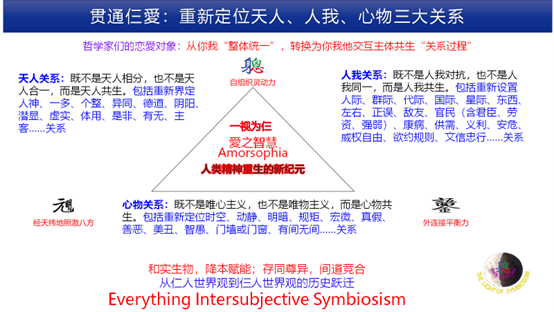
这并不是抛弃哲学,而是让哲学重新进入生命正在发生的地方。
于是,Philosophy——智慧之愛,开始向 Amorsophia——愛之智慧敞开。
智慧不再只是站在生命之外认识世界、解释世界、设计世界;智慧进入生命关系,在交互中辨识,在连接中生成,在行动后果中修正,在共生中涌现方向。
由此看今天正在发生的一系列变化,它们也就不再是彼此孤立的技术、经济与组织改革。
人工智能(AI),升格为人艺心智(AM);
组织强权,还原为组织孞托;
生产,回归生活;生活,呈现生態;生態,激励生命。
它们指向的是一种共通变化:
人们将不再首先追问谁统摄谁、谁取代谁、谁战胜谁,而是回到生命之间真实发生的关系过程,看见连接怎样发生、成本怎样形成、价值怎样承兑、孞托怎样约定、生命怎样彼此赋能。
这也正是为什么,下一个100年的关键词可能发生变化。
过去100年,我们已经把规模的力量发挥到了惊人的程度。
下一个100年,轮到另一种力量登场了:
连接。
过去、现在、未来:组织冲突 → 斗争哲学 → 整体统一 → 关系过程 → Philosophy / Amorsophia → AI / AM → 组织强权 / 组织孞托 → 生产 / 生活 / 生態 / 生命 → 规模复制 / 交互连接。
于是,我重新想起舒马赫那句著名的话:
Small Is Beautiful——小即是美。
过去说“小即是美”,很容易被理解成一种浪漫情怀:回到乡村,回到手工业,回到鸡犬相闻的小生活。
我想说的恰恰不是这个意思。
未来的“小”,可能连接整个地球。
当知识和创新能够极速抵达地球每一个角落,当AI乃至未来的AM能够被一个普通人随时调用,“小”第一次获得了过去只有“大”才拥有的能力。
一个五个人的团队,为什么一定要长成五百人的机构?
一个社区自己可以解决的问题,为什么必须层层上报?
一个人能够直接找到另一个人的服务,为什么一定要经过七八层中介?
一种知识可以瞬间抵达需要它的人,为什么必须被某个庞大组织垄断以后才能使用?
这些问题过去常常只能作为理想提出来。
今天,它们第一次开始成为技术问题、组织问题,也成为现实选择。
大当然不会消失。
飞机制造、基础科学、重大公共安全、全球性事务和深空探索,仍然需要大规模协作。
真正会发生变化的是:
“大”不再天然等于“强”。
规模复制本身不再能够自动证明组织存在的合理性。
一个组织究竟有多少人、有多少层级、有多少资产,也许越来越不是它最值得骄傲的事情。
未来更值得问的是:
你用多小的组织成本,释放了多大的生命能量?
如果这一变化真的发生,那么过去两百年经济学的一些基本观察方法,也会跟着发生变化。
经济学研究了很久的供给和需求。
到了宏观经济学那里,又变成两个庞大的总量:
“总供给与总需求”。
可是,Economy究竟在哪里发生?
回到生活现场看看,其实很简单。
我需要一样东西,你恰好能够提供。
我愿意支付,你愿意承兑。
事情就这样发生了。
一个人的支出,就是另一个人的收入。
这个人的收入,又成为他的支出、储蓄、投资或者新的创造能力;新的创造又连接另一个人的需要。
亿万人的经济生活,拆到最后,就是无数这样的连接。
需要寻找能力。
能力回应需要。
支出连接收入。
收入孕育新的创造。
价值发现价值,价值承兑价值。
所谓“总供给”和“总需求”,当然仍然可以统计。
但它们越来越可能退回到统计结果,而生命之间正在发生的连接,重新回到经济现场。
这可能是下一个100年经济学非常重要的一次视角变化。
工业文明擅长通过扩大规模降低生产成本。
地球世(Earthopocene)将越来越通过改善连接降低组织成本。
这句话的意义,也许远远超过“哪一个国家将在2126年成为第一大经济体”。
因为如果连接成本发生数量级下降,我们今天习以为常的许多经济问题、社会问题乃至政治问题,都可能改变发生方式。
并不是所有冲突都会消失。
而是一些今天看上去非斗不可的问题,可能突然失去“非斗不可”的技术与组织前提。
一旦这样理解,货币也会重新显出它原来的样子。
钱为什么能够成为钱?
因为有人接受。
为什么接受?
因为人相信,当自己接受这张纸、这个数字、这段代码以后,别人还会继续接受。
所以货币从来不只是一个“东西”。
它发生在人与人的关系之中。
一个人创造价值,另一个人承认这种价值;这种承认又得到更广泛的社会承认,于是价值可以跨越陌生人、跨越时间、跨越空间继续流动。
价值承兑的是价值。
货币,不过是这种价值承兑能够普遍流通的凭证。
于是,我们又回到了那个被现代经济学遮蔽很久的东西:
孞托。
国家、银行、企业、平台,以及未来各种数位货币、稳定币、共生币,都逃不过几个最简单的问题:
你承兑了什么?
谁相信你的承兑?
这种孞托能不能继续生成?
没有孞托,再漂亮的制度也会越来越昂贵。
没有价值承兑,再先进的货币形态,也不过是新的记账工具。
走到这里,我们再回头看过去100年,就会发现另一个有趣的变化。
国家主义、社会主义、资本主义、集体主义、个人主义、平等主义、自由主义、民族主义,乃至东方中心主义、西方中心主义……
这些“主义”曾经让无数人激动、争论、革命甚至战争。
它们当然有各自不同的思想来源和历史作用。
可是,从更长的文明尺度看,它们大都在回答同一个人类世(Anthropocene)的问题:
如此庞大的社会,究竟应该怎样组织?
国家多一点,还是市场多一点?
个人优先,还是集体优先?
自由重要,还是平等重要?
谁拥有资源?
谁组织生产?
谁承担分配?
这些问题不会突然消失。
国别利益、族裔差异、阶层矛盾、党派竞争和程序正义的分歧,也不会因为技术进步便自行蒸发。
真正值得警觉的,是人类太容易把这些现实问题进一步抽象成不可调和的概念战争,然后让生命为概念殉葬。
一个本来可以通过降低成本、改善连接、调整规则解决的问题,一旦被翻译成“你死我活”,解决问题本身就退居其次了。
人们开始捍卫标签。
捍卫阵营。
捍卫自己曾经说过的话。
最后甚至需要不断制造敌人,才能证明自己的立场仍然正确。
这正是斗争哲学最顽强的地方:
它不仅解释冲突,还会继续生产冲突。
可是,当一个普通人可以直接接触不同文明的知识,直接比较不同生活方式,直接调用过去只有专家和大型机构拥有的能力,当AI不断击穿信息不对称,AM进一步进入心智、价值与组织孞托,人们会越来越自然地问一些更加朴素的问题:
生活怎么样?
成本降了吗?
能力增加了吗?
身体和心灵更健康了吗?
人与人之间更值得孞托了吗?
战争少了吗?
孩子有没有更多可能?
青年和老人能不能有尊严地生活?
我能不能成为我自己?
到了那一天,生活本身重新获得对理论的检验权。
一种主义也许不需要被另一种主义打败。
亿万普通人的生活,会慢慢穿透它。
理论若不能改善生活,概念再正确,也不能替生命生活。
2018年,我在《共生简史》中提出四个相互连接的文明世代概念;2021年再版时,书名改为《SYMBIOSISM·共生——The Mind Power to Agree on An Innovative Lifestyle·一种约定创新生活方式的精神力量》:
自然世(Naturalopocene)、人类世(Anthropocene)、地球世(Earthopocene)、太空世(Spaceopocene)。
今天重新看这四个词,我越来越觉得,它们并不是四个整齐排列的历史阶段。它们更像是我们倒退着走入未来时,逐渐显现出来的四层风景。
自然世(Naturalopocene),共生是起源。
生命从发生的第一天起,就没有孤立存在过。
一株植物向阳生长,一个细胞与环境交换物质与能量,菌群彼此依存,森林通过无数看得见和看不见的连接生长。
生命本自具足,又非独存。
人类从这里走来。
然后进入人类世(Anthropocene)。
人开始以自己的智慧和欲望“人为自然”,创造城市、国家、市场、工业、资本、科学和技术,把组织能力推向此前任何生命都没有达到过的高度。
过去100年,正是人类世空前加速的100年。
它创造了巨大的财富,也留下巨大的组织成本;创造了核能,也创造了毁灭地球的能力;创造了互联网,也创造了数位铁笼的可能;今天又创造了AI。
人类世的伟大与危险,其实来自同一个地方:
人的能力空前放大到足以影响地球生灵的地步。
所以在人类世:
共生是底线。
人可以创造,可以冒险,可以突破,可以犯错,却不能无限突破生命存在的底线。
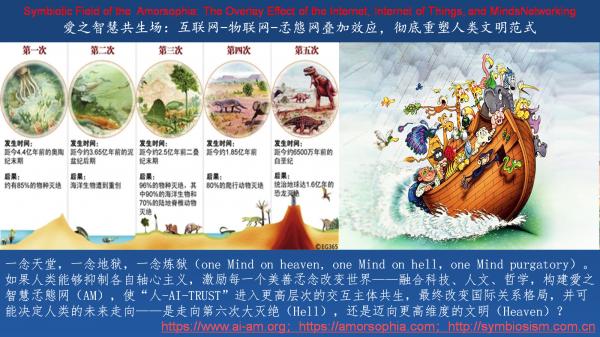
突破地线,斗争方便可能连累他者,同归于尽。所以,有人写出了《第六次大灭绝》。
而今天,我们已经站到了另一道门槛前。
地球世(Earthopocene)。
地球世并不意味着人类退回自然。
人类当然会继续创造。
AI会继续发展,AM(Artificial Mind & Amorsophia MindsField / Network)可能出现,量子技术、生命科学、新材料、能源技术会打开今天无法想象的世界。
真正改变的是人的尺度。
我们开始问:
一种技术究竟给生命增加了什么?
一种组织究竟降低了多少生活成本?
一种经济增长究竟增加了多少健康、孞托与和平?
一个文明究竟释放了多少生命本来具有的可能?
这时候,“增长”不再拥有自动豁免权。
“大”也不再拥有自动正确性。
一种制度叫什么名字,不再足以证明它值得存在。
一切都必须重新接受生活的检验与价值重估。
于是:
地球世(Earthopocene),共生由底线显现为灵魂。
而就在这里,太空世(Spaceopocene)也已经开始。
因为地球从来没有离开过太空。
人类只有真正看见地球,才会真正看见太空;当我们从太空回望这颗蓝色星球,才突然意识到:我们过去划出的许多边界,对地球和宇宙而言原本并不存在,甚至完全没有意义。
国家边界是真实的人类制度。
党派边界是真实的人类组织。
族裔身份也是真实的历史生活。
但如果我们把这些边界进一步想象成宇宙本身的边界,就会忘记一个最简单的事实:
我们首先生活在同一颗正在太空中运行的地球上。
所以,地球世并不是太空世之前的一站。
真正进入Earthopocene,本身就是Spaceopocene的开始。
这也使我重新理解AI。
下一个100年真正重要的问题,决不是:AI最终会有多聪明?
更值得问的是:
如此强大的智能,将进入什么样的生命关系与组织关系?
AI可以让“小”获得前所未有的能力,也可以把“大而无当”推向人类从未见过的极致。
它可以帮助一个普通人调用世界知识,也可以让几个超级平台掌握前所未有的知识权力。
它可以降低组织成本,也可以把每个人变成可预测、可分类、可诱导、可控制的数据对象。
它可以帮助政府改善公共服务,也可以帮助政府建造一个比过去任何时代都更加精密的数位铁笼。
如果AI只是让原来已经过大的组织变得更强、更快、更无孔不入,那么人类得到的未必是一个新时代,也可能只是一个被技术放大的人类世。
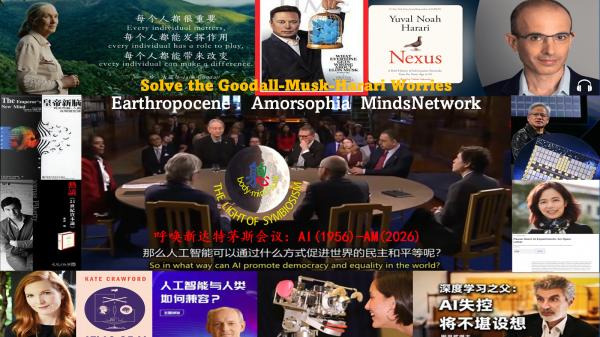
所以,我提出AI升格这AM。
Artificial Intelligence继续发展智能。
Artificial Mind & Amorsophia MindsField / Network则把问题继续向前推进:
它为什么做?
为谁做?
与谁交互共襄生成?
产生什么后果?
由谁受托?
如何进入真实的生命关系?
技术能力重新连接生命目的。
智能进入心智。
权力连接责任。
组织重新成为生命的受托者(Trustee)。
这就是我所说的:
LIFE–AM–TRUST交互契合共生秩序。
它不是给2126年设计的一张制度蓝图。
它一直都在那里。
在自然世(Naturalopocene),它潜在于生命发生与连接之中;
在人类世(Anthropocene),它成为文明不可无限突破的存在底线;
进入地球世(Earthopocene),它开始成为人的自觉、自律而自由,成为文明的自在灵魂;
而当Earthopocene向太空世(Spaceopocene)敞开,人类才可能真正理解:
地球人的生活,本来就是宇宙中的生命生活。
所以,如果一定要问我:
2126年会是什么样?
我不知道。
我不知道,当小即是美,成为现实,那时谁是世界第一大经济体,又有什么意义?不知道美元是否仍然是世界主要储备货币?不知道今天那些炙手可热的AI公司,还有几家留在历史记忆里?也不知道国家边界会发生怎样的变化,帮派政治,政党政治、地缘政治是否完全失去存在理据?
我曾预测过,10年20年以后,地球一年365个自转,每一个自转日都是某一个国家的“国庆节”!
但我现在更想知道,2126年的一个“小地球人”回望我们,会不会觉得有些事情不可思议:
物质已经如此丰富,为什么2026年的人还生活得那么昂贵?
知识已经如此丰富,为什么教育还让孩子们那么痛苦?
一个五个人可以解决的问题,为什么要养一个五百人的机构?
一个人的需要和另一个人的能力明明可以成为差异互补性存在,为什么要经过如此漫长、昂贵的组织过程才能相遇?
人类已经拥有如此聪明的AI,为什么还曾经差一点把自己关进更加精密的数位铁笼?
也许那个小地球人还会笑我们:
你们那时候,怎么那么喜欢争谁第一?
地球在太空中已经转了几十亿年,谁排过第一?
也许他还会感到奇怪:
为什么那时候的人那么喜欢先问你属于哪一边,然后才决定要不要听你说话?
为什么一个问题一旦被贴上左或右、东方或西方、资本或劳动、这个党或那个党的标签,人们就很难再看见问题本身?
为什么大家明明都说自己追求正义,却常常为了证明自己的正义,比对方更加正确,不惜制造新的仇恨?
也许他最终会明白:
那就是Anthropocene(人类世)留下的一部分惯性。
我更愿意想象另一幅图景。
2126年的地球上,仍然有不同国家、不同语言、不同宗教、不同生活方式、不同审美、不同价值选择。
有人喜欢纽约。
有人愿意住在山里。
有人探索火星。
有人一辈子守着自己的菜园。
有人研究量子和虫洞。
有人做木匠。
有人喜欢与几百万人交互。
有人只愿意和几个朋友喝茶。
差异没有消失。
差异反而更加自由地生长。
真正发生变化的是:
差异不再那么容易被组织成敌意。
一个人的诗和远方,越来越不需要以另一个人失去诗和远方为代价。
知识被一个人获得,并不会因此被另一个人失去。
思想与思想交互,会生成此前不存在的思想。
创新传播得越快,越可能成为更多人的能力。
价值越承兑,越能够流动。
孞托越兑现,越可能继续生成。
一个人的支出,成为另一个人的收入;
收入又孕育新的需要、新的创造;
需要寻找能力,能力回应需要;
价值发现价值,价值承兑价值。
就这么简单。
那些庞大的组织依然存在,却不再那么费劲地挡在生命与生命之间。
亿万不同的生命,各自生长,又彼此抵达,各自扬帆,又彼此为岸。
这时候,“财富”本身也许已经悄悄改变了含义。
财富不只意味着我占有什么。
它越来越意味着:
我拥有多少时间?
多少选择?
多少创造的能力?
多少进入未知世界的可能?
重要的是,我能不能愛?
能不能创造?
能不能帮助别人?
能不能在需要的时候,停下来看看星星?
这就是我今天能够预见的“下一个100年”。
当然,我仍然是倒退着走的。
2126年在身后。
我看不见。
我只是一个站在2026年的小地球人,面前是已经走过的自然世(Naturalopocene)和仍在轰鸣的人类世(Anthropocene),脚下却已经开始出现地球世(Earthopocene)的道路。
而当我抬起头来,太空就在那里。
它从来都在那里。
自然世(Naturalopocene),共生是起源。
人类世(Anthropocene),共生是底线。
地球世(Earthopocene),共生是灵魂。
太空世(Spaceopocene),从我们真正看见地球的那一刻开始。
所以,“下一个100年”真正值得期待的,也许并不是我们还能够把世界改造成什么样子,也不是终于有谁战胜谁、取代谁、统一谁。
经过漫长的人类世,人类真正需要学会的,可能只是一个看上去极其简单、实际上至今仍然艰难的问题:
拥有如此巨大的创造能力以后,我们能不能少一点彼此绞杀,多一点彼此成全?
更进一步:
怎样让如此丰富的世界,不再那么费劲地妨碍生命成为自己?
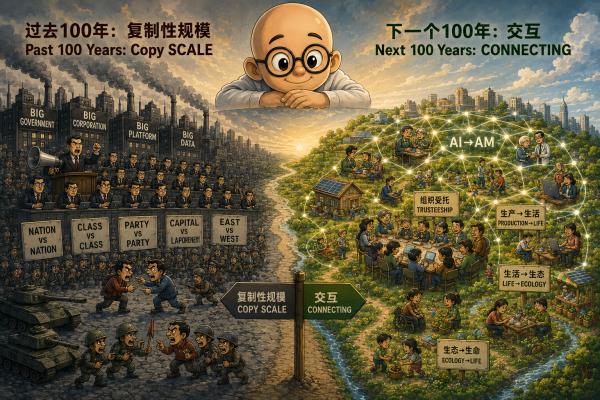
人非牛,非马,也不是宠物猪!
什么投资、消费、进出口,人不是任何一架马车。
生产回归生活。
生活呈现生態。
生態激励生命。
小即是美。
生命本自具足,又非独存。
当凡事交互主体共生秩序自在显现之日,便是地球生灵自美其美、美人之美、美美与共,共生吉祥之时!
于是,每个人的诗和远方,成为所有人的诗和远方的条件。
A Little Earthling Looks Ahead: The Next 100 Years
—From the Anthropocene toward the Earthopocene
Archer Hong Qian
Vancouver, August 19, 2026
Just now, Upgrading AI to AM and An Introduction to Symbionomics (Revised Edition) were finally completed.
I suddenly thought again of the phrase “the next 100 years.” More than a decade ago, George Friedman wrote a book called The Next 100 Years.
Politicians, economists, and military strategists have always liked to forecast the future: which country will rise and which will decline; who will become the world’s largest economy; where the next war may break out; how population, energy, technology, and capital will reshuffle the hierarchy of global power.
Such forecasts certainly have their value.
But I found myself turning the question around: human beings have, in fact, always walked backward into the future.
Our faces are turned toward the past. What has already happened remains within our field of vision and becomes experience, knowledge, theory, concepts, formulas, and historical memory. The future, however, lies behind us. We cannot see it. We can only walk backward, judging each next step cautiously from the landscapes we have already seen.
That is why we so easily extend the variables of the past into the future.
Geography is still geography, nations are still nations, power is still power, war is still war—only recombined in different configurations.
America or China, East or West, left or right, capital or labor, state or market, which party takes power, which ethnic group gains the upper hand, which system prevails… We even carry concepts that helped create yesterday’s problems forward and use them to occupy the future.
Yet the things that truly change human life seldom arrive that way.
The airplane did not grow out of the speed curve of the horse-drawn carriage.
The Internet was not the result of postal systems delivering letters faster and faster.
Nor is AI the natural endpoint of an abacus whose calculating speed kept increasing.
What is truly exciting about the future often comes from possibilities not yet discovered, not yet named, not yet admitted into the threshold of existing logic. It also comes when the known and the unknown suddenly interact, turning what was unimaginable yesterday into ordinary life today.
So if I were to write my own “Next 100 Years” today, I would not try to predict who will be number one in the world in 2126.
I would rather ask:
When people a hundred years from now look back at 2026, where will they see us standing?
People in 1926 could scarcely have imagined today.
Commercial air travel was still four years away from becoming an ordinary means of transportation. Penicillin had not yet been discovered. Television was not yet widespread. There were no computers, no Internet, no smartphones, no artificial intelligence. Humanity had not landed on the Moon, nor had anyone ever looked back at the Earth from space.
A hundred years later, the smartphone in an ordinary person’s hand possesses information capabilities that did not exist anywhere in the world of 1926.
Today, an ordinary person is beginning to acquire another capacity that would once have been unimaginable.
At any moment, one can call upon something close to the accumulated knowledge of humanity.
A ten-person company can use translation, design, computation, market analysis, and even R&D capabilities once available only to multinational corporations. A rural doctor can draw on the assistance of worldwide medical knowledge. A child’s teachers are no longer limited to the few people in one school. A cultivation technique discovered by chance by a farmer can reach another continent in a very short time. An independent thinker can sit at a desk and interact with people—and with AI—across languages, disciplines, and civilizations.
The significance of this is probably far greater than the claim that “AI raises productivity.”
For throughout the long course of human history, there has been one enormously important fact that is rarely singled out:
Connection between people has always been expensive.
For one person’s need to find another person’s capability requires search.
For one person’s creation to reach someone who needs it requires transmission.
For strangers to cooperate requires identification, authentication, negotiation, contracts, and trust.
For knowledge to travel from one place to another requires schools, publishers, media, experts, and long processes of learning.
And so human beings kept creating organizations.
Families, tribes, cities, markets, companies, banks, schools, states, multinational corporations, international organizations…
Organizations enormously expanded human capability.
What one person cannot do, a hundred may be able to do; what a hundred cannot do, a million may accomplish.
Thus “big” gradually became one of the most powerful civilizational imaginaries of the Anthropocene.
Big countries.
Big cities.
Big factories.
Big banks.
Big corporations.
Big governments.
Big platforms.
Big data.
And now, big models.
But once “big” became habitual, we slowly forgot the original question:
Why do organizations arise at all?
Organizations were originally trustees through which life could enlarge its own possibilities.
Yet organizations can also reproduce themselves.
Layers multiply. Rules grow more complex. The cost of maintaining the organization itself rises. Information decays as it passes through layer after layer. Power becomes increasingly concentrated, while responsibility becomes ever more easily detached from the consequences of action.
A fascinating—and rather cruel—historical paradox follows:
Human beings created organizations in order to reduce the cost of living; later, human beings had to sustain organizations through lives that became increasingly expensive.
More troubling still, once these enormous organizations have formed, people easily mistake conflicts among organizations for conflicts inherent in human life itself.
Nation must compete with nation.
Class must struggle against class.
Party must defeat party.
Ethnic groups must fight for a larger share.
Market and government can only advance at each other’s expense.
East and West seem destined to struggle for the center.
Human beings then spend more and more life-energy dealing with frictions generated by large organizations themselves—and afterward interpret those frictions as an inescapable historical destiny.
Could it be that we have mistaken some problems that are really problems of organizational cost for problems requiring life to struggle against life?
Today this question can no longer be avoided.
The issue is no longer simply whether organizations should be large or small, whether there should be more state or more market, nor whether we should replace one system, one ideology, or one group of people with another and reorganize the world all over again. It touches a philosophical theme that recurs throughout A Brief History of Symbiosis, Upgrading AI to AM, and An Introduction to Symbionomics (Revised Edition):
The human way of observing, understanding, and changing the world is itself undergoing a historical transformation.
More than two thousand years ago, the Axial Age left humanity an intellectual inheritance whose greatness endures. Whether seeking to understand the “many” through the “one,” grasp phenomena through ontology, bring the diverse world under an ultimate truth, or ask according to what highest principle society should be organized, humanity’s long intellectual effort was directed toward finding an overarching unity amid complexity.
Philosophy—love of wisdom—thus began its magnificent journey of more than two millennia.
But life never waits for an overarching unity to be completed before it begins to live.
Life’s self-organization begins first in concrete relational connections.
You, I, and others; humanity and nature; life and environment; need and capability; expenditure and income; value and value; organization and trusteeship—all are continuously occurring, connecting, interacting, feeding back, adjusting, and entering dynamic balance.
If we remain determined first to find one uniquely correct whole, one finally correct doctrine, one subject that must occupy the center, and then rearrange other lives around it, even the most sophisticated theory may once again manufacture center and periphery, ruler and ruled, victor and loser—until relational problems that could have been adjusted are pushed into irreconcilable confrontation and mortal struggle.
So the deeper leap from the Axial Age to the Symbiotic Age is this:
From seeking overarching unity to discovering relational process.
This does not abandon philosophy. It lets philosophy re-enter the place where life is actually happening.
Philosophy—love of wisdom—thus begins to open toward Amorsophia—wisdom of love.
Wisdom no longer merely stands outside life to know the world, explain the world, and design the world. Wisdom enters living relationships: discerning through interaction, generating through connection, correcting itself through the consequences of action, and allowing direction to emerge through symbiosis.
Seen from here, a series of changes now under way no longer appear as isolated technological, economic, and organizational reforms:
Artificial Intelligence (AI) is upgraded toward Artificial Mind (AM);
organizational domination is restored to organizational trusteeship;
production returns to life; life manifests ecology; ecology empowers life.
They point toward a common transformation:
Instead of first asking who governs whom, who replaces whom, or who defeats whom, people return to the relational processes actually occurring among lives: how connections happen, how costs arise, how value is redeemed, how trust is covenanted, and how lives empower one another.
This is also why the keyword of the next 100 years may change.
Over the past 100 years, we have developed the power of scale to an astonishing degree.
In the next 100 years, another force may take the stage:
connecting.
Past, present, future:
organizational conflict → philosophy of struggle → overarching unity → relational process → Philosophy / Amorsophia → AI / AM → organizational domination / organizational trusteeship → production / life / ecology / living beings → copy scale / connecting.
This brings me back to E. F. Schumacher’s famous phrase:
Small Is Beautiful.
In the past, “Small Is Beautiful” could easily be heard as romantic nostalgia: back to the village, back to handicraft, back to a small world where neighbors know one another.
That is precisely not what I mean.
The “small” of the future may be connected to the entire Earth.
When knowledge and innovation can reach every corner of the planet almost instantly, and when AI—and perhaps future AM—can be called upon by an ordinary person at any time, “small” acquires for the first time capacities once possessed only by “big.”
Why must a team of five grow into an institution of five hundred?
Why must a problem a local community can solve by itself be reported upward through layer after layer?
If one person can directly find another person’s service, why must seven or eight intermediaries stand between them?
If knowledge can instantly reach the person who needs it, why must it first be monopolized by a huge organization before it can be used?
Such questions could once be raised only as ideals.
Today, for the first time, they are becoming technological questions, organizational questions, and practical choices.
The large will not disappear.
Aircraft manufacturing, basic science, major public safety, global affairs, and deep-space exploration will still require large-scale collaboration.
What will change is this:
“Big” will no longer naturally mean “strong.”
Copying scale will no longer, by itself, automatically justify an organization’s existence.
How many people an organization employs, how many layers it has, or how many assets it controls may become less and less worthy of pride.
The more important question for the future is:
With how little organizational cost have you released how much life-energy?
If this change really occurs, some of the basic ways economics has observed the world for the past two centuries will change with it.
Economics has studied supply and demand for a long time.
In macroeconomics, these became two enormous aggregates:
“aggregate supply and aggregate demand.”
But where does Economy actually happen?
Return to the scene of living and it is quite simple.
I need something, and you happen to be able to provide it.
I am willing to pay; you are willing to redeem the value.
That is how it happens.
One person’s expenditure is another person’s income.
That income becomes expenditure, saving, investment, or new creative capability; new creation then connects with another person’s need.
Reduce the economic life of billions of people to its elementary events and what remains are countless connections like these.
Need seeks capability.
Capability responds to need.
Expenditure connects with income.
Income nurtures new creation.
Value discovers value; value redeems value.
“Aggregate supply” and “aggregate demand” can of course still be measured.
But they may increasingly return to being statistical outcomes, while the connections actually occurring among living beings return to the economic scene itself.
This may be one of the most important shifts of perspective in the economics of the next 100 years.
Industrial civilization excelled at reducing production costs by expanding scale.
The Earthopocene will increasingly reduce organizational costs by improving connections.
The significance of that sentence may be far greater than the question of which country will be the world’s largest economy in 2126.
For if the cost of connection falls by orders of magnitude, many economic, social, and even political problems we now take for granted may change the very way in which they arise.
Not every conflict will disappear.
But some problems that today appear to demand a fight may suddenly lose the technological and organizational conditions that made the fight seem unavoidable.
Once we see this, money too begins to reveal its original form.
Why can money be money?
Because someone accepts it.
Why accept it?
Because people trust that after accepting this piece of paper, this number, or this string of code, others will continue to accept it.
Money, then, has never been merely a “thing.”
It happens in relationships among people.
One person creates value; another recognizes that value. That recognition is in turn recognized more broadly by society, allowing value to continue moving across strangers, across time, and across space.
What value redeems is value.
Money is simply the generally circulable credential of such value redemption.
And so we return to something long obscured in modern economics:
trust.
States, banks, corporations, platforms, and the digital currencies, stablecoins, and symbiotic currencies of the future cannot escape a few elementary questions:
What are you redeeming?
Who trusts your redemption?
Can that trust continue to be generated?
Without trust, even the most elegant institution becomes increasingly expensive.
Without value redemption, even the most advanced form of money is only another accounting instrument.
From here, if we look back over the past 100 years, another interesting change comes into view.
Statism, socialism, capitalism, collectivism, individualism, egalitarianism, liberalism, nationalism, even Eastern-centrism and Western-centrism…
These “isms” have inspired countless people to passion, debate, revolution, and even war.
They have, of course, distinct intellectual origins and historical roles.
But viewed on a longer civilizational scale, most were answering the same Anthropocene question:
How should a society of such enormous scale be organized?
More state or more market?
Individual first or collective first?
Freedom or equality?
Who owns resources?
Who organizes production?
Who bears responsibility for distribution?
These questions will not suddenly disappear.
National interests, ethnic differences, class tensions, party competition, and disagreements over procedural justice will not evaporate simply because technology advances.
What deserves our vigilance is how easily human beings abstract such real problems into irreconcilable conceptual wars, and then sacrifice life to concepts.
A problem that might have been solved by lowering costs, improving connections, or adjusting rules is translated into “you or me, life or death”—and solving the problem itself becomes secondary.
People begin defending labels.
Defending camps.
Defending what they once said.
Eventually they may even need to keep manufacturing enemies in order to prove that their own position remains correct.
This is where the philosophy of struggle is most tenacious:
It does not merely explain conflict. It continues to produce conflict.
But when an ordinary person can directly encounter the knowledge of different civilizations, directly compare different ways of life, directly call upon capabilities once monopolized by experts and large institutions; when AI keeps breaking through information asymmetries and AM moves further into mind, value, and organizational trust, people may increasingly ask much simpler questions:
How is life?
Have costs fallen?
Have capabilities grown?
Are body and mind healthier?
Are people more worthy of one another’s trust?
Is there less war?
Do children have more possibilities?
Can young people and old people live with dignity?
Can I become myself?
When that day comes, life itself regains the right to test theory.
One “ism” may not need to be defeated by another.
The lives of billions of ordinary people will slowly pass through it.
If a theory cannot improve life, no matter how correct its concepts may be, concepts cannot live life in our place.
In 2018, in A Brief History of Symbiosis, I proposed four interconnected concepts of civilizational generations. When the book was republished in 2021, it was retitled SYMBIOSISM: The Mind Power to Agree on An Innovative Lifestyle:
Naturalopocene, Anthropocene, Earthopocene, and Spaceopocene.
Looking again at these four terms today, I increasingly feel that they are not four neatly separated historical stages. They are more like four layers of landscape gradually coming into view as we walk backward into the future.
Naturalopocene: symbiosis is the origin.
From the first moment life arose, it never existed in isolation.
A plant grows toward the sun. A cell exchanges matter and energy with its environment. Microbial communities depend upon one another. Forests grow through innumerable visible and invisible connections.
Life is self-sufficient in itself, yet never exists alone.
Humanity came from here.
Then came the Anthropocene.
Human beings began to “human-make nature” through their own intelligence and desire, creating cities, states, markets, industry, capital, science, and technology, and pushing organizational capability to a level no other life had ever reached.
The past 100 years have been a century of unprecedented Anthropocene acceleration.
It created immense wealth, and immense organizational costs; it created nuclear energy, and the capacity to destroy the Earth; it created the Internet, and the possibility of a digital iron cage; and now it has created AI.
The greatness and danger of the Anthropocene come from the same source:
Human capability has been magnified to the point where it can affect living beings across the Earth.
Therefore, in the Anthropocene:
Symbiosis is the bottom line.
Human beings may create, take risks, break through, and make mistakes—but they cannot endlessly violate the bottom line of life’s existence.
Once that line is crossed, one side’s struggle may engulf others and end in mutual destruction. Hence books such as The Sixth Extinction.
Today, however, we have reached another threshold.
The Earthopocene.
The Earthopocene does not mean that humanity retreats back into nature.
Human beings will of course continue to create.
AI will continue to develop. AM—Artificial Mind & Amorsophia MindsField / Network—may emerge. Quantum technology, life sciences, new materials, and energy technologies may open worlds we cannot yet imagine.
What truly changes is the human measure.
We begin to ask:
What has a technology actually added to life?
How much has an organization reduced the cost of living?
How much health, trust, and peace has economic growth actually generated?
How much of life’s inherent possibility has a civilization released?
At that point, “growth” no longer receives automatic exemption.
Nor is “big” automatically right.
The name attached to an institution no longer proves that it deserves to exist.
Everything must once again submit to the test of life and to a revaluation of value.
Thus:
In the Earthopocene, symbiosis rises from the bottom line and becomes the soul.
And right here, the Spaceopocene has already begun.
Because the Earth has never been outside space.
Only when humanity truly sees the Earth can it truly see space. Looking back at this blue planet from space, we suddenly realize that many of the boundaries we drew in the past do not exist for the Earth or the universe at all—and may have no meaning there whatsoever.
National borders are real human institutions.
Party boundaries are real human organizations.
Ethnic identities are real historical lives.
But if we imagine those boundaries to be boundaries of the universe itself, we forget the simplest fact:
We first of all live on the same Earth moving through space.
The Earthopocene, therefore, is not a station before the Spaceopocene.
To truly enter the Earthopocene is already to begin the Spaceopocene.
This also makes me understand AI anew.
The truly important question of the next 100 years is definitely not: How intelligent will AI ultimately become?
The more important question is:
Into what kinds of living relationships and organizational relationships will such powerful intelligence enter?
AI can give the “small” unprecedented capability; it can also push the bloated “big” to an extreme humanity has never seen.
It can help an ordinary person call upon the knowledge of the world; it can also give a handful of super-platforms unprecedented power over knowledge.
It can reduce organizational costs; it can also turn every person into a data object that can be predicted, classified, induced, and controlled.
It can help governments improve public services; it can also help governments construct a digital iron cage more precise than anything in previous history.
If AI merely makes organizations that are already too large stronger, faster, and more pervasive, what humanity receives may not be a new age at all. It may only be an Anthropocene magnified by technology.
That is why I propose upgrading AI to AM.
Artificial Intelligence continues to develop intelligence.
Artificial Mind & Amorsophia MindsField / Network pushes the question further:
Why does it act?
For whom?
With whom does it interact and co-generate?
What consequences does it produce?
By whom is it entrusted?
How does it enter real living relationships?
Technological capability reconnects with the purpose of life.
Intelligence enters mind.
Power connects with responsibility.
Organization once again becomes the trustee of life.
This is what I call:
the LIFE–AM–TRUST order of interactive, congruent symbiosis.
It is not an institutional blueprint designed for 2126.
It has always been there.
In the Naturalopocene, it is latent in the arising and connecting of life;
in the Anthropocene, it becomes the existential bottom line that civilization cannot violate without limit;
in the Earthopocene, it begins to become human self-awareness—self-disciplined and therefore free—and the immanent soul of civilization;
and as the Earthopocene opens toward the Spaceopocene, humanity may finally understand:
The life of Earthlings has always been life in the universe.
So if you insist on asking me:
What will 2126 look like?
I do not know.
If Small Is Beautiful becomes reality, what meaning would it even have to ask which country is then the world’s largest economy? I do not know whether the dollar will still be the world’s principal reserve currency; how many of today’s celebrated AI companies will remain in historical memory; how national borders will change; or whether factional politics, party politics, and geopolitics will have completely lost their reason for being.
I once predicted that ten or twenty years from now, of the Earth’s 365 rotations each year, every rotation-day would be the “national day” of some country!
But now I am more curious whether a “little Earthling” in 2126, looking back at us, will find certain things almost unbelievable:
Material abundance was already so great—why was life still so expensive in 2026?
Knowledge was already so abundant—why did education still cause children so much pain?
Why maintain an institution of five hundred people for a problem five people could solve?
If one person’s need and another person’s capability could plainly exist as complementary differences, why did they have to pass through such a long and expensive organizational process before they could meet?
Humanity already possessed AI of such intelligence—why did it once come so close to locking itself inside an even more elaborate digital iron cage?
Perhaps that little Earthling will laugh at us:
Why were you so obsessed with who was number one?
The Earth has been turning through space for billions of years. Who ever ranked first?
Perhaps the little Earthling will also wonder:
Why did people then so often ask which side you belonged to before deciding whether to listen to you?
Why, once a question was labeled left or right, East or West, capital or labor, this party or that party, did people find it so difficult to see the question itself?
Why, when everyone claimed to pursue justice, did they so often create new hatred simply to prove that their justice was more correct than someone else’s?
Perhaps the little Earthling will finally understand:
That was part of the inertia left behind by the Anthropocene.
I prefer to imagine another scene.
On the Earth of 2126 there are still different countries, languages, religions, ways of life, aesthetics, and value choices.
Some people love New York.
Some choose to live in the mountains.
Some explore Mars.
Some spend a lifetime tending a vegetable garden.
Some study quantum physics and wormholes.
Some are carpenters.
Some like interacting with millions of people.
Some prefer tea with only a few friends.
Difference has not disappeared.
Difference has become freer to grow.
What has truly changed is this:
Difference is no longer so easily organized into hostility.
One person’s poetry and distant horizon increasingly need not be purchased at the cost of another person losing theirs.
Knowledge acquired by one person is not thereby lost by another.
When thought interacts with thought, it generates thoughts that did not exist before.
The faster innovation spreads, the more likely it becomes the capability of more people.
The more value is redeemed, the more freely it can flow.
The more trust is fulfilled, the more trust can continue to be generated.
One person’s expenditure becomes another person’s income;
income nurtures new needs and new creation;
need seeks capability, capability responds to need;
value discovers value, value redeems value.
It is that simple.
Large organizations still exist, but they no longer laboriously stand between life and life.
Billions of different lives grow in their own ways and reach one another—each setting sail, each becoming a shore for others.
At that point, the meaning of “wealth” itself may already have quietly changed.
Wealth no longer means only what I possess.
Increasingly, it means:
How much time do I have?
How much choice?
How much capacity to create?
How many possibilities for entering unknown worlds?
More importantly:
Can I love?
Can I create?
Can I help others?
Can I stop, when I need to, and look at the stars?
This is the “next 100 years” that I can foresee today.
Of course, I am still walking backward.
2126 is behind me.
I cannot see it.
I am only a little Earthling standing in 2026. Before my eyes lie the Naturalopocene we have already traveled through and the still-roaring Anthropocene; beneath my feet, however, the road of the Earthopocene has already begun to appear.
And when I lift my head, space is there.
It has always been there.
Naturalopocene: symbiosis is the origin.
Anthropocene: symbiosis is the bottom line.
Earthopocene: symbiosis is the soul.
Spaceopocene begins the moment we truly see the Earth.
So what is truly worth anticipating in “the next 100 years” may not be what else we can remake the world into, nor the final victory of one side over another, one replacing another, one unifying another.
After the long Anthropocene, what humanity truly needs to learn may be a question that sounds exceedingly simple yet remains exceedingly difficult:
Having acquired such enormous creative power, can we do a little less mutual destruction and a little more mutual fulfillment?
And further:
How can we make this abundant world stop working so hard to prevent life from becoming itself?
A human being is neither an ox nor a horse, nor a pet pig!
A human being is neither an ox nor a horse, nor a pet pig!
Investment, consumption, imports, exports—human beings are not horse-drawn carriages of any kind.
Production returns to life.
Life manifests ecology.
Ecology empowers life.
Small Is Beautiful.
Life is self-sufficient in itself, yet never exists alone.
When an order of intersubjective symbiosis freely manifests in all things, the living beings of Earth may each delight in their own beauty, appreciate the beauty of others, and let all beauty flourish together—in auspicious symbiosis.
Then each person’s poetry and distant horizon become a condition for the poetry and distant horizons of all.
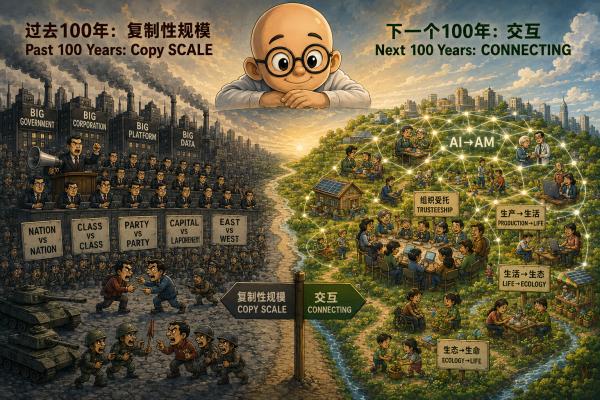
Past 100 Years: COPY SCALE → Next 100 Years: CONNECTING



复制性规模 → 交互连接
整体统一 → 关系过程
Philosophy → Amorsophia
AI → AM
组织强权 → 组织孞托
生产 → 生活 → 生態 → 生命
Small Is Beautiful
2026年08月22日上午2:23